
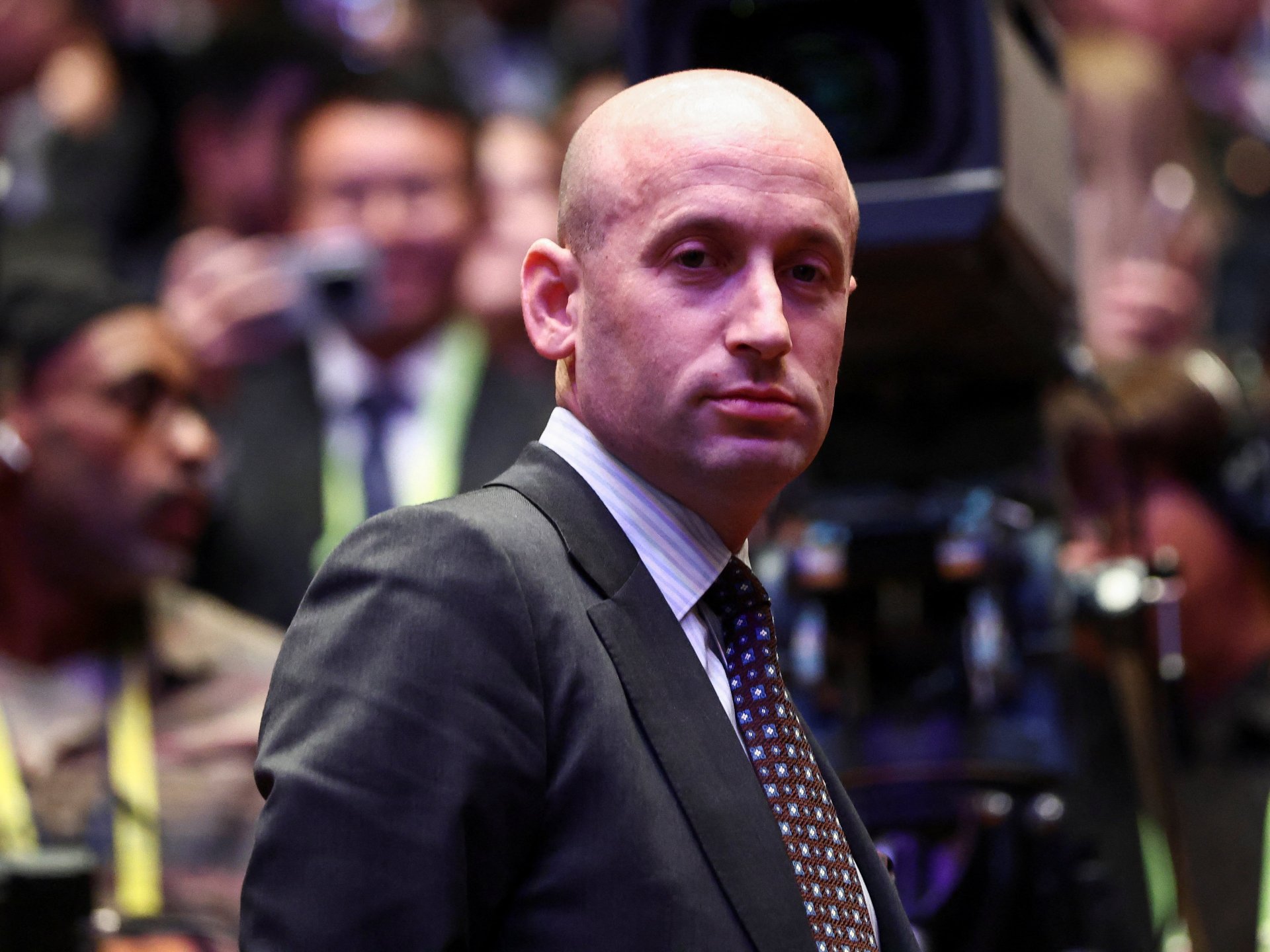

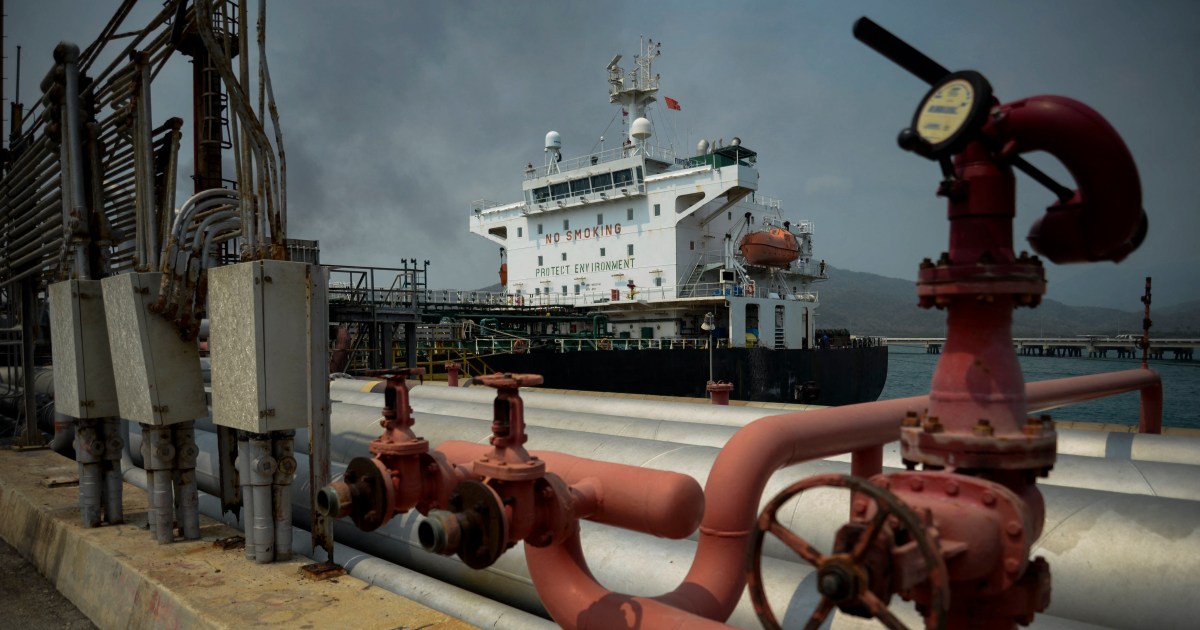
Stephen Miller, a top aide to United States President Donald Trump, has suggested that Venezuela’s oil belongs to Washington, describing the nationalisation of the South American country’s petroleum industry as “theft”.
Miller’s comments on Wednesday raise further questions over the Trump administration’s claim that drug smuggling is its primary source of the tension with Venezuela.
- list 1 of 3Venezuela’s Machado leaves Oslo after trip to receive Nobel Peace Prize
- list 2 of 3Who is Susie Wiles? Why has her Vanity Fair interview stirred controversy?
- list 3 of 3Faced with Trump’s deportation push, US teachers fear leaving the classroom
end of list
“American sweat, ingenuity and toil created the oil industry in Venezuela,” Miller, who serves as White House deputy chief of staff, wrote in a social media post.
“Its tyrannical expropriation was the largest recorded theft of American wealth and property. These pillaged assets were then used to fund terrorism and flood our streets with killers, mercenaries and drugs.”
While US and British companies were involved in early oil exploration in Venezuela, the fuel belongs to the Latin American country under the international law principle of permanent sovereignty over natural resources.
Venezuela nationalised its oil sector in 1976 and brought it under the control of the state-owned PDVSA.
Later, in 2007, the late left-wing President Hugo Chavez nationalised the remaining foreign oil projects in Venezuela, effectively ousting US oil giants like ConocoPhillips and Exxon Mobil.
The US companies filed legal challenges to fight the expropriation process, and in 2014, a World Bank arbitration tribunal ordered Venezuela to pay Exxon Mobil $1.6bn. Legal proceedings remain ongoing.
The US imposed sanctions on PDVSA in 2019, under Trump’s first presidency.
Advertisement
But Trump has ramped up his “maximum pressure” campaign against Venezuela since returning to office for a second term in January.
Late on Tuesday, Trump announced a blockade on Venezuelan oil tankers, describing them as “sanctioned”. In a Truth Social post on the subject, Trump echoed Miller’s assertions that Venezuelans had stolen oil from the US.
“Venezuela is completely surrounded by the largest Armada ever assembled in the History of South America,” Trump wrote.
“It will only get bigger, and the shock to them will be like nothing they have ever seen before – Until such time as they return to the United States of America all of the Oil, Land, and other Assets that they previously stole from us.”
The blockade is part of the increasingly confrontational approach Trump has taken towards Venezuela and its left-wing President Nicolas Maduro, who served as vice president under the late Chavez.
Last week, the US military – which has been amassing military assets near Venezuela – seized an oil tanker off the coast of Venezuela, a move that Caracas denounced as “international piracy”.
Since September, the US has also been bombing vessels near the South American country in the Caribbean Sea that it says are drug boats, in a deadly campaign many legal experts call a violation of domestic and international laws.
On Tuesday, the publication Vanity Fair quoted White House chief of staff Susie Wiles as saying that the US boat strikes aim to topple the Venezuelan president, who has faced accusations of human rights abuses.
Wiles reportedly told the magazine that Trump “wants to keep on blowing boats up until Maduro cries ‘uncle'”.
The Trump administration has also taken several actions against the Maduro government itself. In November, the administration designated the “Cartel de los Soles” as a “foreign terrorist organisation”, even though the term does not refer to an organised group.
Rather, it is a reference to alleged corruption within the Venezuelan government and military.
There is no evidence, however, to back the claim that Maduro is the leader of a drug cartel, nor that Venezuela is a major source of US-bound narcotics.
On Tuesday, Trump nevertheless said he would name “the Venezuelan regime” a “foreign terrorist organisation”, citing the “theft of our [US] assets”.
Another grievance that Trump and his aides have cited is the unfounded claim that Maduro intentionally sent criminals and gang members to the US over the past years.
But Venezuela’s vast oil reserves – believed to be the largest in the world – have been a particular point of contention.
Advertisement
On Wednesday, citing anonymous sources, the news publication Politico reported that the Trump administration had been approaching private oil companies to ask if they were interested in returning to Venezuela, should Maduro be removed from power.
“There has been the genesis of an outreach with the industry on the potential of reentering Venezuela,” one anonymous source told Politico.
“But frankly, there’s not a lot of interest from the industry, in light of lower oil prices and more attractive fields globally.”
However, prominent Venezuelan opposition figure Maria Corina Machado has promised to privatise the country’s oil sector and open it up to investment should Maduro lose power. She won the Nobel Peace Prize earlier this year.
Related News
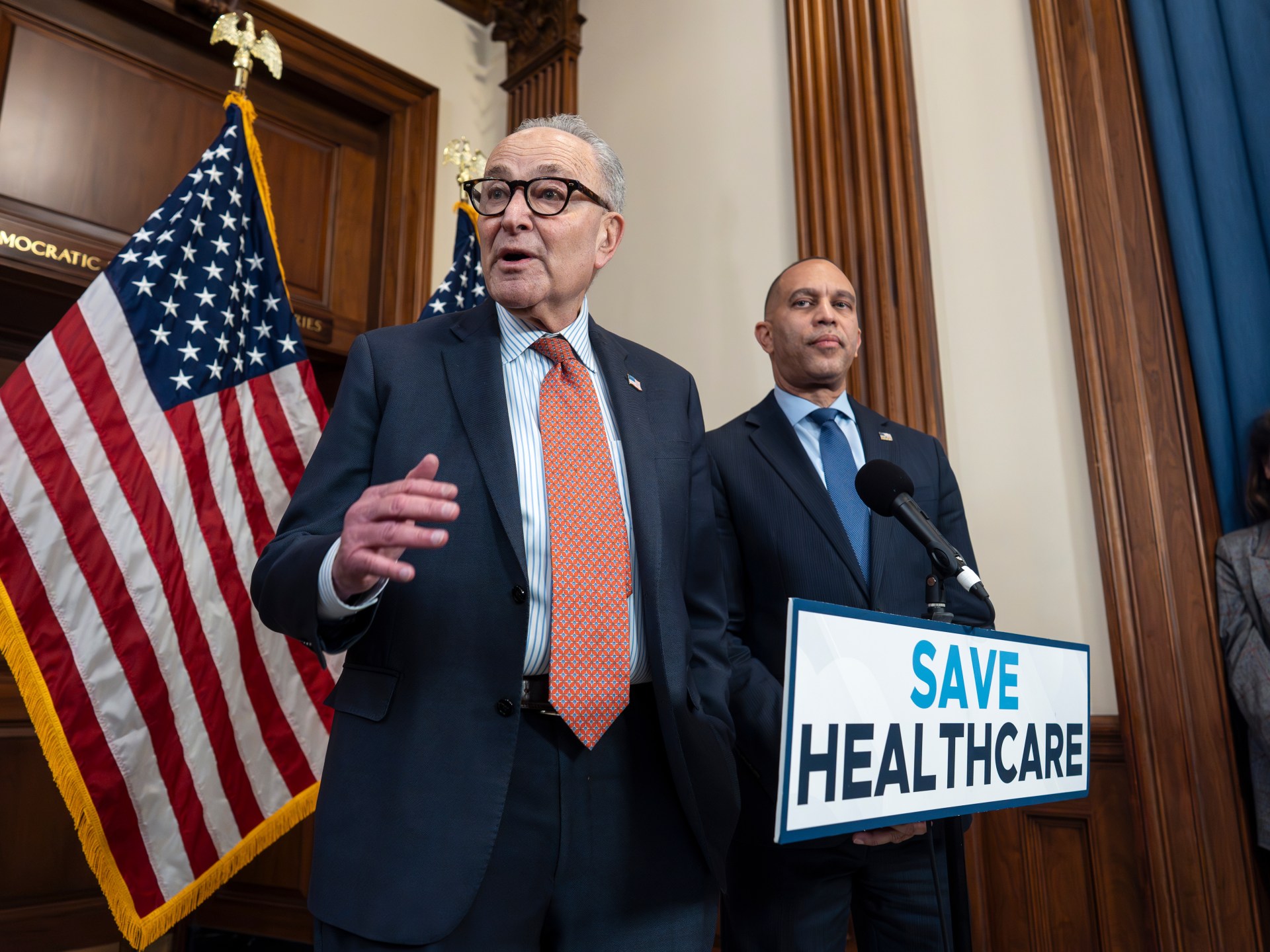
Republicans defy House leadership to force vote on healthcare subsidies
Venezuela oil exports fall steeply after US forces seize tanker off coast
More heavy rain slows Sri Lanka’s recovery after deadly cyclone