

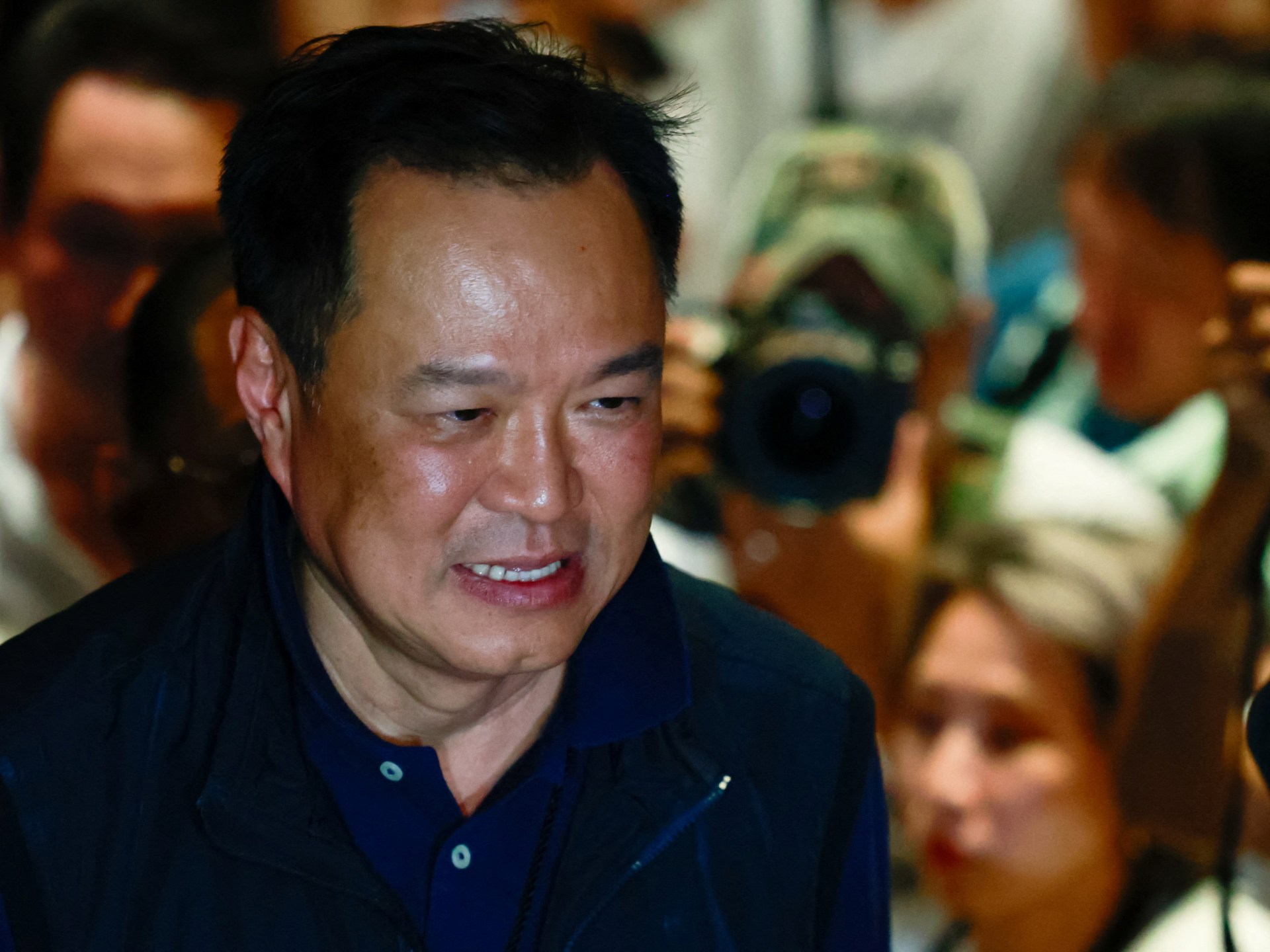

Thailand’s ruling Bhumjaithai Party has taken an early lead in general elections, according to a preliminary vote count.
With around 30 percent of polling stations reporting results, the party, led by Prime Minister Anutin Charnviraku, took a commanding lead over the progressive People’s Party, showed partial results released by the country’s election commission.
- list 1 of 3Japan votes as Sanae Takaichi seeks mandate for conservative agenda
- list 2 of 3US to support Cambodian-Thai ceasefire with $45m aid pledge
- list 3 of 3At least 28 people killed as crane falls on train in northeast Thailand
end of list
The populist Pheu Thai Party, backed by the billionaire former Prime Minister Thaksin Shinawatra, who was jailed last year, was in third place, the results showed.
People’s Party leader Natthaphong Ruengpanyawut appeared to concede defeat as the results came in, telling reporters, “We acknowledge that we did not come first.”
“We stand by our principle of respecting the party that finishes first and its right to form the government,” said Ruengpanyawut.
Nevertheless, the three-way battle is unlikely to see any single party win a clear majority, meaning parties will likely have to resort to coalition-building to form the next government.
Bhumjaithai, seen as the preferred choice of the royalist-military establishment, centred its campaign on economic stimulus and national security, tapping into nationalist fervour stoked by deadly border clashes with neighbouring Cambodia.
Its leader, caretaker premier Anutin, stepped in as prime minister last September, after his predecessor, Paetongtarn Shinawatra, was forced out of office for an ethics violation.
Threatened with a no-confidence vote, Anutin dissolved the National Assembly or parliament in December to call a snap election.
Advertisement
The rival People’s Party, which many had expected to win a plurality of seats, had promised to curb the influence of the military and the courts, as well as break up economic monopolies. Pheu Thai campaigned on economic revival and populist pledges like cash handouts.
Al Jazeera’s Tony Cheng, reporting from Bangkok, said there was a sentiment of “political fatigue” in the run-up to elections, but voters turning out Sunday were still hopeful about the prospect for change.
Thai voters were also asked during the vote to decide if a new constitution should replace a 2017 charter, a military-backed document that critics say concentrates power in undemocratic institutions, including a powerful Senate that is chosen through an indirect selection process with limited public participation.
The election commission’s early count showed voters backing constitutional change by a margin of nearly two to one.
Thailand has had 20 constitutions since the end of absolute monarchy in 1932, with most of the changes following military coups.
If voters back the drafting of a new national charter, the new government and lawmakers can start the amendment process in parliament with two more referendums required to adopt a new constitution.
“I believe that the party that wins in the next election will have an outsized influence on the direction of constitutional reform, whether we move away from the junta-drafted constitution or not,” said Napon Jatusripitak of the Bangkok-based Thailand Future think tank.
Related News

Washington Post announces massive layoffs in blow to storied paper

French MPs approve law seeking ban on social media for children below 15
US dollar: ‘Wounded hegemon’ or secure as most powerful currency on earth?