

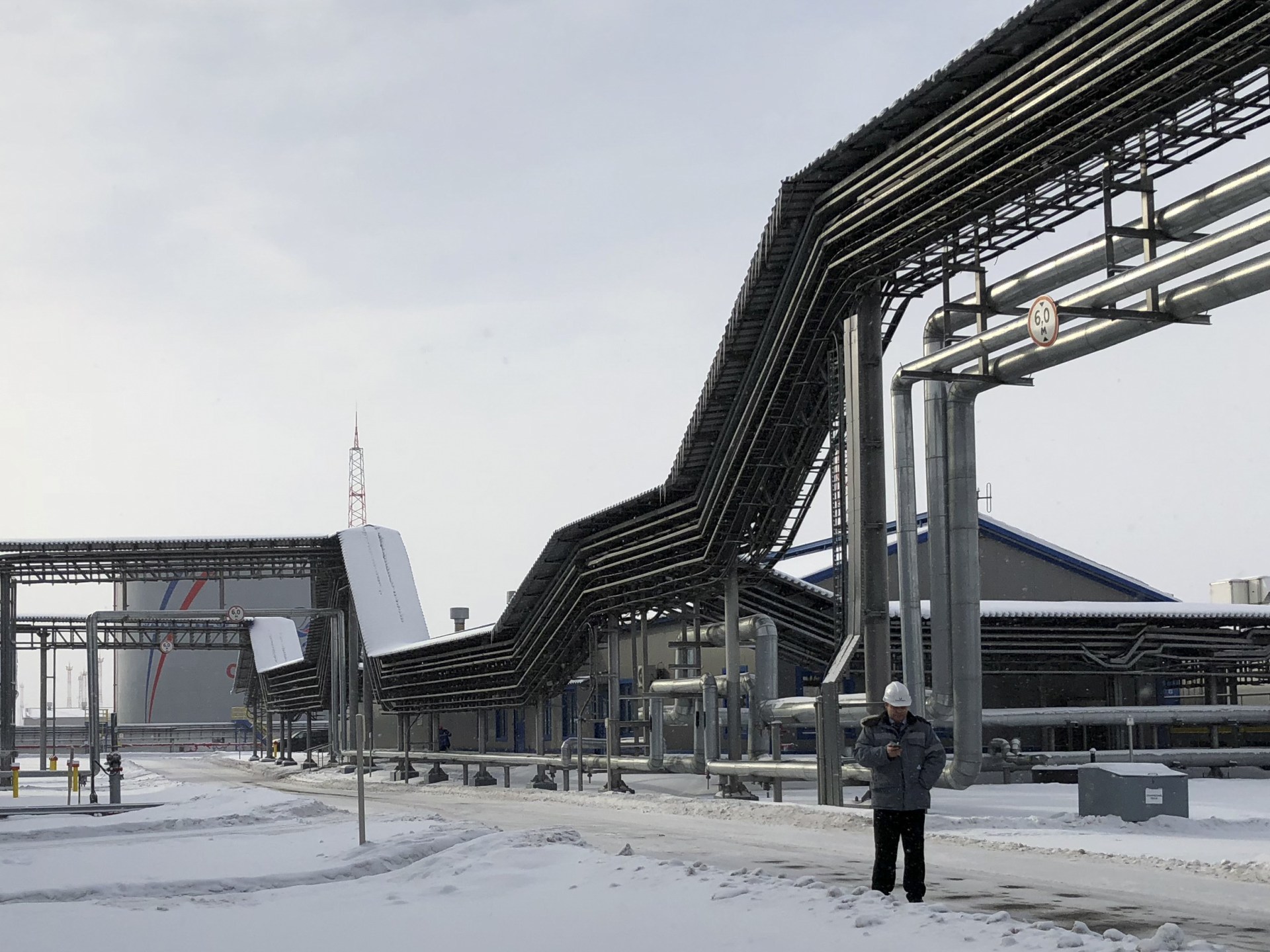

Ukrainian drones have struck Russia’s Baltic Sea port of Ust-Luga for the fifth time in 10 days, as Kyiv continues to step up attacks on Russia’s oil export infrastructure.
Regional governor Alexander Drozdenko said on Tuesday that three people, including two children, were treated for injuries and several buildings were damaged in the overnight attacks.
- list 1 of 3Ukraine’s Zelenskyy signs air defence deals with UAE, Qatar on Gulf tour
- list 2 of 3Could Ukraine’s drone expertise serve Gulf countries?
- list 3 of 3US-Israel war on Iran: What’s happening on day 30 of attacks?
end of list
In a message on Telegram, he said air-raid alerts in the region had been lifted but gave no details on damage to the port.
Ust-Luga, on the southeastern shore of the Gulf of Finland, is a sprawling complex of oil-processing facilities and export terminals handling crude oil and oil products.
Authorities said it was hit on March 22, 25, 27, 29 and 31, forcing suspensions of export operations.
According to source-based data, the port exported 32.9 million metric tonnes of oil products last year and typically handles about 700,000 barrels of crude oil per day.
Ukraine has stepped up attacks on Russia’s oil export infrastructure over the past month, launching its heaviest drone attacks of the more than four-year war against the Baltic ports of Ust-Luga and Primorsk.
Peace talks to end the war in Ukraine have been suspended due to the Middle East war, and officials in Kyiv have expressed concerns that weapons supplies could be diverted away from Ukraine as Western military resources are stretched.
Oil prices have surged to their highest level in nearly two weeks amid escalation on multiple fronts of the US-Israel war on Iran, with Brent crude, the global benchmark, topping $116 a barrel.
Advertisement
At least 40 percent of Russia’s oil export capacity has been halted due to drone attacks, a disputed strike on a major pipeline and the seizure of tankers, according to Reuters news agency calculations based on market data.
Cash-strapped Ukraine is also grappling with rising costs of fuel due to a surge in oil prices.
Kyiv announced on Tuesday that its air defences shot down 267 out of 289 drones launched by Russia last night towards Ukrainian territory. Meanwhile, Russia’s Ministry of Defence said its army took control of the village of Mala Korchakivka, in Ukraine’s northern Sumy region.
The European Union’s top diplomat Kaja Kallas and several EU foreign ministers reiterated their support for Ukraine as they arrived in Kyiv on Tuesday to mark the fourth anniversary of Russia’s massacre in Bucha, where Ukrainian officials and rights groups say Russian troops killed more than 400 people.
“Bucha has come to symbolise the cruelty of Russia’s war,” Kallas said on X, posting pictures from the town.
“The EU is committed to ensuring that these crimes do not go unpunished … Russia must be held accountable for what it has done to Ukraine.”
Moscow denied its troops committed atrocities in Bucha and has accused Ukraine of staging the incident. The United Nations has verified 15,364 civilians killed since Russia’s invasion of Ukraine, though it says the actual number is likely to be higher.
Europe is the main backer for Ukraine; however, a 90-billion-euro ($103.23bn) EU loan was blocked by Hungarian Prime Minister Viktor Orban due to a dispute over the Russian oil transit via Ukraine’s Druzhba oil pipeline.
Hungary is also blocking progress on talks about Ukraine’s accession to the EU.
Ukrainian Foreign Minister Andrii Sybiha called on partners to remain focused on the war in Ukraine despite the widening impact of the war with Iran.
“Perhaps more than anywhere else, it is here in Bucha that we feel the future of Europe and Europe’s security are being decided right here – in Ukraine,” Sybiha said. “The current front line is also a line of international law and the shared values we uphold.”
Related News
US-Israel war on Iran: What’s happening on day 27 of attacks?
Republican Mace says Congress must approve any US troop deployment to Iran
Trump says it’s a ‘good thing’ counterterrorism director resigned over Iran