

Cuba is facing one of its worst crises in decades, as the Caribbean island contends with nationwide blackouts, fuel shortages and growing political uncertainty.
The crisis comes as the United States increases pressure on the communist government in Havana.
- list 1 of 3Mexico will continue accepting Cuban medical workers despite US pressure
- list 2 of 3Cuban president says Raul Castro involved in US talks amid oil blockade
- list 3 of 3Missing Cuba-bound aid boats from Mexico found; crews ‘safe’
end of list
As recently as Friday, US President Donald Trump hinted that he might attack Cuba, following military operations in Venezuela and Iran.
“I built this great military. I said, ‘You’ll never have to use it.’ But sometimes you have to use it. And Cuba is next,” he said.
Trump’s threats have raised questions about the future of Cuba’s leadership and whether political change could be on the horizon.
Here is what to know about the US campaign against Cuba’s government and the powerful figures who lead Havana:
What is happening in Cuba?
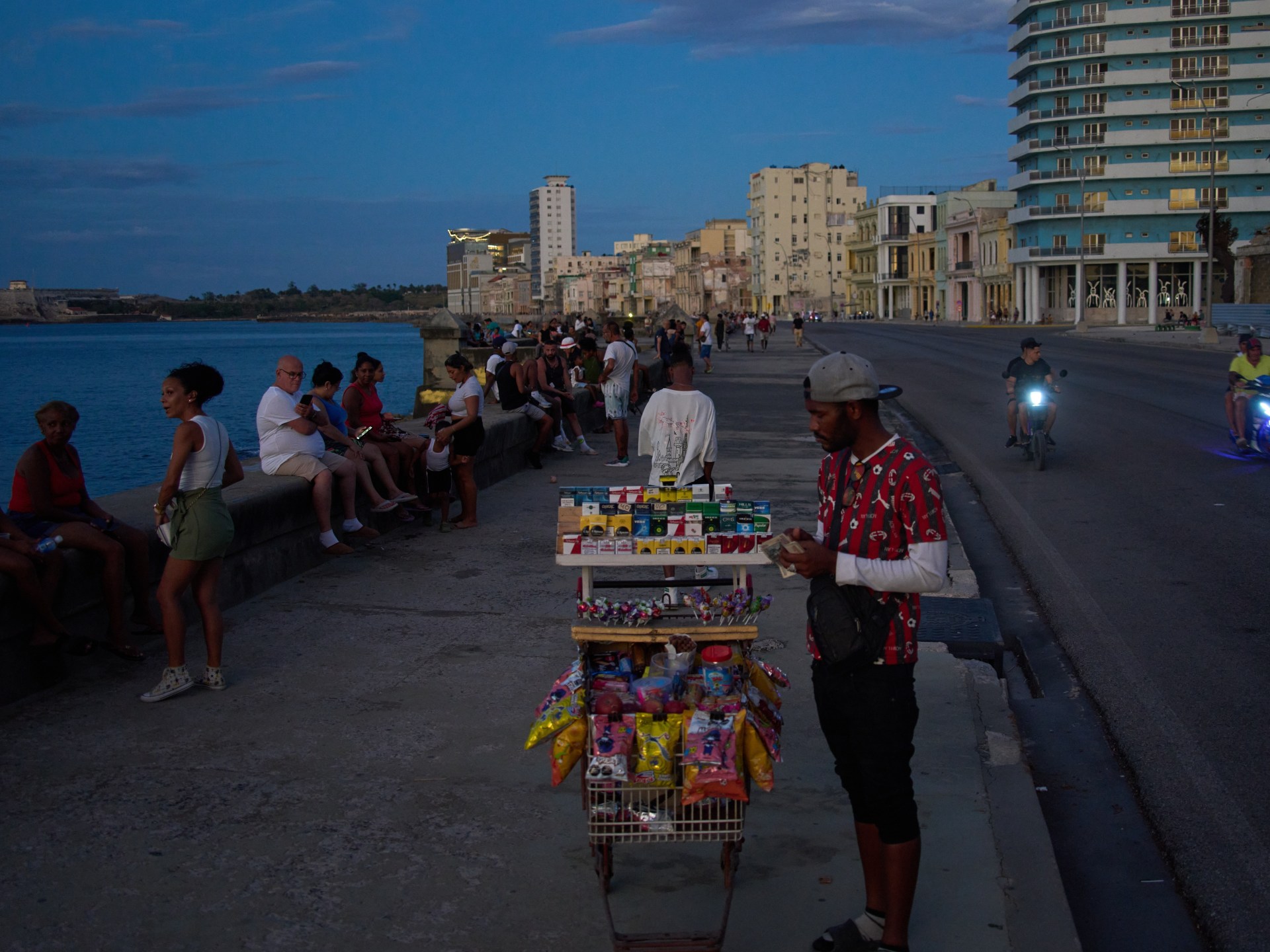
Nearly every aspect of Cuban society is under strain amid a de facto US oil blockade.
The island relies on imported oil to generate electricity and run public transport. But fuel shipments have largely stopped since January.
On January 11, Trump announced that no more oil or funding would come from Cuba’s close ally Venezuela, following a US attack on that country. Then, on January 29, he issued an executive order threatening tariffs against any country that supplies Cuba with fuel.
Since then, only one tanker has reached the island: On Tuesday, a Russian vessel carrying 730,000 barrels of oil arrived in Havana’s harbour.
But it is unclear how far one ship will go in addressing the island’s oil crisis. The depletion of the island’s fuel supply has pushed the nation’s already fragile infrastructure past its breaking point.
Advertisement
In March alone, Cuba faced two island-wide blackouts, as well as regional power outages. Analysts have blamed both US policy and ongoing problems with Cuba’s ageing power grid.
But the result has left nearly 10 million Cubans in complete darkness.

The effects are being felt across daily life. The fuel shortage is disrupting water systems and food distribution across the island.
Litter is piling up in Havana because rubbish trucks lack fuel. Hospitals are limiting surgeries. Public transport has been reduced. And many people have resorted to using wood fires to cook and heat water.
Reporting from Havana, journalist Ed Augustin told Al Jazeera’s The Take that the crisis is “absolutely eviscerating every part of life”.
In Havana, residents face blackouts lasting up to 15 hours a day, while in some rural areas, outages can last far longer, sometimes stretching into more than a full day without electricity.
“Cubans are living in unbearable conditions, and that is clearly part of what this policy is designed to do,” Augustin said.

What is the human cost of the fuel shortage?
The United Nations has warned of a possible humanitarian “collapse” in Cuba as a result of the fuel shortages.
Journalists like Augustin warn that there is a human cost to steep economic sanctions like those the US has imposed on Cuba.
“It’s worth pointing out: Sanctions kill,” Augustin said. “There’s a lot of academic literature that show that sanctions kill.”
He pointed to a 2025 study in The Lancet Global Health journal, which estimated that 564,000 excess deaths each year were linked to economic sanctions. Augustin added that children are especially vulnerable.
“I’ve been going to various Cuban hospitals, and the Cuban doctors are telling me that the infant mortality rate this year is rising,” Augustin said.
“And it’s rising because staff can’t get to work, because there are no buses. It’s rising because cleaners can’t get to work, so more children and mothers are getting sepsis. It’s because prenatals [vitamins] and folic acid are not getting to mothers. Milk is not getting to children.”
Faced with international criticism, Trump in recent weeks has signalled he may loosen the oil embargo, allowing a Russian vessel to reach Havana. Mexico too has indicated it may resume oil shipments to Cuba.
Advertisement
How long have Cuba and the US been at odds?
Current tensions with Cuba stretch back to the Cold War, when the US took an adversarial stance against left-wing governments throughout the Americas.
The Cuban Revolution in the 1950s led to the overthrow of a US-backed, military-led government, and by the early 1960s, the US had placed the island under a comprehensive trade embargo, designed to weaken Havana’s new communist leadership.
“No country in modern history, at least since the French Revolution, has been sanctioned as long as Cuba has been sanctioned,” Augustin said.
But the pressure has intensified under President Trump, who tightened economic restrictions on Cuba during his first term, from 2017 to 2021.
Since returning to office in 2025, Trump has labelled Cuba an “unusual and extraordinary threat” to US security and has threatened a “takeover” of the island. The energy blockade is part of that campaign, Augustin explained.
“The US is purposely de-industrialising Cuba,” Augustin said. “By targeting energy, it’s targeting all of the infrastructure on which life depends.”
Who holds power in Cuba?
Although Miguel Diaz-Canel is Cuba’s president, power in Cuba does not sit with the presidency alone.
Cuba is a one-party state, and the most powerful institution in the country is the Communist Party of Cuba, which is defined in its constitution as the “leading force of the state and society”.
In practice, this means the party — not the government — sets the country’s political direction.
While Diaz-Canel is the secretary-general of Cuba’s Communist Party, analysts say there are signals he might not be the one deciding the country’s future.
The US and Cuba are currently in negotiations, and reports have emerged that the Trump administration is pressuring other powerful Cuban leaders to remove Diaz-Canel from power.
“Politically, I think what is happening is that we are seeing the real power, the real authority within the Cuban regime, which is not Diaz-Canel,” Orlando Perez, a political science professor at the University of North Texas at Dallas, told Al Jazeera.
Perez explained that the family of the late Cuban revolutionary leader Fidel Castro continues to hold significant sway over the government. That includes his brother, former President Raul Castro.
“The real power in Cuba really rests with the Castro clan, Raul Castro and his family, and then GAESA, the military-controlled conglomerate that controls probably about 60 percent of the economy in Cuba,” Perez said. “Those are the real powers.”
In Cuba, experts say the government is designed to survive the leader, so removing the president would not necessarily mean toppling the system.

What happens if the president is removed?
Under Cuba’s 2019 constitution, the president can be replaced if they resign, are removed, die or are deemed unable to continue in office.
Advertisement
In that case, the vice president — who is currently Salvador Valdes Mesa — would take over temporarily, and the National Assembly would then appoint a new president to serve the rest of the term.
How popular is Miguel Diaz-Canel?
Diaz-Canel became president in 2018, becoming the first Cuban leader since 1959 who was not a Castro. But his presidency has been marked by a series of crises that have shaped public opinion.
Relations with the US worsened after the Trump administration tightened sanctions in 2019, and the COVID-19 pandemic in 2020 devastated Cuba’s tourism industry, one of its main sources of income.
However, the moment that most damaged Diaz-Canel’s public image came in July 2021, when rare nationwide protests broke out over economic hardship. The demonstrations were among the largest since 1959. Diaz-Canel’s government responded with a crackdown, and hundreds of protesters were arrested.
Since then, Cuba’s economic crisis has deepened, with inflation, supply shortages and power cuts becoming part of daily life. For many Cubans, Diaz-Canel has come to be associated with one of the country’s most difficult economic periods in decades.
“The current government is not very popular,” Perez said. “We have seen in the last five or six years a significant migration situation. Cuba has lost roughly a 10th of its population, in a migration wave not seen since the 1960s.”
Perez added that the protests have not stopped, either.
On March 14, the government confirmed that a Communist Party office in the city of Moron was set on fire, and residents have continued to bang pots and pans at night, as part of a protest tradition called “cacerolazo”.

Could Diaz-Canel be replaced?
Analysts say replacing Cuba’s president is possible.
“You can easily replace Diaz-Canel, and that would not change anything,” said Sebastian Arcos, the interim director of the Cuban Research Institute at Florida International University. “That position is hollow. Cuba is really a military-run system.”
If Diaz-Canel were replaced, the next president is likely to come from within the political and military establishment that already governs the country.

Who could replace him?
Analysts say attention has turned to two cousins from the Castro family as possible successors to President Diaz-Canel. But there is a possible third option, from outside the family, as well.
Oscar Perez-Oliva Fraga
A great-nephew of Raul Castro, Oscar Perez-Oliva Fraga has undergone a meteoric rise.
Virtually unknown a few years ago, he took over the Ministry of Foreign Trade and Investment in May 2024 before being elevated to deputy prime minister in October.
“The key is that he has spent years inside GAESA, the military conglomerate,” Perez, the political scientist, said.
“He carries the Castro blood,” Perez added, but “not the name”. That allows the regime to present a “technocratic” image to the world without appearing like a family dynasty.
Perez-Oliva Fraga is also well-positioned to be the public face of Cuba’s economic opening. He recently led a high-stakes initiative to allow Cubans living outside the country to invest in businesses on the island, something that previously was heavily restricted.
But analysts like Perez question whether a government under Perez-Oliva Fraga would mark a departure from the status quo, in which the Cuban military holds great influence.
Advertisement
“He comes directly from the revolutionary family; he is not a break from it,” Perez told Al Jazeera.
“He may be different in tone, he may be younger, and he may be willing to implement some economic reforms, but it is hard to see those reforms ever undermining the military’s control of the economy.”

Raul Guillermo Rodriguez Castro
Another contender to rise to the presidency is Raul Guillermo Rodriguez Castro, better known as “Raulito”, or “Little Raul”.
Former President Raul Castro’s grandson, Raulito has never occupied a ministerial post in Cuba’s government. But he has served as his grandfather’s bodyguard and later as head of Cuba’s equivalent of the US Secret Service.
Despite his relatively low political profile, he has reportedly emerged as a key interlocutor in discussions about opening Cuba’s economy and political system.
The publication Axios first reported in February that Raulito had been a key contact for US Secretary of State Marco Rubio, who has made transforming Cuba’s government a central goal.
However, some analysts, including Arcos at Florida International University, believe Raulito is not the best person for the presidency.
“Raulito is a conduit of negotiations, because he has the complete trust of Raul Castro. That’s his role here. He’s someone Raul Castro trusts, absolutely. And he is someone, for the United States side of the negotiation, who represents the Castro family,” Arcos explained.
“But he’s not the right person to lead the transition. He doesn’t have the qualifications. He doesn’t have any official position in government or in the military. He doesn’t have the formal education necessary to do something like this.”

Roberto Morales Ojeda
The institutional fallback, if the transition follows party channels, would be Roberto Morales Ojeda.
A former medical professional from the city of Cienfuegos, Morales Ojeda has spent the latter part of his career in Cuba’s government. He spent eight years as public health minister, starting in 2010, and afterwards, he was a deputy prime minister from 2019 to 2021.
Those appointments put him in high-level positions under two presidents: Raul Castro and Diaz-Canel.
“Roberto Morales Ojeda is the secretary of organisation of the Central Committee of the Communist Party, and he is what most analysts have identified as the conventional successor,” Perez explained.
The problem, according to Perez, is that Cuba is currently facing an extraordinary crisis, prompted by an outside force: the US. Convention has been overturned, and new factors are at play.
Plus, Morales Ojeda doesn’t have a connection to the military-economic apparatus that runs the country.

What happens next in Cuba?
Analysts say Cuba is entering one of its most uncertain periods in decades, with economic collapse, negotiations with Washington and internal power struggles all unfolding at the same time.
The US is trying to push Cuba towards economic and political reforms, while Cuba’s communist leadership is attempting to hold onto power and prevent a total economic collapse.
According to news reports, the Trump administration has signalled it may be willing to leave the Cuban government in place if reforms are made and Diaz-Canel is ousted.
That would echo its strategy in Venezuela, where the US removed former President Nicolas Maduro but left his government intact.
“The US administration is caught between a rock and a hard place,” Perez said.
Hardliners, he explained, want regime change, while others fear government instability could provoke a humanitarian crisis and mass migration out of Cuba.
“The optics of thousands of Cubans taking to little boats, crossing the Florida Straits to South Florida — that is a sight that I don’t think Trump wants,” Perez added.
Perez is among those sceptical of Venezuela-style transitions, though. He argues that swapping out the top brass is not the same as reforming a government.
“Will Diaz-Canel be forced by the Castros to resign? Or shifted to another position? Perhaps. But that is not regime change. That is merely managing the top position,” Perez said.
Meanwhile, the government in Havana has indicated — at least publicly — that changes to its political system are not up for negotiation. Earlier this month, Vice Foreign Minister Carlos Fernandez de Cossio said he “categorically” rejects any proposal to remove Diaz-Canel.
“We are at this point where we have always been with Cuba,” Perez said. “The gap between what the US is legally and politically able to offer and what the Cubans are willing to give — that gap is where negotiations go to die.”

If no government change is made, will the US resort to military force?
Not necessarily. But it is a possibility.
Arcos believes the Castro family is likely to only offer “minor concessions” to the Trump administration, and removing Diaz-Canel could be among its bargaining chips.
But if the Trump administration wants more, it may have to resort to a more aggressive approach.
“I’m not talking about an invasion. I’m not saying that the US Marines are going to land in Havana. That’s not what I’m saying,” he said. “But they will have to do some sort of military action there in order to send the message that they are being serious and that the regime has to change.”
For now, however, major political change does not appear imminent. The US is currently enmeshed in a costly conflict with Iran, and Trump has indicated he is unlikely to take action against Cuba until that war is complete.
Perez argues that engagement, rather than force, may be the best option to produce lasting change in Cuba. Easing the long-running US embargo against Cuba could be a powerful tool to incentivise reform.
“We have been in this dance where the United States insists: Change your regime and then we will lift the embargo. And the Cubans say: Lift the embargo and we will make changes,” Perez said.
He suggests a different approach: Instead of demanding immediate regime change, the US could implement a series of conditions and benchmarks for ending the trade embargo.
“It would take away an excuse from the Cuban government and force real change,” he said.
Related News
Trump deploys ICE agents to US airports amid staffing issues, delays
Iran accuses US of plotting ground attack, as Israel steps up bombardment
Hotel in Iraqi capital Baghdad struck as attacks on US embassy intercepted