
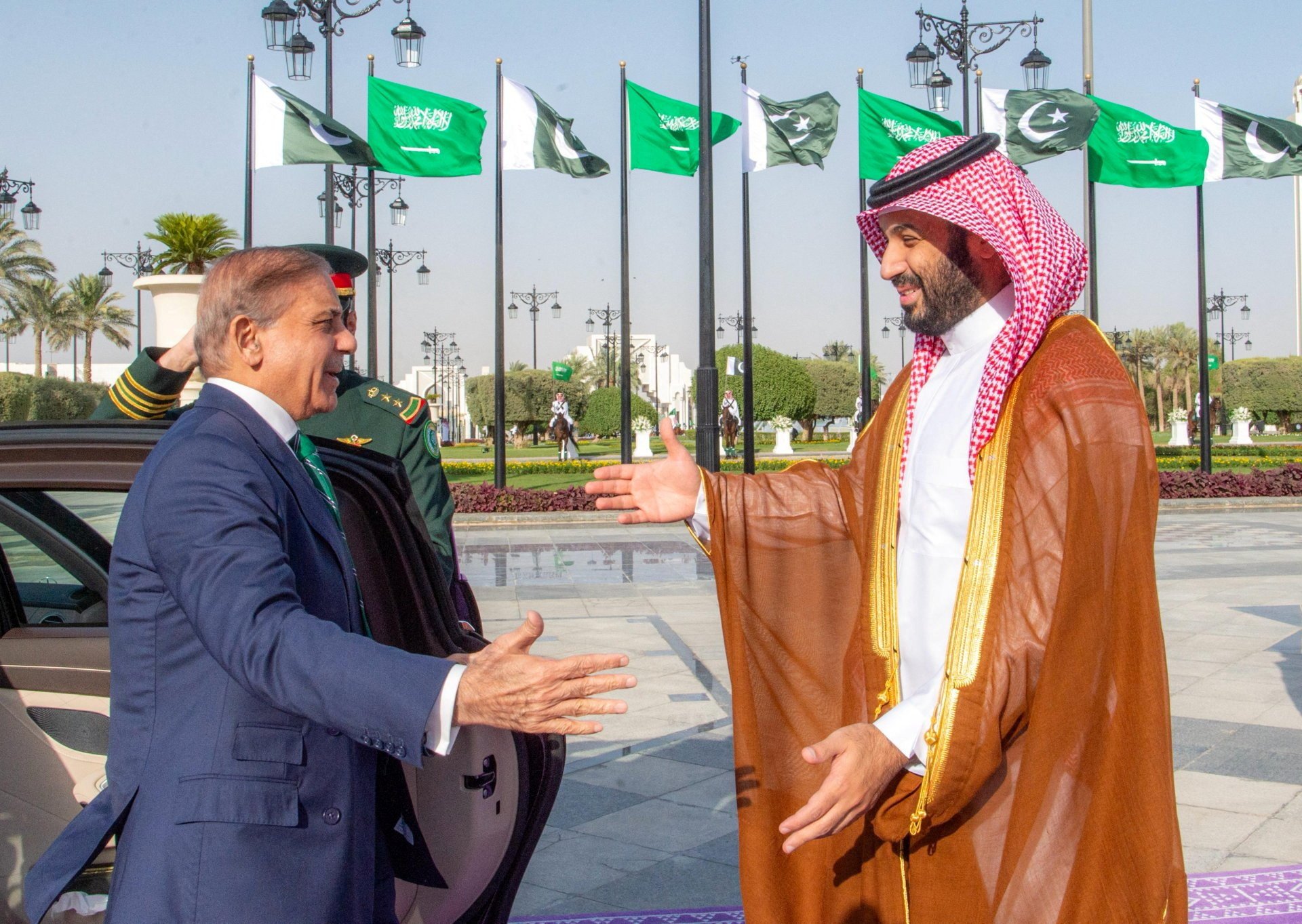

Islamabad, Pakistan – On April 11, Pakistani Prime Minister Shehbaz Sharif shook hands with United States Vice President JD Vance, guiding him to a seat for talks on the sidelines of the highest-level direct negotiations between Washington and Tehran since the 1979 Iranian Revolution.
At almost the same time, Saudi Arabia’s Ministry of Defense made a very different announcement.
In a statement carried by the state-owned Saudi Press Agency, Riyadh confirmed the arrival of a Pakistani military force at King Abdulaziz Air Base in the kingdom’s Eastern Province under the Strategic Mutual Defence Agreement (SMDA) signed last year.
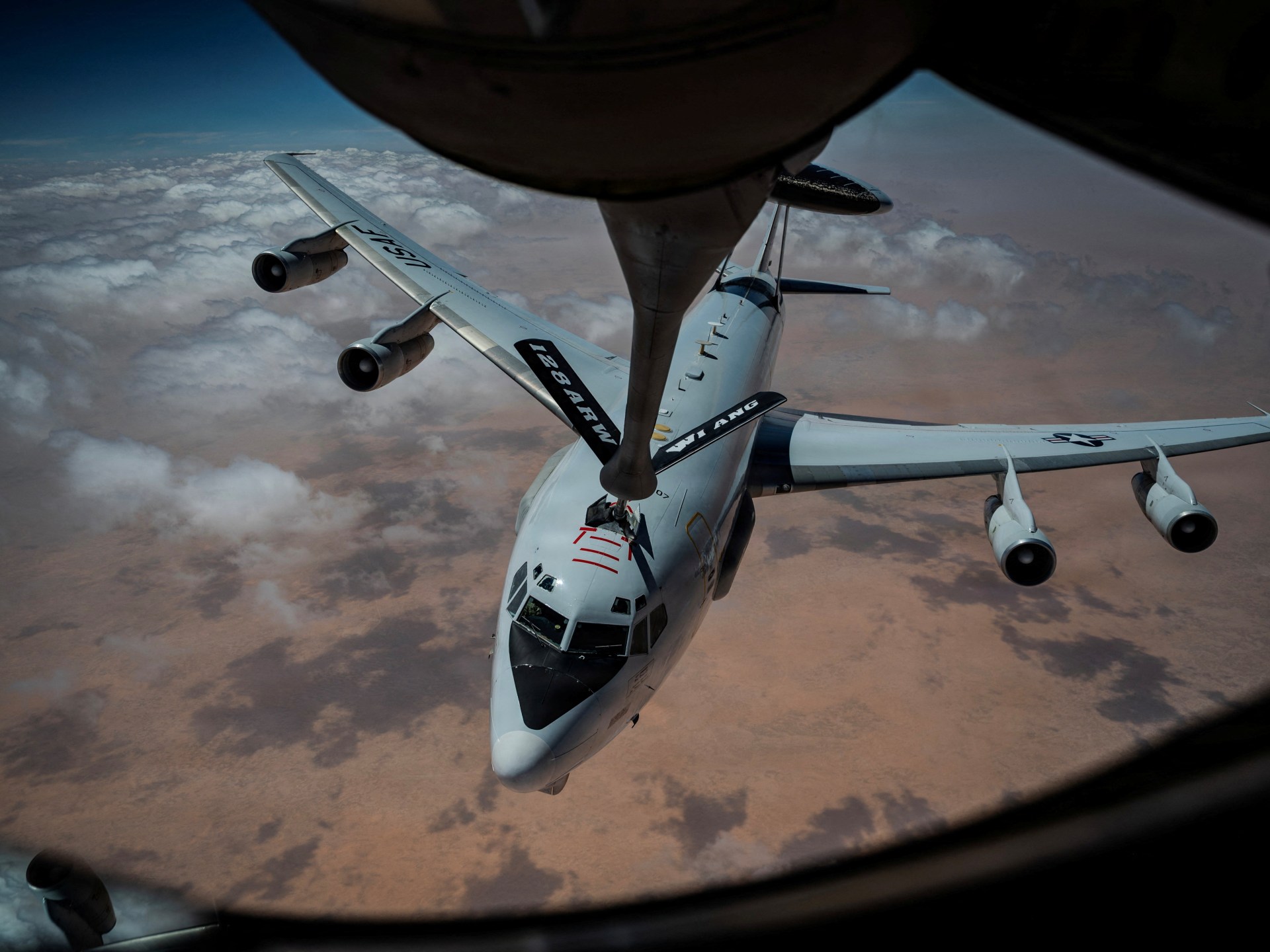
The statement said the deployment included fighter and support aircraft from the Pakistan Air Force, aimed at strengthening joint military coordination and raising operational readiness between the two countries.
In the two days that have passed since then, Pakistan’s government has made no official statement about the development. The military’s media wing, the Inter-Services Public Relations (ISPR), the Ministry of Information, and the Ministry of Foreign Affairs did not respond to requests for comment sent by Al Jazeera.
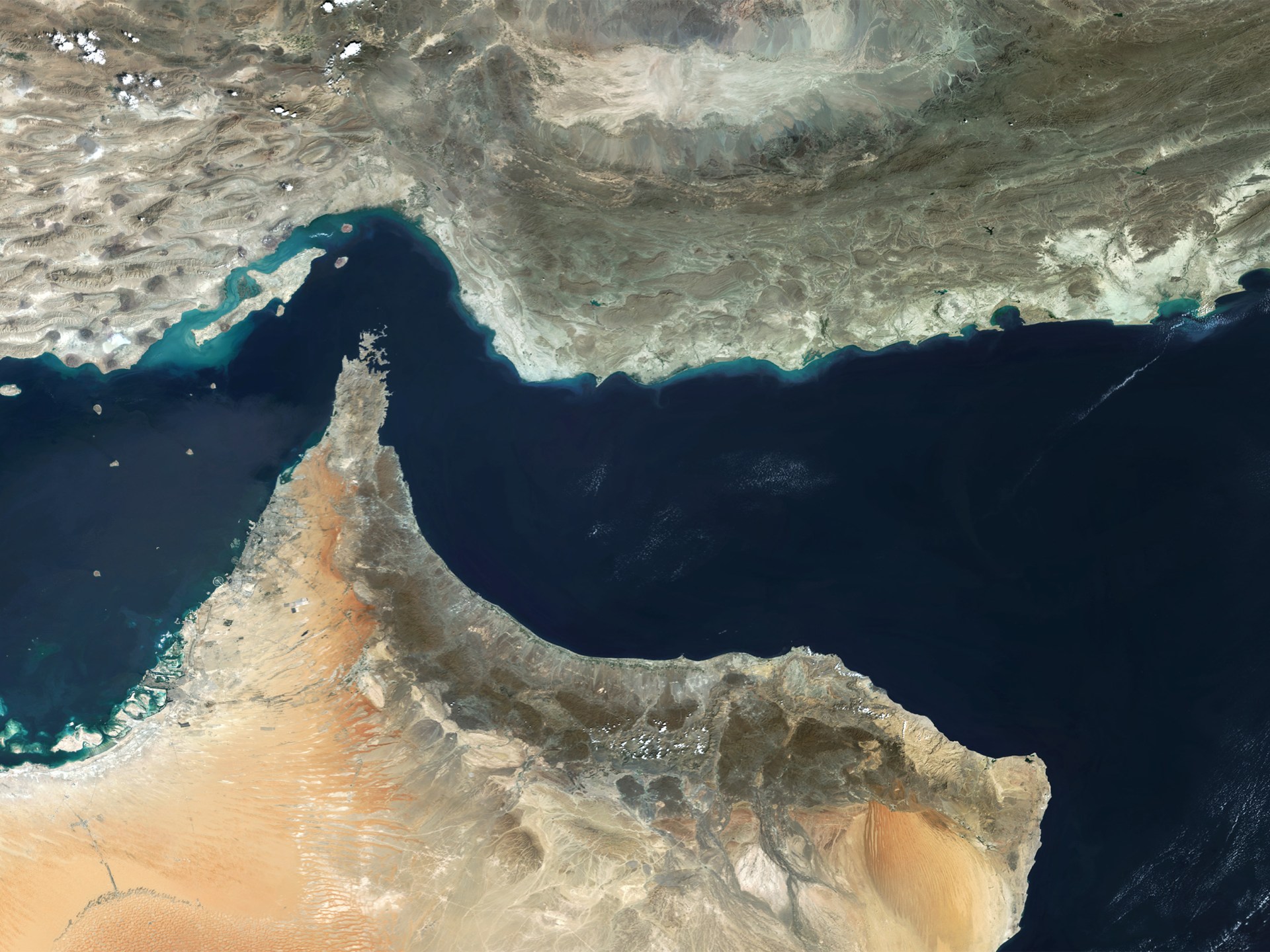
The Saudi announcement immediately underscored Pakistan’s delicate juggling act in the middle of a war that has destabilised the global economy, led to attacks and deaths in multiple countries and has now led to a high-stakes escalation between the US and Iran in the Strait of Hormuz.
On the one hand, Islamabad has been a central mediator between the US and Iran, hosting their teams last Saturday, and driving attempts to get them to continue with talks after the breakdown in their negotiations.
Advertisement
On the other hand, the SMDA represents a commitment from Pakistan to militarily assist a key ally that was repeatedly hit by Iran before the ceasefire – with Tehran offering no guarantees it will not strike Saudi Arabia or other Gulf nations again.
For now, Pakistani officials said, they can manage both roles.
A Pakistani official, speaking on condition of anonymity, said Islamabad remains committed to facilitating the process for as many rounds as required, adding that diplomatic contact between all sides continues.
Sharif is expected to travel to Saudi Arabia in the coming days, with visits to other regional countries, including Turkiye, also likely as Islamabad seeks to sustain diplomatic momentum before the ceasefire deadline.
But with a US naval blockade of Iranian ports now in effect and the ceasefire Islamabad brokered between Washington and Tehran set to expire on April 22, Pakistan’s balancing act could become more complicated.
Deepening ties with Riyadh
At the heart of this tightrope walk is the SMDA.
A day before the Islamabad talks opened, Saudi Finance Minister Mohammed bin Abdullah Al-Jadaan made a brief visit to Islamabad, calling on PM Sharif at the prime minister’s House. Deputy Prime Minister Ishaq Dar and Army Chief Field Marshal Asim Munir were also present.
According to an official statement, Sharif expressed appreciation for Riyadh’s “longstanding economic and financial support” to Pakistan, which he said had played a vital role in stabilising the country’s economy.
The visit underscored the breadth of the Pakistan-Saudi relationship, spanning defence, diplomacy and finance.
The SMDA was signed on September 17, 2025, at Al-Yamamah Palace in Riyadh by Crown Prince Mohammed bin Salman and Sharif, with Munir also in attendance. It commits both countries to treating any act of aggression against one as an act against both.

Pakistan’s position on the agreement has remained consistent.
Addressing the Senate on March 3, three days after the war began, Dar said plainly that Pakistan had a defence pact with Saudi Arabia “and the whole world knows about it”.
He added that he had personally conveyed Pakistan’s obligations under the pact to Iranian Foreign Minister Abbas Araghchi, making clear what the agreement entailed.
Sharif similarly pledged that Pakistan would stand by the kingdom and its people.
Advertisement
What remains unclear is under what specific conditions either Pakistan or Saudi Arabia are expected to come to the other’s defence. Would one of them need to declare that they are at war with another country? Would either of them need to specifically request the other to join a military intervention? Has Saudi Arabia so far refrained from formally asking Pakistan to come to its defence?
Analysts say the steps taken so far by Saudi Arabia and Pakistan to demonstrate that the SMDA is in operation are aimed at sending clear messages to other countries – even as the ambiguity over the specific contents of the deal itself serves as a deterrent. An enemy of Saudi Arabia, for instance, will not know exactly when it will also need to contend with Pakistan’s military might.
To be clear, Pakistan’s military presence in the Arab world is longstanding. Pakistani pilots flew for Arab air forces during the 1967 Six-Day War, and Pakistani forces have been deployed across the Middle East in various roles since the 1960s.
In Saudi Arabia, Pakistan has trained thousands of military personnel since 1967. A formal agreement in 1982 institutionalised the deployment of Pakistani armed forces personnel for training purposes.
During the 1970s and 1980s, Pakistani troops were stationed in significant numbers in the kingdom, including to protect oil infrastructure in the Eastern Province, the same region where the current deployment is based.
Still, the SMDA is the first pact that formally commits Saudi Arabia and Pakistan to treating an attack on one as an attack on the other.
Walking a tightrope
Azeema Cheema, founding director of Islamabad-based Verso Consulting, said the SMDA’s invocation reflects a specific calculation.
“The invocation of the SMDA is the price of the significant restraint shown by the Saudis in the progression of this conflict,” she told Al Jazeera. “This was likely pre-agreed with the Saudis in advance of the talks [between the US and Iran] when Pakistan signalled its highest level of anger to the Iranians.”
She said Saudi Arabia appears to be “taking a long-term view of the security partnership with Pakistan, against all threats to their territorial sovereignty, whether from Iran or Israel”.
At the same time, Pakistan hosts no US military bases and has no diplomatic relations with Israel, factors that Cheema said help preserve its credibility with Tehran.
“The Iranians will know that Pakistan does not wish to be in combat against Iran,” she said. “They will be wary that Pakistan is not neutral in a case where Iran and Saudi Arabia are co-belligerents, but also acknowledge that Pakistan will first seek a path through mediation.”
Umer Karim, an associate fellow at the Riyadh-based King Faisal Center for Islamic Research and Studies, said Pakistan’s approach carries both logic and risk.
“Pakistan is walking a tightrope with regards to both the mediation responsibilities it has taken upon itself and the commitments towards Saudi Arabia’s defence,” he told Al Jazeera.
Advertisement
Karim said Islamabad appears to have calculated that it can sustain both roles, using its commitments under the SMDA to create leverage over Iran and deter further strikes on Saudi installations.
“This ploy may work till US-Iran talks or engagement continue,” he said, “but in case hostilities restart, this strategy may collapse and Pakistan may have to get fully involved in the conflict.”
That’s one of the reasons why, the Middle East expert added, Pakistani officials are likely to prioritise keeping the current arrangement intact for as long as possible.
“The continuation of US-Iran talks is most important for Pakistan,” Karim said.
Sina Azodi, an assistant professor of Middle East politics at George Washington University, offered a more optimistic view.
“I don’t believe that Pakistan will jeopardise its relationship with Iran, given both religious ties and ethnic and linguistic affinity,” he told Al Jazeera.
Azodi also suggested the deployment may be aimed elsewhere.
“I think the Saudi move to partner with Pakistan was more geared toward Israel than Iran,” he said.

Limits of balancing roles
A former three-star Pakistani general, however, cautioned that Pakistan’s window for playing the role of both mediator and Saudi military ally was narrow.
“Pakistan can hold both roles only if [any military] deployment remains strictly defensive, time-bound, and transparently limited. The moment the theatre shifts to offensive operations, or the perception of offensive coordination emerges, the dual role collapses,” he said, speaking on condition of anonymity.
He pointed to the long history of Pakistani deployments in Saudi Arabia as a factor that could shape Iran’s response.
“Iran’s perception, not Pakistan’s intent, will determine whether trust survives,” he said. “But Pakistan’s intent, in this case, has precedent behind it.”
In Riyadh, the deployment has been framed as a deterrent.
Faisal Alhamad, a retired Saudi brigadier general and military analyst, told Independent Arabia that the move was “a deterrence step more than preparation for an attack on any party”.
Stationing aircraft in the Eastern Province, he said, sends a signal that Saudi Arabia’s most exposed areas are being reinforced. The province, home to most of Saudi Arabia’s oil infrastructure, has been the biggest target of Iran’s attacks on the kingdom during the war.
The Royal Saudi Air Force remains one of the region’s strongest aerial forces, operating more than 200 F-15 variants, the second largest fleet in the world after the United States, alongside 72 Eurofighter Typhoons.
Some analysts suggested the Pakistani deployment includes pilots, airmen and ground technicians, though this could not be officially confirmed.
It is also unclear whether Pakistani forces are operating under their own command structure or if they have been integrated into Saudi operational command.
Fragile diplomacy
Since the American and Iranian delegations left Islamabad on April 12 without a deal, the situation has grown more precarious.
A US naval blockade of Iranian ports and coastal areas came into effect on April 14. Iran’s armed forces called it “piracy”, declaring that the country’s ports are “either for everyone or for no one”.
Despite the breakdown, Pakistani officials say Washington and Tehran remain in contact. Islamabad, officials say, has again offered to host another round of talks, with the ceasefire in place until April 22.
Advertisement
Diplomatic channels between Riyadh and Tehran also remain open.
On April 9, Saudi Foreign Minister Prince Faisal bin Farhan held the first publicly announced call with his Iranian counterpart Araghchi since Iran began strikes against Gulf neighbours, discussing ways to reduce tensions and restore stability.
A second call followed on April 13, focusing on regional developments and the outcome of the Islamabad talks.
Analysts say the continued contact suggests both sides have an interest in keeping communication lines open, regardless of military positioning.
“Iranian scepticism of Pakistan, if any, can at least be offset by the certainty that Pakistan will prioritise the stability of the region over other interests,” Cheema said.