

After slowing Russia’s rate of advance over the past several months, Ukraine may have tipped the scales in April and recaptured more of its land than it lost, according to an analysis of battlefield positions.
The Institute for the Study of War, a Washington-based think tank, said it had observed evidence that Russian forces suffered a net loss of 116 square kilometres (45 square miles) during the month.
- list 1 of 4Russia kills 27 in ‘senseless’ strikes on Ukraine days before ceasefire
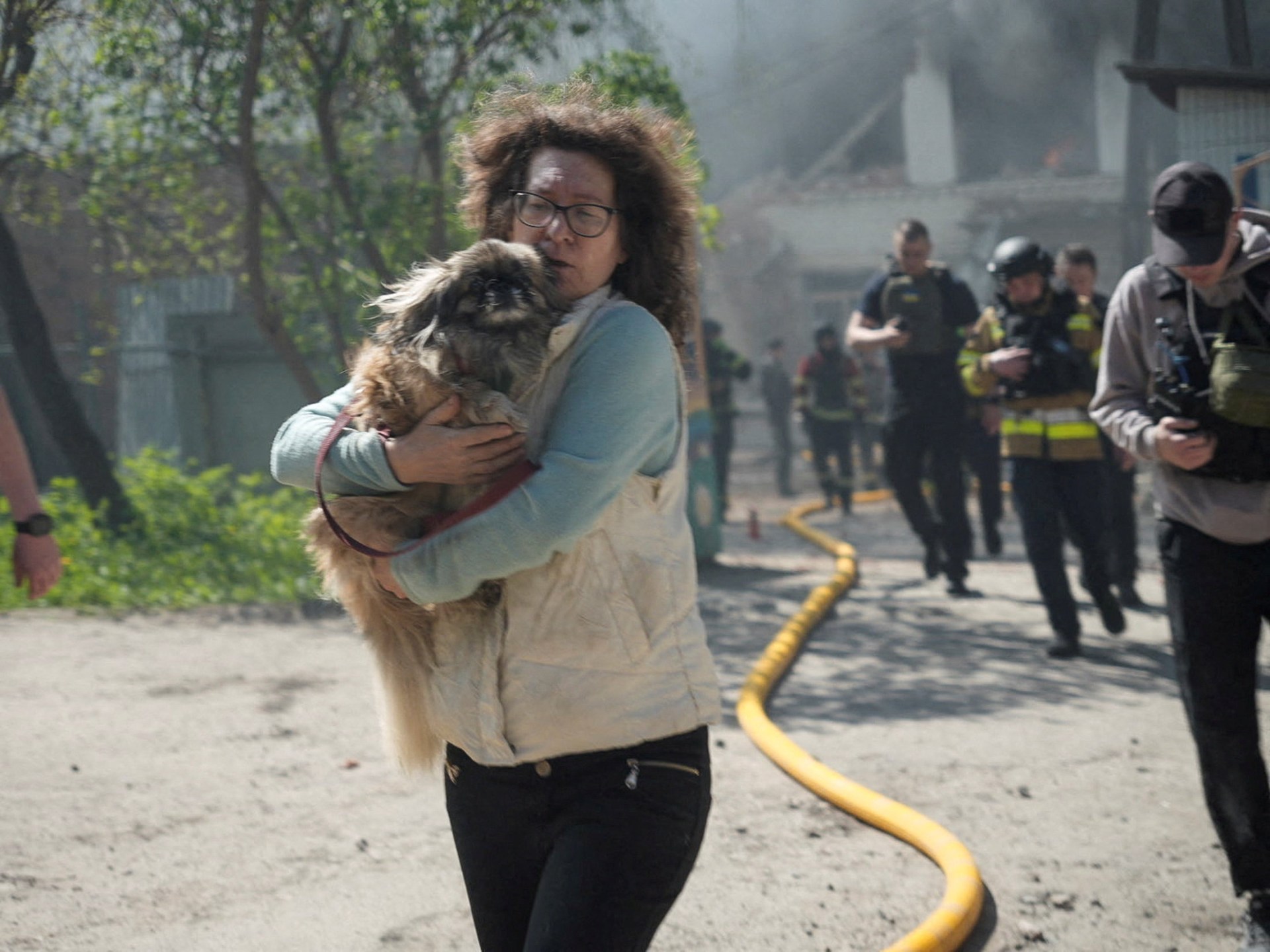
- list 2 of 4Russian drone hits kindergarten in Ukraine
- list 3 of 4Russia tells diplomats to leave Kyiv in case Moscow launches mass strikes
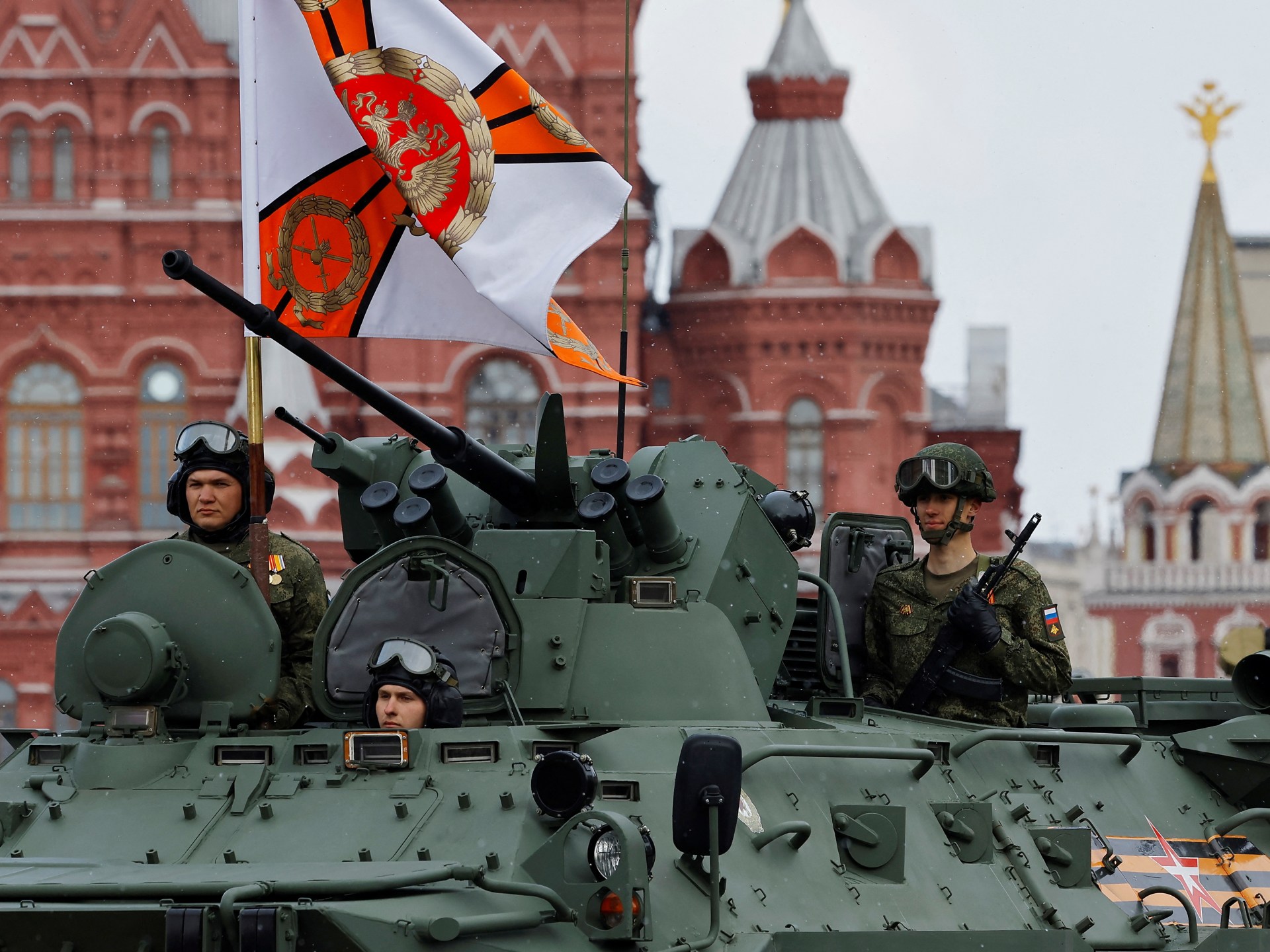
- list 4 of 4Amid Ukraine’s daring assaults, Russia scales back Victory Day celebrations
end of list
That figure counted only territory firmly held by each side, not what it called “grey zones”, where both Russian and Ukrainian soldiers held positions.
“Russian forces have been using infiltration tactics in part to create the perception of continuous Russian advances across the front and to support Kremlin cognitive warfare efforts to exaggerate Russian successes,” the ISW said. “Russian forces, however, do not control these infiltration areas.”
The ISW has observed a progressive slowing of the Russian rate of advance by at least two-thirds over the past 18 months.
It found that Russian forces seized an average of 2.9sq km (1.1sq miles) a day in the first third of 2026, compared with an average of 9.76sq km (3.77sq miles) in the same period in 2025.

Russian President Vladimir Putin has prioritised capturing the remainder of Donetsk, in eastern Ukraine, which contains a “fortress belt” of heavily fortified cities, Sloviansk, Kramatorsk, Konstiantynivka and Druzhkivka.
Russian assaults here “noticeably increased” in April, said Ukrainian commander-in-chief Oleksandr Syrskii.
Advertisement
Moscow has claimed to be gradually overrunning Konstiantynivka, but the ISW observed that it had “infiltrated in 10.14 percent of Kostiantynivka and advanced in only 0.7 percent of its eastern outskirts”.
Ukraine also said Russia suffered higher casualties than its rate of recruitment could replenish for the fifth month running.
“In April, 35,203 Russian soldiers were eliminated or seriously wounded,” said Defence Minister Mykhailo Fedorov, adding that Russia was “gradually drowning in losses”.
In March, Ukrainian President Volodymyr Zelenskyy said Ukrainian intelligence had obtained Russian documents reporting that 62 percent of casualties were deaths – a higher rate than Ukraine or anyone else had previously assumed.

It is not clear when Ukrainian forces reached that level of lethality, but it seems to be a recent development.
Fedorov said on May 6 that last year “Russia was losing about 14,000 soldiers per month,” meaning deaths, since total casualties averaged 34,833. That would suggest recent advances in Ukrainian tactics.
Zelenskyy recently said Ukraine aimed to double down on mid-range attacks in the Russian rear, striking supplies before they can be brought to bear on the battlefield.
“In April, the number of strikes over 20km (12 miles) was twice as high as in March, and four times as high as in February,” said Fedorov.
The revenue war
Ukraine struck several refineries and oil facilities during the past week as part of a strategy of depriving Russia of export revenue.
It struck the Tuapse refinery on the Black Sea for the fourth time in two weeks on May 1, and the Perm refinery 1,000km (620 miles) inside Russia on the same night.
On May 2, Ukraine used surface drones to raid two Russian oil tankers outside the offloading port of Novorossiysk on the Black Sea. On the same night, Zelenskyy said the Ukraine Security Service (SBU) struck a missile carrier, a patrol boat and a tanker in the port of Primorsk in the Baltic Sea, also damaging the oil terminal.
On May 5, Ukraine struck the Kirishinefteorgsintez in the Leningrad region. The Reuters news agency reported that the refinery stopped operations after three of its four distillation towers were damaged.

Ukraine has also targeted military equipment.
Zelenskyy said Flamingo drones had covered a distance of 1,500km (930 miles) to strike a manufacturer of navigation modules for the Russian navy, air force and rocket forces in Cheboksary on May 5.
Ukraine also recently struck several Su-57 fighter jets and Su-34 bombers at the Shagol Airfield in Chelyabinsk, more than 1,600km (994 miles) inside Russia.
Advertisement
Russia and Ukraine have given conflicting reports on the damage to Russian oil revenues.
“By the most conservative estimates, the aggressor state has lost at least $7 bn since the beginning of the year solely from our effective sanctions against the Russian oil industry and refining: From hits, downtime, and delays in shipments,” Zelenskyy said on May 1.
Bloomberg reported on April 30 that average output per refinery had dropped to 4.69 million barrels a day, the lowest since 2009.
But Russia had a different assessment, wrote the independent Russian outlet Meduza. The Ministry of Finance on May 6 said mineral extraction revenues doubled to $12bn in April relative to March. Of this, $10bn was from oil, whose price has soared during the US-Israel war on Iran.

Russian Finance Minister Anton Siluanov recently told a Kremlin reporter he expected May oil revenues to be $2.7bn higher.
Fedorov also raised the alarm, saying Russia’s windfall from high oil prices was estimated at $150m a day, and could amount to $40bn in 2026.
It was unclear whether Zelenskyy’s $7bn figure was an estimate of revenue deprivations over and above that windfall.
Meduza wrote that Moscow would spend half of April’s oil revenue subsidising oil companies “to keep gasoline prices low and to modernise and repair oil refineries”, suggesting Ukraine was still taking a toll.
Diplomacy triumphs
Ukraine has faced opposition to its European Union funding and membership bid from EU members Hungary and Slovakia, but in the past week, its relationship with both countries improved.
Zelenskyy said on May 2 he had invited Slovakia’s Prime Minister Robert Fico to visit Kyiv and had received an invitation to Bratislava.
Fico had vetoed Ukrainian talks to join the EU in June 2025, but relented in September for reasons he never explained.
Hungary’s former Prime Minister Viktor Orban had also vetoed those talks, and his successor, Peter Magyar, has not yet lifted that veto, saying he will hold a referendum on the matter.
In the meantime, Magyar returned to Ukraine’s Oschadbank $82m in cash and valuables Orban had seized in March on suspicion that the seven Ukrainians carrying it were money-laundering. Zelenskyy hailed it as a “constructive and civilised step”.
But unblocking Ukraine’s accession may be easier said than done. A poll by the European Council on Foreign Relations (ECFR) found that 54 percent of Hungarians still oppose the move. Majorities also continue to oppose Hungary’s participation in EU financial aid to Kyiv, as they continue to oppose the shipment of weapons to Ukraine via Hungary.
Hungarian voters “might be underestimating how important opening Ukraine’s accession negotiations are for Hungary’s European partners”, the ECFR said, “or they are simply not linking it to Hungary normalising its relations with Brussels.”
Advertisement
Related News

Iran war: What’s happening on day 63 as Trump signals possible attacks

Suspect arrested after two Jewish people stabbed in London

Iran’s judiciary vows action against ‘enemy’s mercenaries’ amid executions