Analysis: Hezbollah backs Iran ambassador as conflict deepens Lebanon rifts
 31 March 2026

Beirut, Lebanon – On March 24, Lebanon’s Foreign Minister Youssef Raggi declared Iran’s ambassador to Beirut persona non grata and gave him until March 29 to leave the country.
But two days after the deadline, Ambassador Mohammad Reza Sheibani is still in Lebanon.
- list 1 of 3One month of war on Iran cost Arab countries up to $194bn: UNDP
- list 2 of 3UN aid chief warns of new Israeli occupation in southern Lebanon
- list 3 of 3Iran war: What is happening on day 32 of US-Israel attacks?
end of list
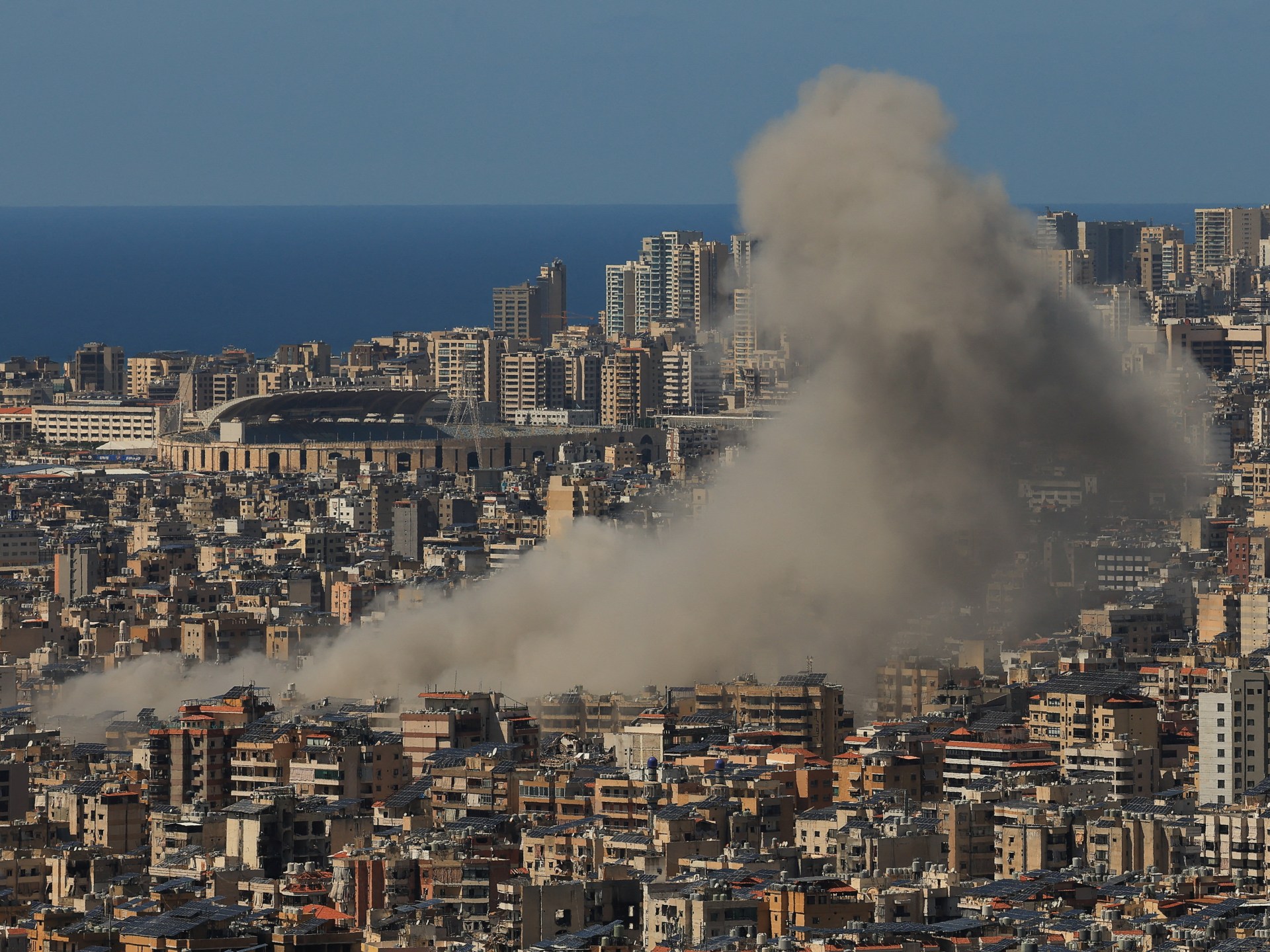
The incident comes amid another Israeli war and invasion of Lebanon, which has so far killed more than one thousand people and displaced more than 1.2 million others in just one month.
It has also highlighted a deep political divide in the country – between supporters and opponents of the pro-Iranian Lebanese Shia group Hezbollah. The debate over Hezbollah’s weapons and Iran’s role in Lebanon has taken on a new dimension with the US-Israeli war on Iran and with Hezbollah’s re-entry into war with Israel, reportedly under the command of Iran’s Islamic Revolutionary Guard Corps (IRGC).
“The ambassador’s refusal to leave reflects a deeper political contest over legitimacy and authority,” Imad Salamey, a political scientist at the Lebanese American University, told Al Jazeera.
IRGC calling the shots
Iran’s influence on Lebanon started to take shape in 1982, when the IRGC helped fellow Shia Muslims form Hezbollah as a response to Israeli invasion and occupation. Over the years, Hezbollah became the most powerful actor in Lebanon, both politically and militarily, in large part due to billions of dollars in Iranian funding.
Hezbollah peaked in popularity in 2000, when the group drove the Israeli military out of south Lebanon, ending an 18-year occupation. But subsequent events, which include engaging in the 2006 war with Israel, deploying fighters to the streets of Beirut in 2008, joining the Syrian civil war in support of Bashar al-Assad’s regime in 2011, and sending partisans to attack protesters during a 2019 uprising, eroded much of the group’s support outside of its core constituency.
Advertisement
When Hezbollah entered war with Israel on October 8, 2023, the group had few supporters outside the Shia Muslim community. By the time a ceasefire was agreed with Israel in November 2024, the group was also at its lowest politically and militarily. Israel had killed more than 4,000 people in Lebanon, mostly Shia, including Hezbollah’s longtime leader Hassan Nasrallah and much of its military leadership.
With Hezbollah weakened, many in the international community began demanding the disarmament of Hezbollah, and the Lebanese government led by Prime Minister Nawaf Salam and President Joseph Aoun made it a priority.
But the IRGC reportedly used the calm brought on by the ceasefire to send officials to Lebanon to help Hezbollah restructure. And some analysts believe it was Tehran that made the call for Hezbollah to re-enter the war with Israel on March 2, just a couple of days after Iran’s Supreme Leader Ali Khamenei was assassinated in Tehran.
Lebanon’s Prime Minister Salam recently made a similar claim, saying that the IRGC is “managing the military operation in Lebanon”. He also accused the Iranian group of firing an attack at Lebanon’s island neighbour to the west, Cyprus.
Ambassador won’t leave
In light of the IRGC’s perceived role in Lebanon, Raggi declared Sheibani persona non grata, effectively removing his diplomatic immunity and asking him to leave the country.
“The Lebanese government’s decision to order the ambassador of Iran out of the country represents a landmark decision in Lebanese politics, given Iran’s profound role in Lebanese politics and its backing for Hezbollah’s militia,” Dania Arayssi, a senior analyst at New Lines Institute for Strategy and Policy, told Al Jazeera.
But Iran’s Foreign Ministry has said Sheibani won’t leave.
Sheibani’s stay in Lebanon is being backed by Hezbollah, whose officials have made stark statements in local media in recent weeks indicating that the government will have to rescind its decisions on Hezbollah’s disarmament.
“The cabinet decision to disarm Hezbollah triggered the group to make explicit threats to ‘punish’ those involved,” Arayssi said.
Also in Sheibani’s corner is Parliament Speaker Nabih Berri. Though Berri is a longtime Hezbollah ally, following Hezbollah’s reentry into the war in March, he initially supported the government’s decision to ban Hezbollah’s military activity.
The war on Iran and Hezbollah’s reenergised war campaign, in which it is still firing dozens of attacks and militarily engaging with Israeli troops on the ground in Lebanon, is shifting political fortunes, making it more difficult for the government to remove Hezbollah’s military power.
Advertisement
The group, considered badly weakened before its re-entry into the war, is now exerting more confidence militarily and politically in Lebanon.
That is likely connected to Iran’s fortunes, as the government there appears to be holding on to power despite a month of attacks and assassinations.
For his part, Sheibani cannot be stopped or arrested as long as he stays inside the Iranian compound.
Hezbollah’s critics say that the Iranian government’s refusal to abide by the government decision undermines the state’s authority, which has been faltering since the war began. Many of Hezbollah’s most fervent opponents have continued calling for their disarmament, but analysts say that is increasingly difficult while the group is actively fighting Israel, particularly on Lebanese territory.
“The state is asserting its authority on paper,” Salamey said. “But it is constrained in practice by internal divisions and competing claims of legitimacy, with each step testing the boundaries of Lebanon’s power-sharing system.”
Related News
Will China join Pakistan-led efforts to mediate US-Iran peace?
Schools, water, industry: What civilian targets have US, Israel, Iran hit?
What did Arab and Muslim ministers discuss in Riyadh meeting on Iran?