How many Syrians have returned home one year since the fall of al-Assad?
 08 December 2025
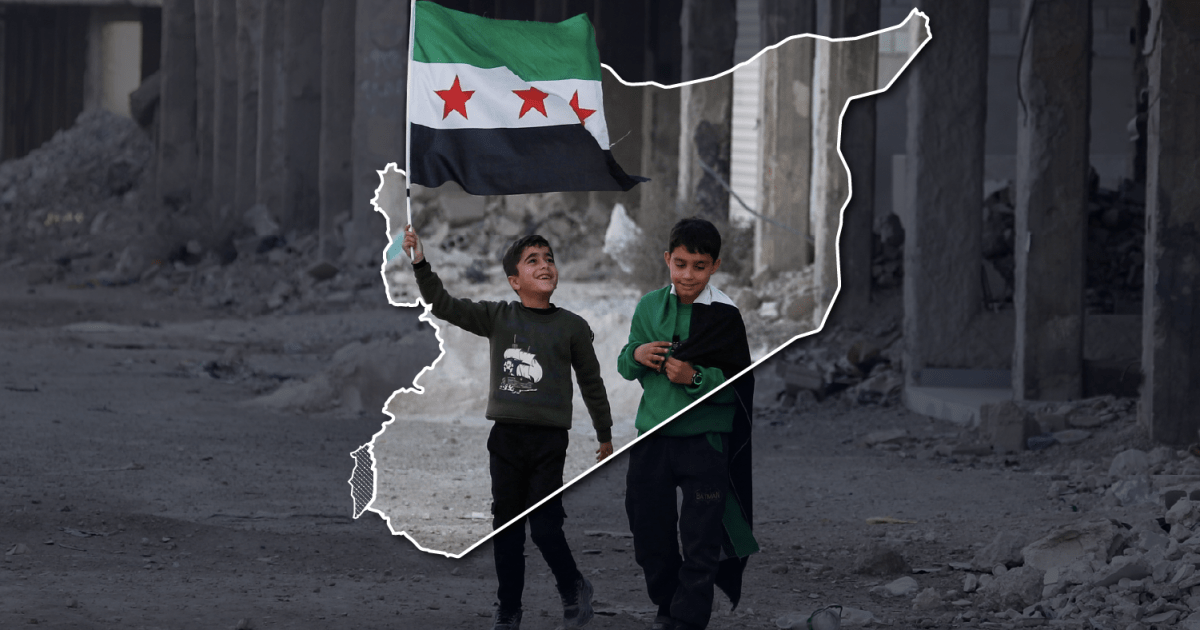

December 8 marks one year since the al-Assad dynasty, which lasted 54 years, was removed from power by a rebel offensive.
The 14-year-long war led to one of the world’s largest migration crises, with some 6.8 million Syrians, about a third of the population, fleeing the country at the war’s peak in 2021, seeking refuge wherever they could find it.
More than half of these refugees, about 3.74 million, settled in neighbouring Turkiye, while 840,000 found refuge in Lebanon and 672,000 in Jordan.
The animation below shows the number of Syrian refugees who fled from 2011 to 2025, highlighting the top 10 countries that hosted them.
Now, as Syria is entering a new chapter, millions of refugees and members of the diaspora are weighing the decision to return home and rebuild their lives.
‘The feeling of belonging’
Khalid al-Shatta, a 41-year-old management administration professional from Damascus, decided to return to Syria after fleeing the country in September 2012.
Al-Shatta, along with his wife and one-year-old son, first fled to Jordan by car before flying to Turkiye, which became their temporary home.
Al-Shatta recalls the anticipation surrounding al-Assad’s fall. On the night it happened, he said, everyone stayed up to watch the news.
“The moment Syria was liberated, we made our decision,” he told Al Jazeera. “My family and I came to the conclusion that we have to return to Syria, and be part of its future,” he explained.
Al-Shatta describes returning to Syria for the first time in 13 years and feeling “like I have never left Syria before, with one difference, the feeling of belonging to this country, to this nation, this land”.

How many Syrians have returned from abroad?
Al-Shatta and his family are among the more than 782,000 Syrians documented by the International Organization for Migration (IOM) who have returned to Syria from other countries over the past year.
Advertisement
Of those who have arrived from abroad, 170,000 have returned to Aleppo, 134,000 to Homs and 124,000 to rural Damascus.

Since returning to Damascus, al-Shatta has opened his own business, focused on power solutions. However, he says many returnees are struggling to find work with suitable salaries.
“Syria is not cheap [to live] compared with the average salaries; there are job opportunities, yet the salaries are challenging,” he says.
He explains how the quality of life varies greatly for Syria’s population, which now stands at 26.9 million. “Some families are living on $150 to $200 per month, while others live on $1,500 to $2,000, and some earn even more,” he explains.
Despite the rise in returns, limited job opportunities and high living costs continue to undermine long-term resettling. Housing remains unaffordable for many, leaving returnees in damaged homes or expensive rental units.
According to the IOM, while 69 percent of Syrians still own their property, 19 percent are renting, 11 percent are being hosted for free, and 1 percent are squatting.

New EU asylum guidelines
In the days following the fall of al-Assad, several European countries – including Austria, Belgium, Denmark, Germany, Greece, Italy, Sweden, and the United Kingdom – announced plans to pause asylum applications from Syrians.
The freeze applied to both new applications and those already in process, leaving many Syrians in limbo about whether they would be accepted, rejected or deported.
As of mid-2025, total asylum applications across the EU+ – European Union countries plus Norway and Switzerland – fell by 23 percent compared with the first half of 2024.
The decline was driven mainly by a steep drop in Syrian applications. Syrians lodged about 25,000 applications in the first half of 2025, a two-thirds decrease from a year earlier.
For the first time in more than a decade, Syrians are no longer the largest nationality group seeking asylum in Europe.
On December 3, the EU issued updated guidance for Syrian asylum applicants, saying opponents of al-Assad and military service evaders “are no longer at risk of persecution”.
Between 2012 and June 2025, EU+ states granted refugee status to approximately 705,000 Syrian applicants, according to the European asylum agency.

Returning to ‘destroyed and demolished’ homes
In addition to the 782,000 Syrians returning from abroad, the IOM has documented nearly 1.8 million internally displaced Syrians returning to their towns over the past year.
Advertisement
This brings the total number of Syrian refugees and IDPs who have returned home over the past year to 2.6 million. Of those internally displaced, 471,000 have returned to Aleppo, nearly 460,000 to Idlib, and 314,000 to Hama.

Talal Nader al-Abdo, 42, from Maaret al-Numan in southern Idlib, was one of the internally displaced Syrians who returned home from a tent where he and his family had been living.
“I was one of the victims of [Bashar al-Assad’s] brutality,” al-Abdo told Al Jazeera.
His family had been internally displaced multiple times, first from Maaret al-Numan, then to Ariha, then to Idlib, and finally to the border camps Kafr Jalis and Harbanoush of northern Syria, where al-Abdo recalls the harsh days they spent in the extreme cold and intense heat.
“When the regime fell, I knew that relief had come, the bombing had ended, and the time was near for us to return to our homes, even though they were destroyed and demolished. We would return and rebuild them,” al-Abdo added.
Throughout the war, al-Abdo, together with his wife, three sons, daughter, and elderly mother, stayed in northwestern Syria “because we had great faith that one day God would grant us relief and we would return home”.
![Bullet holes deface a mural depicting the toppled Syrian president Bashar al-Assad in Adra town on the northeastern outskirts of Damascus on December 25, 2024. [Sameer Al-Doumy / AFP]](https://www.aljazeera.com/wp-content/uploads/2025/12/AFP__20241225__36RF84L__v2__HighRes__SyriaConflict-1765092018.jpg?quality=80)
Despite many returning home, there are still more than six million Syrians who remain internally displaced, according to the IOM.
The largest share of those are living in rural Damascus (1.99 million), followed by Aleppo (1.33 million) and Idlib (993,000).

Related News
Putin says US-backed peace plan as framework is OK ‘in general’

Polls open in Honduras presidential election marked by fraud accusations
Australia sanctions Afghan Taliban officials over women’s rights abuses