India deploys police and restricts transport ahead of mass protest in Delhi
 10 October 2026
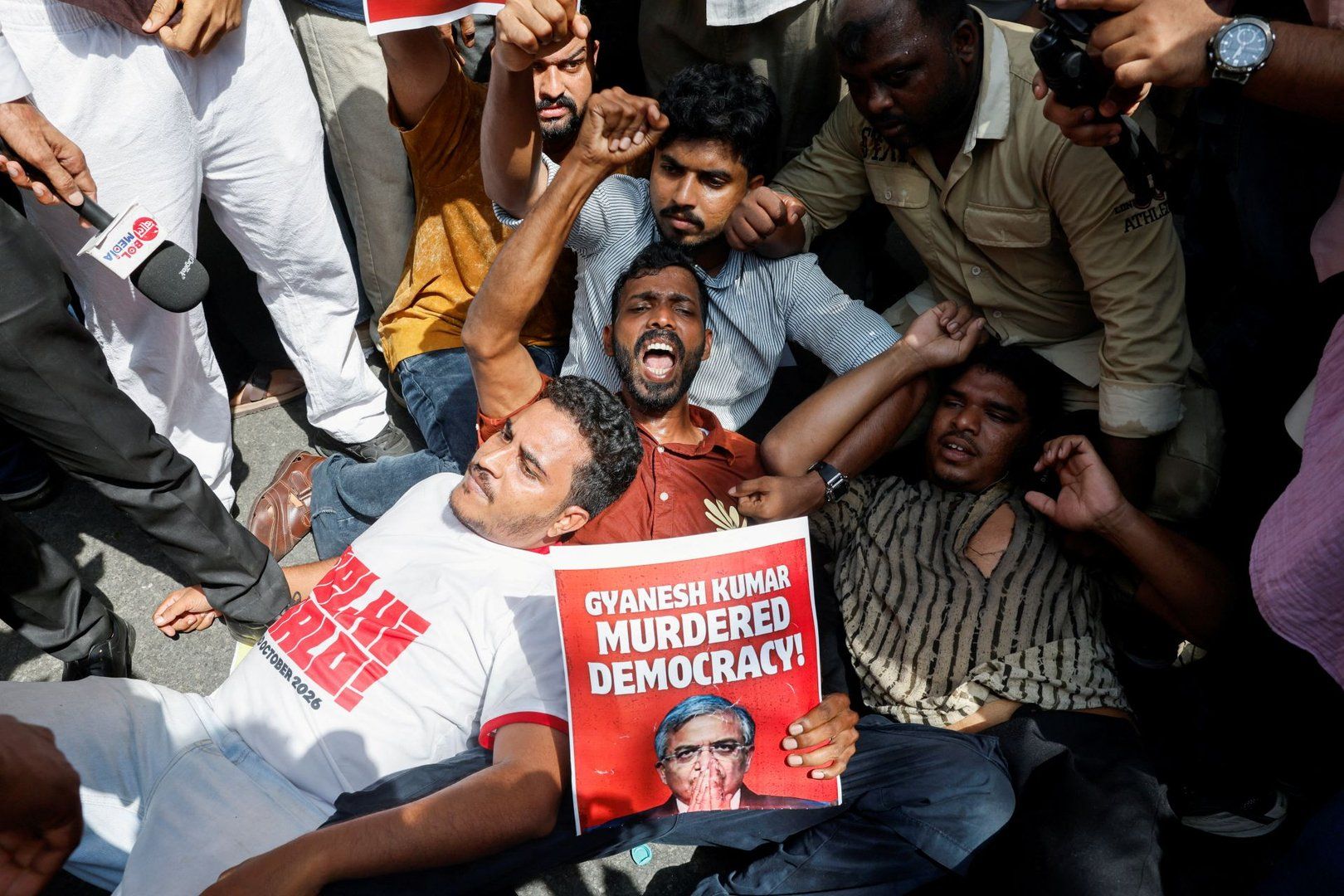

India has deployed thousands of police and paramilitary personnel in central Delhi and restricted transport in and around the capital ahead of a youth-led protest demanding the resignation of Gyanesh Kumar, the country’s chief election commissioner.
Saturday’s rally, called by the Cockroach Janta Party (CJP), a youth-based political movement, is expected to be the biggest yet in a wave of near-daily protests over a revision of voter lists that critics say favours Prime Minister Narendra Modi’s ruling Bharatiya Janata Party (BJP).
- list 1 of 3Is the CJP changing India’s political landscape?
- list 2 of 3Mass protests demanding poll chief resignation shake India for third day
- list 3 of 3India’s ‘million mutinies’ are puncturing Modi’s aura of invincibility
end of list
Organisers have billed it as a protest to “Save Democracy”.
Shutdown of central Delhi
Police have not authorised a rally at Jantar Mantar in central Delhi, which authorities usually designate for protests, because they said the request was not made on time and that the CJP had violated undertakings given during earlier protests.
Police have also warned that protesters will face a forceful law enforcement response if they violate the ban.
Roads to the site are blocked with multiple layers of metal barricades, as authorities shut 57 metro stations from Friday night, cancelled several long-distance trains and suspended mobile internet within 4km (2.5 miles) of the protest area until Saturday night, the Indian news agency ANI reported.
India’s Supreme Court said on Friday that some trains must still run and that blanket closure of metro stations is unlikely.
“The dictator would rather shut down the entire national capital and inconvenience millions of citizens than allow a peaceful protest at a designated protest site,” CJP chief Abhijeet Dipke said on X.
Advertisement
The CJP says at least 10,000 people, including protesters travelling to Delhi by train, have been detained across the country.
“You can detain the people, you cannot detain the movement,” said Neha Bora, national president of the All India Students’ Association, who has emerged as a leading face of the protests.
What kicked off the protests
Protesters want Chief Election Commissioner Gyanesh Kumar to quit over a voter list revision that has removed more than 130 million names.
The Election Commission says the exercise removes duplicate and ineligible voters and aims to prevent “foreign illegal immigrants” from voting.
Critics say it has disproportionately affected marginalised and minority communities.
The protests escalated after the Indian Express reported that Kumar’s two deputies had formally raised concerns at least 14 times in the past 10 months over the revisions.
The Election Commission and the BJP have denied the allegations. The BJP says the opposition is misleading the country because it cannot win elections.
The CJP began online as political satire in May after Chief Justice Surya Kant called unemployed youth “cockroaches”, sparking nationwide outrage. Since then, the CJP has garnered a large following among India’s youth.
The July protests led Modi’s education minister to resign over exam paper leaks. The latest demonstrations come months before a series of state elections in early 2027, including in Uttar Pradesh, India’s most populous state, which the BJP governs.