

Tehran, Iran – Commanders, politicians and religious authorities in Iran are rallying around the flag and hinting at a prolonged war after Mojtaba Khamenei was selected as supreme leader as the country is under fire from the United States and Israel.
The 88-member Assembly of Experts, made up of religious leaders, approved the second son of Ayatollah Ali Khamenei as his successor after he was killed on February 28, the first day of the war. The younger Khamenei was tasked with steering the “holy establishment of the Islamic Republic”, state television said overnight into Monday.
- list 1 of 3‘Reprehensible’: New wave of Iranian missiles, drones target Gulf nations
- list 2 of 3Europe becoming arms powerhouse despite increased imports, says SIPRI
- list 3 of 3US-Israel war on Iran: A brief history of mission creep and false promises
end of list
The 56-year-old Mojtaba Khamenei has hardly made any public appearances or remarks but is believed to have acted as a powerbroker with deep connections to the Islamic Revolutionary Guard Corps (IRGC). His ascension signals continuity for the theocratic establishment that came to power after the 1979 Islamic revolution.
The IRGC, which was originally created to operate in parallel to the country’s regular army to safeguard the establishment but has since turned into a major military and economic force, was among the first to pledge allegiance to the new leader.
It said its forces are prepared to “fully obey and sacrifice for the divine commands” of Khamenei to “maintain the values of the Islamic revolution and safeguard the legacies” of the first two supreme leaders, Ali Khamenei and Ruhollah Khomeini.
The aerospace, ground, naval and other major forces of the IRGC issued separate statements of support.
The Iranian army, the high command of police and the Defence Council also said they were prepared to take orders from Mojtaba Khamenei, and Intelligence Minister Esmaeil Khatib said his selection shows that “Islamic Iran knows no dead ends and always has a bright outlook of victory.”
Advertisement
The powerful 12-member constitutional watchdog known as the Guardian Council called the selection of Mojtaba Khamenei a “balm for the pain” of losing his father while influential seminaries across the country and the heads of government, the judiciary and parliament issued similar statements.
Ali Larijani, the secretary of the Supreme National Security Council, appeared relatively less enthusiastic but emphasised that the process was done legally so he backs it.
“During the recent period, many negative narratives and campaigns were carried out, but the transparent and lawful process undertaken by the Assembly of Experts provided a clear response to those narratives,” he told state media in an apparent reference to media reports that he and some others were opposed to the choice.
Larijani stressed that the office of the supreme leader must be assisted by all as a “symbol of national unity” and expressed hope that during Mojtaba Khamenei’s time, “Iran is aligned with the path of development, economic conditions are improved, and more calm and welfare is provided for the people”.
All who praised the new leader referred to him as “ayatollah”, indicating that his religious standing has been upgraded from the lower rank of hojatoleslam as part of his ascension to the highest political and religious office in the country.
Hardline state-affiliated media and supporters went as far as calling him “imam”, a title used to describe significant religious figures and regularly used by state media to describe his father and Khomeini, the first supreme leader.
State television broadcast images of the news of Khamenei’s selection being announced at important mosques in Tehran, Mashhad, Isfahan and other cities across the country.
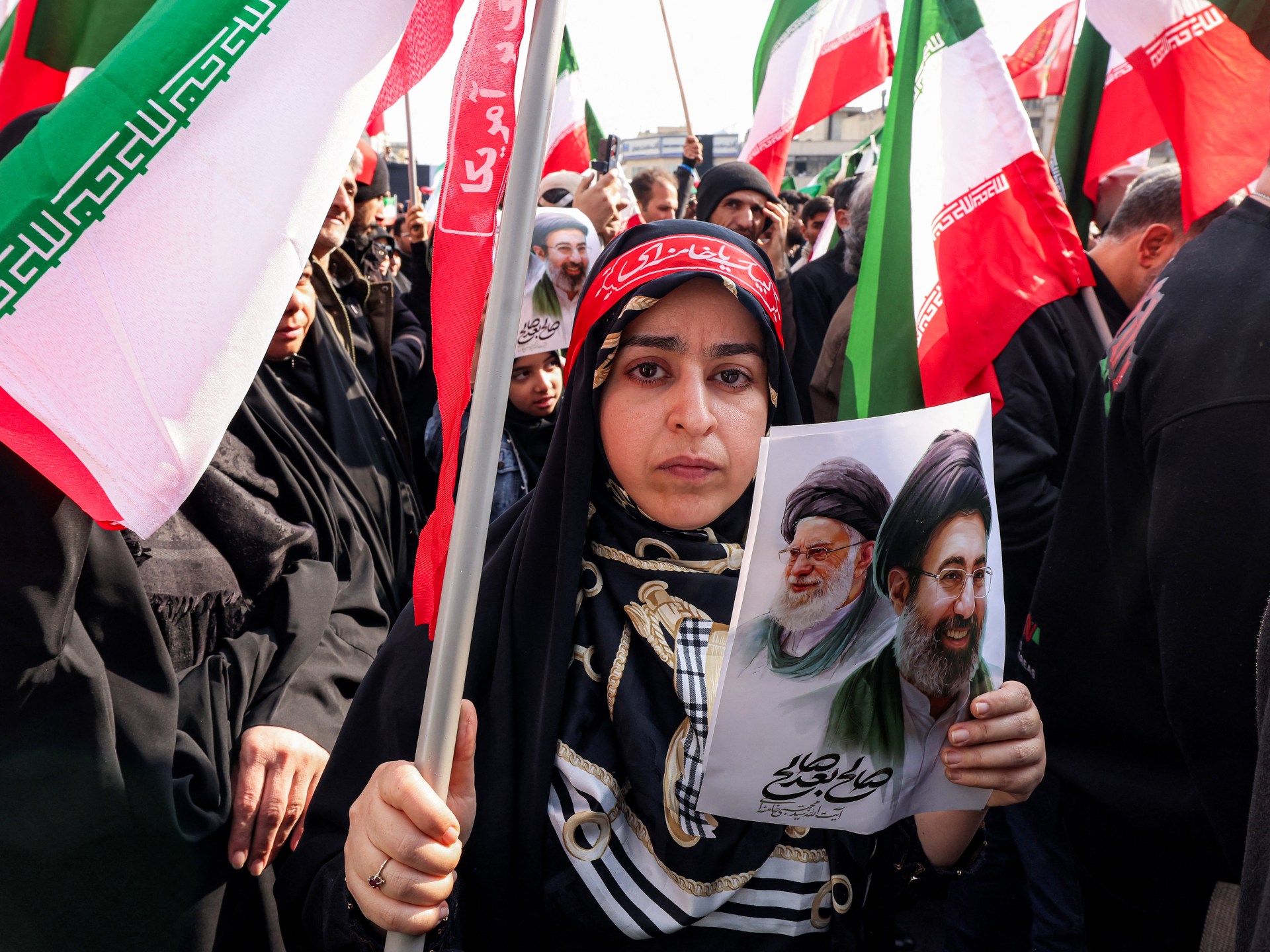
Mass text messages sent by the state to Iranians invited people to gather at Enghelab (Revolution) Square in downtown Tehran and spots in other cities on Monday afternoon to “renew the covenant with the martyred imam of the Muslim nation and pledge allegiance to the supreme leader selected by the Assembly of Experts”.
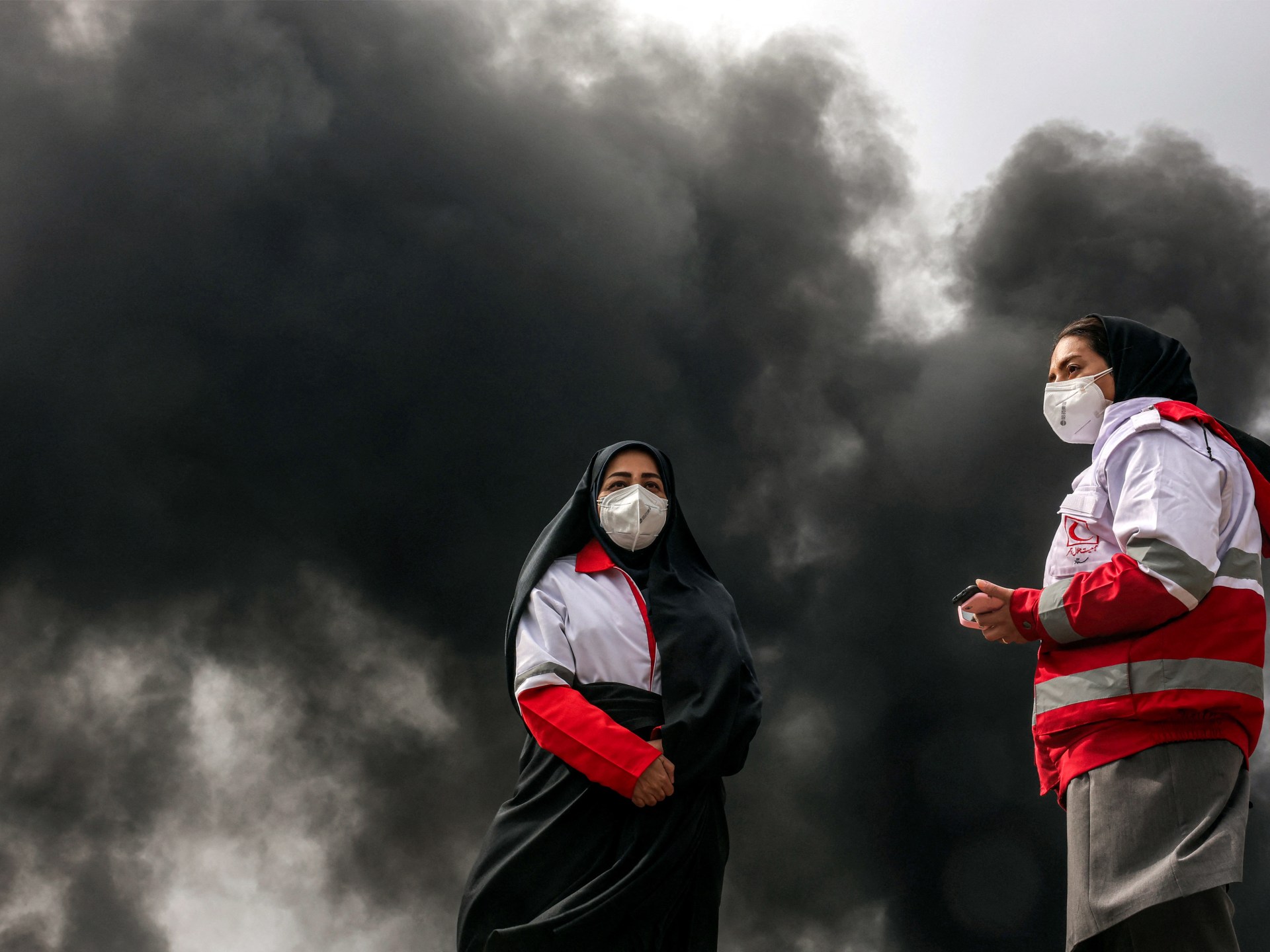
Israeli and US warplanes bombed Tehran and Isfahan in the afternoon, two days after sweeping attacks on the capital’s oil reserves and refineries left thick black smoke hanging over the city.
The younger Khamenei faces myriad challenges, most prominently the threat of assassination in the foreseeable future as the US and Israel have promised to keep taking out Iranian leaders.
Some local and Israeli media have claimed he may have been wounded in a strike, but details were unclear. There was no clarity from officials on whether Khamenei is expected to make an appearance anytime soon.
Advertisement
US President Donald Trump has repeatedly said he is unhappy with the selection and will aim to kill the new leader because he wants the US to play a role in deciding Iran’s future leadership.
The younger Khamenei’s ascension suggests more hardline factions in Iran’s establishment retain power and could indicate that the government has little desire to agree to new negotiations with the US in the short term.
The commanders of the IRGC and the army have continued shooting projectiles since his selection with one IRGC commander telling state television that the country is capable of keeping up considerable attacks for at least six months.
US officials have also expressed eagerness to continue the war in pursuit of their objectives, including dismantling Iran’s nuclear and missile programmes and cutting off support to regional allies in the “axis of resistance”.
Its members – including Hezbollah in Lebanon, the Houthis in Yemen and armed groups in Iraq – released statements backing Khamenei’s selection.
Khamenei is also leading Iran at a time when the US is trying to curb its oil exports, a key revenue stream, while tightening sanctions that have heavily damaged the Iranian economy.
The Strait of Hormuz is expected to remain a flashpoint area as shipping is disrupted. Iran is also experiencing one of its highest inflation rates in decades at about 70 percent with annual food inflation rates shooting above 100 percent, according to the Statistical Centre of Iran.
The national currency is among the least valuable and most isolated in the world. The government continues to promise that Iran’s population of about 92 million people does not need to worry about shortages of essential goods like food and fuel because contingency plans are in motion.
Related News
British military base in Cyprus targeted in suspected drone attack
US judge rules Trump policy of ‘third country’ deportations unlawful
Australian PM backs removal of ex-Prince Andrew from succession line