
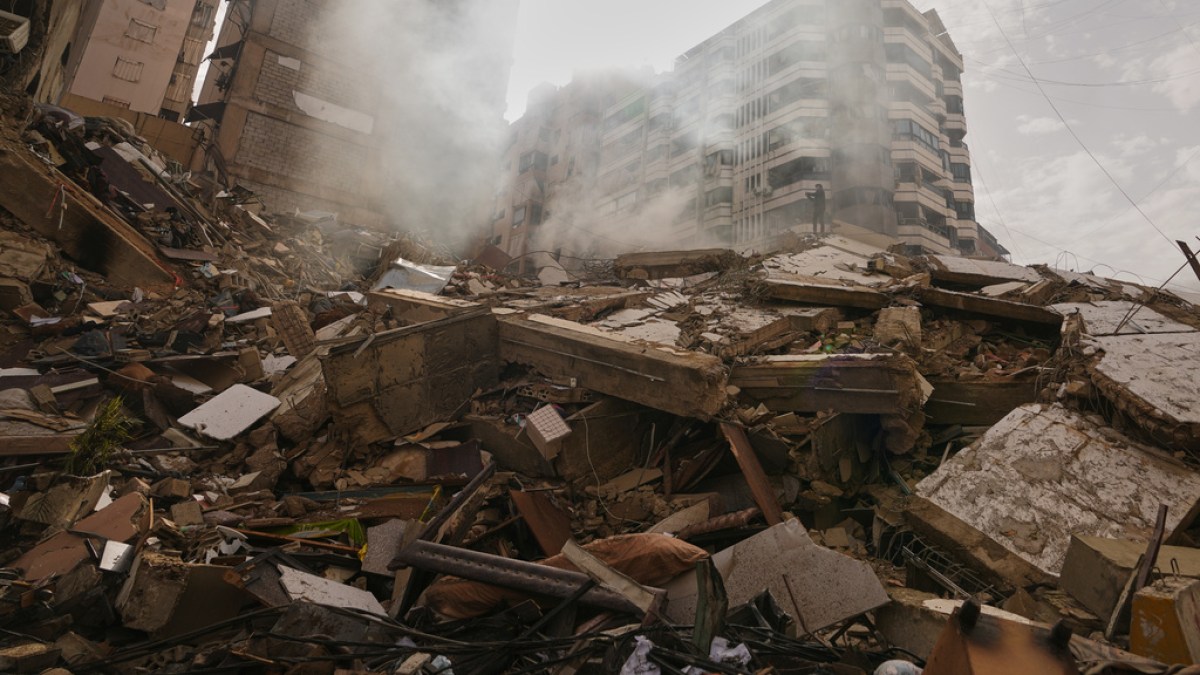

The United Nations secretary-general says the Lebanese people have been “dragged into” war, and has called for an end to the fighting, as Israel keeps up its assault on several areas of the country.
“The south [of Lebanon] risks becoming a wasteland. Southern Beirut, which is under sweeping evacuation orders by Israel, risks being bombed to oblivion,” Antonio Guterres said at a news conference in Beirut on Saturday. “There is no military solution, only diplomacy.”
- list 1 of 3Iran war: What is happening on day 15 of US-Israel attacks?
- list 2 of 3Israel kills 12 medics in attack in southern Lebanon as war ravages nation
- list 3 of 3Four killed in southern Lebanon apartment after reported Israeli attack
end of list
Guterres is visiting the country to launch a flash appeal for $325m to support the 800,000 plus people who have been internally displaced since Lebanon was dragged into the Middle East war on March 2, when Hezbollah attacked Israel in response to the US-Israeli killing of Iranian Supreme Leader Ayatollah Ali Khamenei.
Asked by Al Jazeera’s Bernard Smith whether Israel’s forcible evacuation orders, now covering 14 percent of the country, were “consistent with international humanitarian law”, Guterres said: “Whatever does not create enough security for civilians inevitably becomes in violation of international humanitarian law.”
The Israeli army has issued sweeping evacuation orders to residents of south Lebanon and Beirut’s southern suburbs as it hammered the areas, killing a family of four in the southern city of Sidon and one person in an attack on a residential building in Bourj Hammoud, located east of Beirut, on Saturday.
Guterres said that a UN special coordinator was engaging with “all actors around the clock to bring the parties to the table” and that peacekeepers with the UN Interim Force “remain in position”, warning that attacks on the latter were “completely unacceptable”.
Talks with Israel
The UN chief’s visit came as high-level Lebanese consultations took place to form a negotiating delegation for talks with Israel.
Advertisement
An official source told Al Jazeera Arabic that a delegation is expected to be formed at ambassadorial level in preparation for any possible negotiations, with the likely venue being Cyprus, although Lebanon was said to be open to any European capital.
The source said the Lebanese presidency was working to ensure representation of all Lebanese factions in the delegation, but that Nabih Berri, the speaker of parliament, was demanding a ceasefire before negotiations, which have been welcomed by Europe, with no response as yet from Washington.
Israel’s Haaretz newspaper reported that US President Donald Trump’s son-in-law Jared Kushner would be involved in the talks that could be held in Paris or in Cyprus, with Israeli Prime Minister Benjamin Netanyahu’s confidant Ron Dermer leading the Israeli delegation.
The negotiations were expected to focus on ending fighting in Lebanon and disarming the Lebanese armed group Hezbollah, Haaretz said.
Separately, French President Emmanuel Macron said the Lebanese government was ready to engage in “direct talks” with Israel and offered to host negotiations in Paris, warning that “everything must be done to prevent Lebanon from descending into chaos”.
Speaking from Ramallah in the occupied West Bank, Al Jazeera’s Nour Odeh said that Israel had no concerns that it would “face pressure about its operations or its plans for Lebanon”.
Incidentally, she said, the Israeli cabinet was planning to meet on Saturday night to discuss “a possible ground invasion” and “the occupation of southern Lebanon – 10 percent of it, all the way to the Litani River”.
Odeh noted that Israel in 1978 had mounted a similar campaign, named “Operation Litani”. When it withdrew from its positions in June 1978, it handed self-imposed power to the South Lebanon Army, a Christian client militia.
Separately on Saturday, Lebanese Prime Minister Nawaf Salam hosted a number of former prime ministers at his residence in downtown Beirut, including Najib Mikati, Fouad Siniora, and Tammam Salam, according to Lebanon’s National News Agency.
Following the meeting, Siniora delivered a statement on behalf of the group condemning “the intensifying, unprecedented Israeli attacks on Lebanon”. He accused “Israel of committing humanitarian war crimes, including killing civilians, mass displacement, and the destruction of homes and livelihoods particularly in southern Lebanon and Beirut’s southern suburbs”.
‘A new genocide’
Israel kept up strikes on Lebanon on Saturday as the Ministry of Public Health reported that the death toll from Israeli strikes had reached 826 since March 2, with more than 2,000 people wounded.
Advertisement
At least 65 women and 106 children have been killed by the Israeli strikes, said the ministry.
The death toll also includes 31 paramedics.
Lebanese health authorities said an overnight Israeli strike killed 12 doctors, paramedics and nurses working at a healthcare centre in the southern town of Burj Qalawiya.
The Israeli army said on Saturday that a day earlier it struck Hezbollah operatives “who were bringing rockets into a weapons depot” in Majdal, about seven kilometres (four miles) from Burj Qalawiya.
Israeli military spokesperson Avichay Adraee warned that Israel would act “in accordance with international law against any military activity” by any Hezbollah use of medical facilities or ambulances.
A Hezbollah official said that the group was not using ambulances and medical facilities for military purposes.
So far, Israel has not provided any proof it is doing so.
Turkish Foreign Minister Hakan Fidan told a news conference on Saturday that Israel could be committing “a new genocide”, referring to the killing of at least 72,000 Palestinians in Gaza and fears of a possible Israeli ground invasion in Lebanon.
Related News
Rubio suggests US strikes on Iran were influenced by Israeli plans
Drone targets US base in Iraq as Iran attacks hit region amid US-Israel war
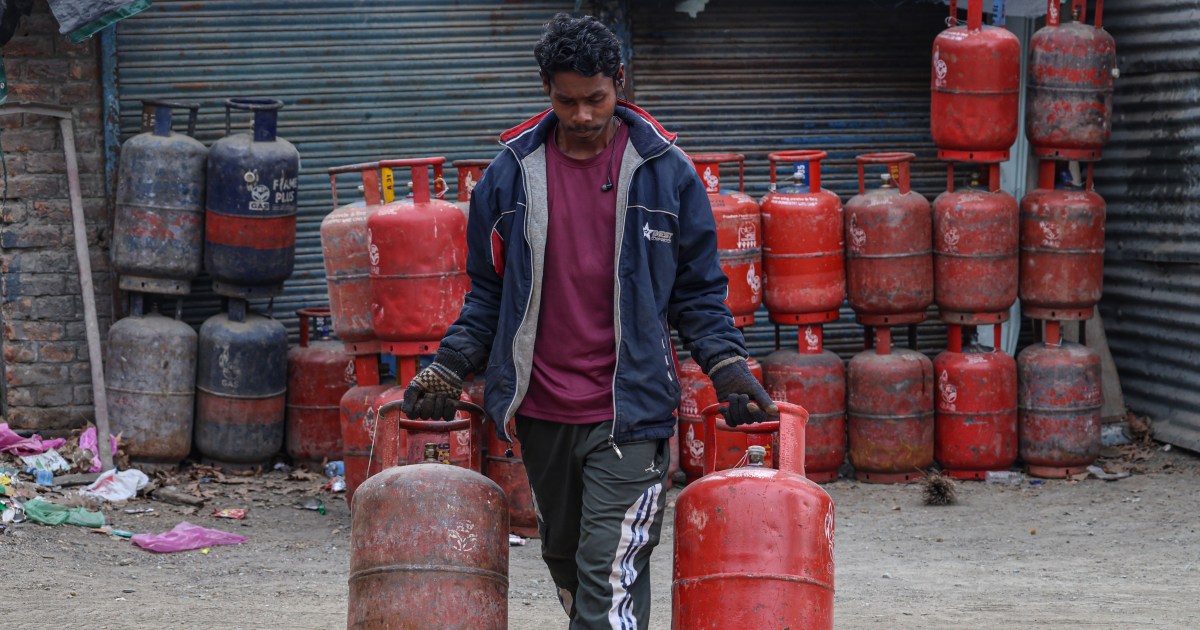
Two Indian ships cross Strait of Hormuz as Iran says it allowed passage