

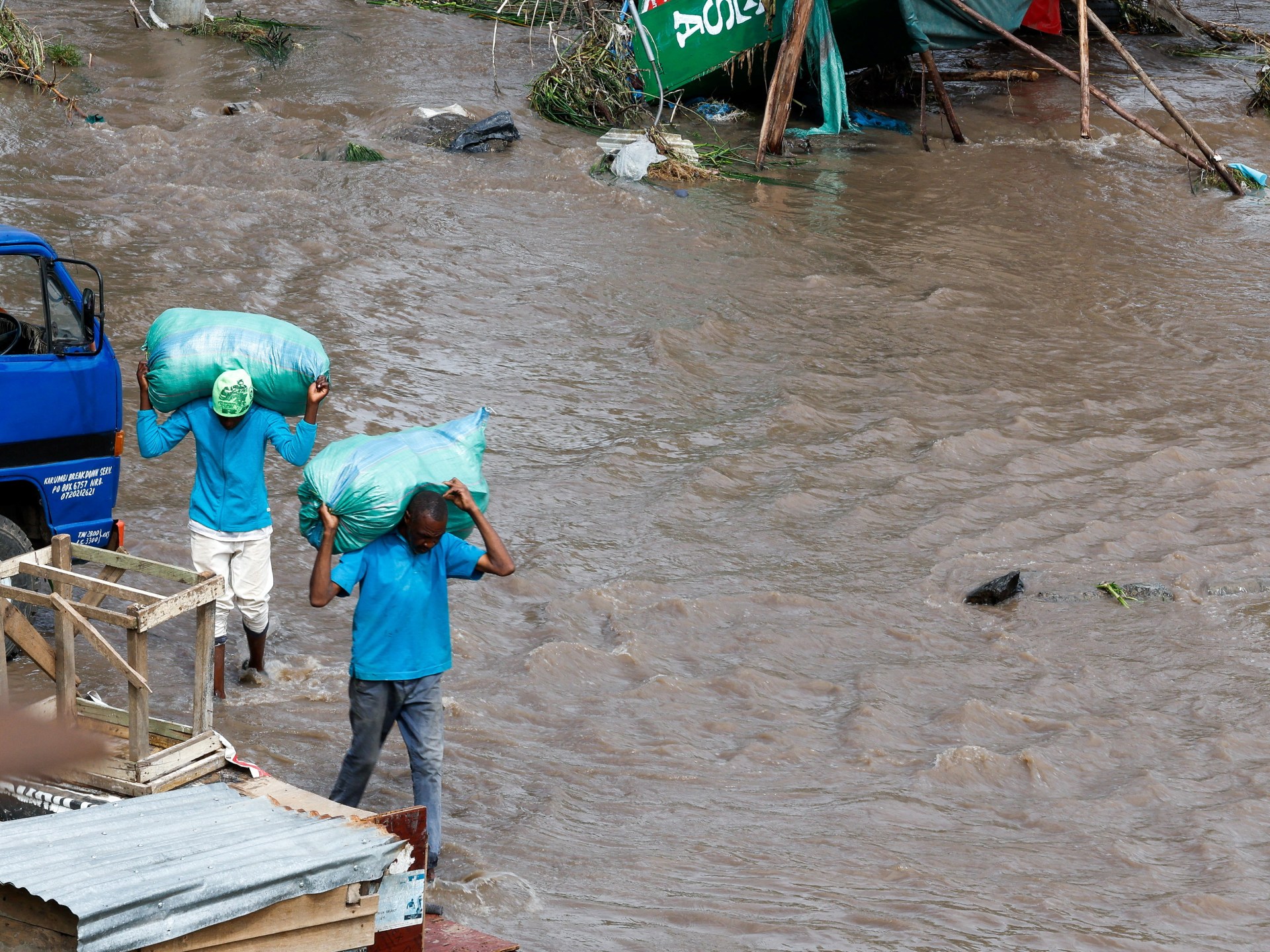

At least 18 people have died in flooding and landslides caused by heavy rains in multiple parts of Kenya.
The police stated on Sunday that landslides were reported in Tharaka Nithi, Elgeyo-Marakwet, and Kiambu counties in the country’s central and eastern regions. They confirmed that 18 lives had been lost to these incidents and urged caution amid the challenging weather conditions.
- list 1 of 3‘Environmental disaster’: Ukrainian attacks on oil refineries rock Russia
- list 2 of 3Soaring fuel prices in Pakistan threaten economic and political crises
- list 3 of 3At least six dead in heavy rains in northeast Brazil, thousands displaced
end of list
Mudslides are impacting “multiple families, displacing households, and causing significant damage to property and infrastructure”, the police said, warning residents living in landslide-prone or flood-affected areas to be careful.
It’s unclear how many people have been displaced.
Reports from local media show streets in the capital city, Nairobi, overflowing with water as cars and pedestrians wade through the deluge.
Traders in the city’s Makongeni and Ruai neighbourhoods staged protests on Sunday over the poor state of roads amid the rains, saying it was affecting their businesses.
Weather authorities earlier on Friday warned that the rains posed health risks in the form of waterborne diseases, and that damage to crops and farmland across the country was likely.
This is the second time in less than two months that parts of Kenya are seeing deadly floods. In March, floodwaters swelled to the brim in parts of Nairobi, killing at least 37 people.
The East African country is currently experiencing its seasonal March to May rain season, which usually peaks in the first half of May. However, experts have long warned that human-induced climate change is exacerbating weather conditions in Kenya and other East African countries.
Advertisement
“Across African cities, water extremes—too much during intense rains and too little during droughts—are driving increasingly severe impacts,” Fruzsina Straus, head of Disaster Risk Reduction for the United Nations Environment Programme (UNEP), said in a brief last week, adding that “cities must adapt rapidly to this new water volatility”.
Related News

Family longest held in US immigration detention re-arrested after release

South Africa to deport Robert Mugabe’s son over firearm offence

Iran war live: Tehran may skip talks as tensions rise over US ship seizure