
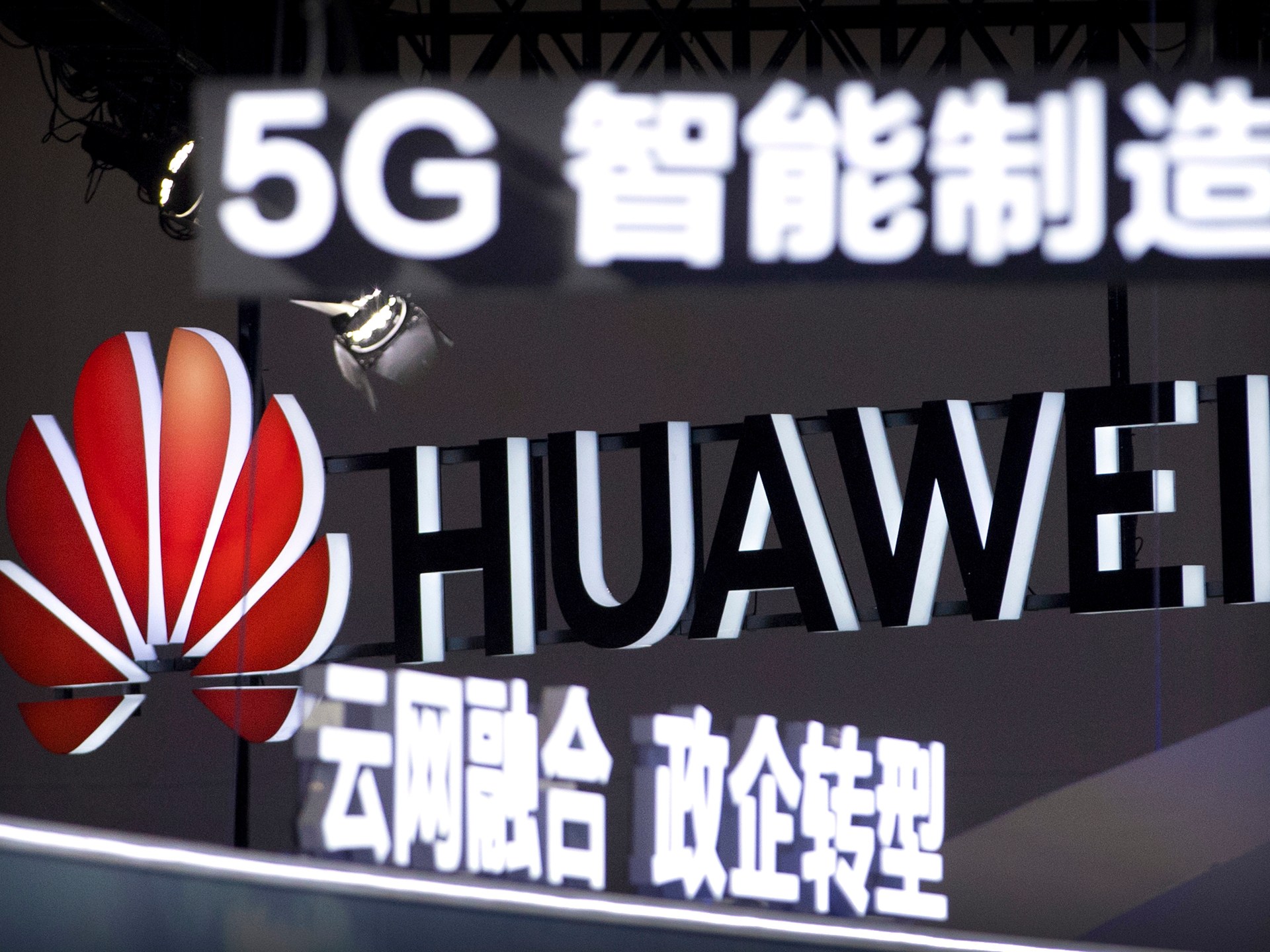

Chinese technology giant Huawei is facing a landmark criminal trial in the United States amid Washington’s long-running tech rivalry with Beijing.
The trial began in federal court in Brooklyn, New York, on September 9, with US prosecutors portraying Huawei as a criminal enterprise that spent two decades stealing technology from US companies, deceiving banks and circumventing sanctions on Iran.
- list 1 of 3Trump and Xi: The history of encounters between two superpower leaders
- list 2 of 3How Chinese, Iranian companies profit in Russia-occupied Ukrainian regions
- list 3 of 3China’s secret weapon in AI race with US? Lots of cheap energy
end of list
Huawei has pleaded not guilty and says the US government is attempting to turn ordinary business disputes and the actions of individual employees into evidence of a company-wide conspiracy.
The trial is expected to last about three months and overlaps with Chinese President Xi Jinping’s September 23-25 visit to Washington, where trade, artificial intelligence, tariffs and access to critical technologies are likely to be on the agenda.
Here is what you need to know:
What are the allegations against Huawei?
US prosecutors have accused the company of racketeering, money laundering, bank and wire fraud, sanctions violations, obstruction and conspiring to steal trade secrets from five US technology companies.
Prosecutors say the alleged wrongdoing stretched from about 1999 to 2020.
“Theft, lies, cover-up,” Justice Department lawyer Taylor Stout said in his opening remarks.
Prosecutors allege Huawei stole technology, including internet-router source code from Cisco and a robotic arm used by T-Mobile to test phones.
They also accuse Huawei of concealing the nature of its operations in Iran to move US dollars through the financial system despite US sanctions.
Advertisement
The government also alleges that Huawei supplied equipment that could help Iranian authorities monitor protesters during demonstrations in 2009.
How has Huawei responded?
Huawei, a major manufacturer of telecommunications equipment, denies any wrongdoing.
The tech giant’s lawyer Brian Heberlig told jurors the case was about “competition, not conspiracy. Innovation, not theft. Ordinary business dealings, not criminal conduct.”
Heberlig accused prosecutors of “cherry-picking isolated events” to construct a conspiracy that did not exist. Huawei’s defence says some incidents involved individual employees whose actions were dealt with internally, rather than reflecting company policy.
He told jurors that prosecutors will describe routine activities by global tech companies “but will twist those ordinary activities to try to make them look criminal”.
Huawei separately described the broader prosecution as an attempt to undermine its competitiveness, saying the US government’s “overarching narrative is demonstrably false” and that it had “the utmost respect for intellectual property”.
The case originated during Donald Trump’s first presidency. His administration placed Huawei on a US trade blacklist in 2019 and pushed allies to exclude the company from 5G networks, arguing its equipment could present national security and espionage risks.
Huawei has repeatedly denied that its technology is used for spying.
What has China’s response been?
Beijing has strongly criticised the prosecution, which has come weeks ahead of Chinese President Xi Jinping’s visit to the US.
On Thursday, a Chinese Ministry of Foreign Affairs spokesperson said “the Chinese government firmly opposes the US side’s suppression and containment of Chinese enterprises”, when asked about the case and the American prosecutor’s “criminal enterprise” description.
China “firmly supports Chinese enterprises in safeguarding their legitimate rights and interests”, the spokesperson said at a regular news conference.
What is Huawei, and has the tech giant faced investigations before?
Huawei is one of the world’s largest telecommunications equipment manufacturers. It also produces smartphones and has become increasingly important to China’s semiconductor and AI industries.
Its activities have drawn scrutiny well beyond the current US trial.
Belgian prosecutors launched an investigation in 2025 into suspected bribery involving the European Parliament allegedly for Huawei’s benefit.
The European Parliament subsequently suspended access for Huawei lobbyists. Huawei said it had “zero-tolerance” for corruption and would cooperate with authorities.
Huawei chief financial officer Meng Wanzhou made worldwide headlines in 2018 when she was arrested on a US warrant after landing in Vancouver, straining both US-China and China-Canada relations.
Advertisement
The warrant was filed after a sealed indictment accused her and the company of bank fraud for misleading HSBC and other banks about Huawei’s business in Iran.
She returned to China in 2021 under a deferred prosecution agreement, and the charges against her were later dismissed.
Admissions Meng made as part of that agreement can, however, be presented as evidence in Huawei’s current trial after a US judge ruled them admissible in June.
They are legally separate but form part of a much wider economic and technological competition between Washington and Beijing.
Huawei became one of the most prominent targets of US restrictions during Trump’s first term.
Since then, the rivalry has expanded from telecommunications and 5G into semiconductors and AI, with Washington restricting China’s access to advanced US chips and chipmaking technology.
Last week, Dario Amodei, the CEO of Anthropic, warned that a “Chinese lead in AI would pose grave danger for the US and the world” and urged Washington to maintain restrictions on cutting-edge AI tech. He also called for action against alleged “distillation” of US models by Chinese AI laboratories.
China’s Foreign Ministry on September 14 accused the US tech giant of “fearmongering”.
“Fomenting various threats, engaging in confrontation and malicious competition will only disrupt the process of global governance of artificial intelligence and is not in the interests of any party,” said ministry spokesperson Guo Jiakun.
The state-backed Global Times newspaper went further, describing Amodei’s proposal as a “Cold War playbook” whose real purpose was to curb Chinese AI development and preserve US technological dominance.
China and the US were engaged in a tit-for-tat tariff war at the beginning of Trump’s presidency in 2025. The trade war ended in a truce, but the world’s two largest economies have failed to strike a trade deal.
Beijing, meanwhile, has used its dominance of critical minerals as leverage and accelerated efforts to build domestic alternatives to American technology.
Currently, China controls most of the world’s rare earth minerals, including metals that are necessary for the manufacture of many technological items, from smartphones to fighter jets. The world’s second-largest economy has 60 percent of these minerals and processes 90 percent of the world’s supply.
In October, Beijing announced plans to require foreign companies to obtain permission to export Chinese rare earth equipment or material.
This meant companies anywhere in the world would need a licence to export rare earth magnets and certain semiconductor materials that contain even trace amounts of minerals sourced from China or produced using Chinese technology.
China’s Ministry of Commerce said its export controls on rare earths, which Trump had labelled “surprising” and “very hostile”, were introduced in response to a series of US measures.
Related News
Israeli wounded in occupied West Bank stabbing
US blocks Iran nuclear chief from attending key Vienna conference
Trump dismisses calls for AI slowdown from leading tech CEOs