

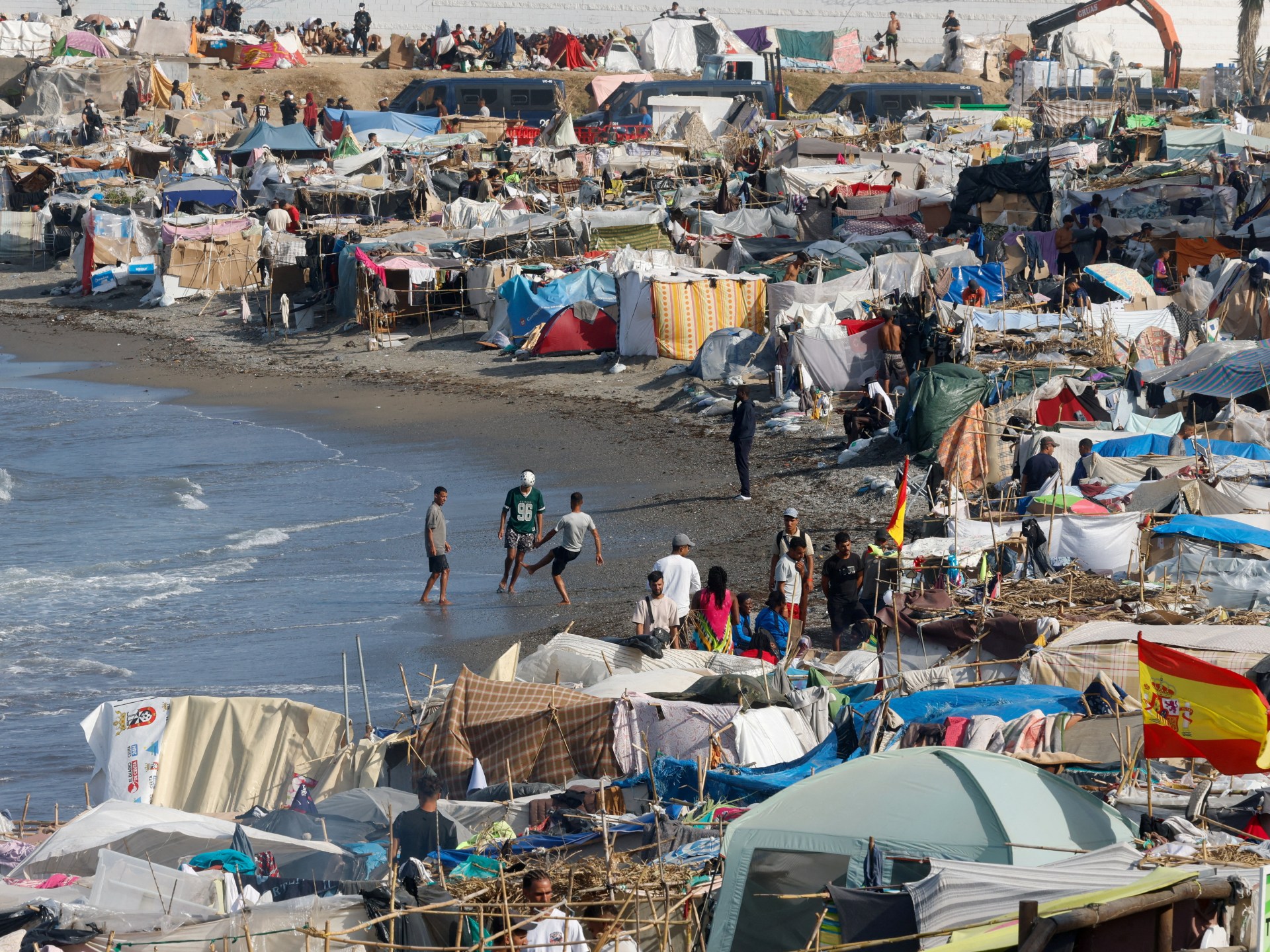

Italy and Spain have agreed to lift border controls on each other’s citizens, ending a three-month standoff triggered after a mass surge of migrants and asylum seekers entered the Spanish enclave of Ceuta.
The Italian Interior Minister Matteo Piantedosi and his Spanish counterpart Fernando Grande-Marlaska spoke on the phone and agreed not to extend their suspension of the European Union’s open-border Schengen arrangements, an Italian statement said on Thursday.
- list 1 of 3Migrant children protest after police clear beach camp in Ceuta
- list 2 of 3Vox rises as Sanchez battles political turmoil: Could Spain swing right?
- list 3 of 3Europe is in trouble, and it is blaming Muslims
end of list
“The decision, reached after a careful assessment of the situation, will be accompanied by enhanced information-sharing measures to ensure the full security of the common Schengen area,” the ministry added.
The decision followed a meeting between Italian Prime Minister Giorgia Meloni and Spanish Prime Minister Pedro Sanchez on the sidelines of a European Council meeting.
Italy’s right-wing government first suspended its open-border arrangements with Spain on July 31, saying it wanted to make sure no migrants entering the North African enclave of Ceuta could travel to Italian territory.
Madrid responded by taking similar action against Rome, describing the Italian measures as “unjust, contrary to European Union interests, and discriminatory to the population of Spain”.

Ceuta migrant surge
The tit-for-tat border closures happened after upwards of 70,000 people swam around barricades and entered Ceuta from neighbouring Morocco on July 30 and 31, fuelling tension in the Spanish territory.
Advertisement
Most returned to Morocco within hours, but thousands, including unaccompanied minors, have remained for weeks in often dire conditions.
“We thought our government was going to do something in the short or medium term, but we’ve been here for two months, and these people haven’t been sent back,” Ceuta resident Ruben Gonzalez said.
The Spanish government’s handling of the mass crossing of migrants into Ceuta has complicated Socialist Prime Minister Pedro Sanchez’s bid for re-election in November.
Sanchez was already facing criticism for his government’s decision to open a path to legal status for hundreds of thousands of undocumented foreign residents.
After the Ceuta incident, Far-right Vox and centre-right PP parties accused him of being soft on immigration and put the issue at the centre of their campaigns in the run-up to next month’s elections.
Related News
UK PM Andy Burnham vows to renegotiate post-Brexit trade deal with EU

Israel moves to bar both main Arab lists from October election

Drone attack sinks ship off Bulgaria’s Black Sea coast, PM says