Could MV Barima Victims Sue The Guyana Government For Negligence? Here’s What The Law Says
 05 August 2026
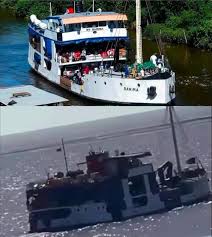


News Americas, GEORGETOWN, Guyana, Tues. July 28, 2026: As many Guyanese continue to bury the dead from the Guyana MV Barima disaster and investigators examine manifest discrepancies, a wharf project three years behind schedule, and a $12.7 million replacement ferry that never sailed the route, a legal question is emerging alongside the grief: can the families of victims sue the government for negligence?
Under Guyanese law, the answer is yes – the mechanism already exists.
Guyana’s State Liability and Proceedings Act, Chapter 6:05, waives the government’s traditional immunity from lawsuits in cases of negligence. Section 3 of the Act establishes the “liability of the State in tort,” while Section 9 grants the public a “right to sue the State” directly. The law is modeled on the United Kingdom’s Crown Proceedings Act of 1947, which made governments legally responsible for the negligent acts of their own agents and employees carrying out official duties.
In practice, this means the Transport and Harbours Department, and by extension the government itself, is not shielded from a negligence claim simply because the Barima was a government-operated vessel.
Guyana does not use the term “class action” in its legal system. Instead, its Civil Procedure Rules, adopted in 2016 and modeled on the rules of England and Wales, allow for what is known as a representative proceeding. Under this rule, claimants who share “the same interest” in a legal matter can have one or more of their number bring, or continue, a claim on behalf of the entire group. Any judgment reached is binding on every person represented, whether or not they were individually named in the suit – functionally similar to a US class action, filed under different rules and a different name.
A negligence claim, whether brought individually or as a representative proceeding, would need to establish that the government owed passengers a duty of care, breached that duty, and that the breach directly caused the deaths and injuries.
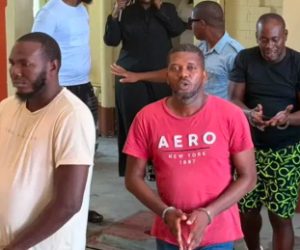
Much of the evidentiary groundwork for such a claim is already public record, generated largely by government officials themselves. Public Works Minister Juan Edghill has confirmed that state-owned vessels like the MV Barima do not carry commercial insurance, meaning the government automatically assumes direct responsibility for operational losses and liability. He has also publicly acknowledged that the Port Kaituma wharf meant to receive the Ma Lisha, the newer vessel purchased specifically to replace the MV Barima, failed due to structural problems after the surrounding soil shifted. Guyanese authorities have separately confirmed that at least 35 passengers rescued from the Barima were not listed on its official manifest. The vessel’s captain and first engineer, both currently in custody, tested positive for cannabis after the disaster.
Whether any procedural hurdles apply, such as a required notice period before suing the Attorney General, potential caps on damages, or statutory defenses tied to acts carried out under government authority, will now be up to Guyanese attorneys to assess in detail against the Act’s full text. But Attorney-at-law Darren Wade has argued that ultimate responsibility for the vessel rests with the State.
“The Barima is a national ferry, and the responsibility and accountability for its condition ultimately rest with the Government. Full stop,” stated Wade in a social media post.
NewsAmericasNow will continue following the investigation into the MV Barima disaster.
Related News
Guyana Ferry Disaster: 53 Dead, 50 Still Missing
Can Massy’s US$75M Guyana Hub Succeed Without Reliable Power?

CCJ President Breaks Silence: Denies Influencing Mohamed Ruling, But Admits Guyana Meddlin...