

European Union leaders have agreed to provide an interest-free loan to Ukraine to meet its military and economic needs for the next two years, EU Council President Antonio Costa has said.
The leaders decided early on Friday to borrow cash on capital markets to fund Ukraine’s defence against Russia rather than use frozen Russian assets, diplomats said.
- list 1 of 3Russia-Ukraine war: List of key events, day 1,394
- list 2 of 3Putin slams West’s ‘war hysteria’ as EU mulls Russian assets for Ukraine
- list 3 of 3EU debates use of frozen Russian assets to support Ukraine
end of list
Ukrainian President Volodymyr Zelenskyy thanked the EU for its loan to bolster the country’s looming budget shortfalls, saying it “truly strengthens” Kyiv’s defence.
“This is significant support that truly strengthens our resilience,” Zelenskyy said on X. “It is important that Russian assets remain immobilized and that Ukraine has received a financial security guarantee for the coming years,” he added.
“We have a deal. Decision to provide 90 billion euros [$105.5bn] of support to Ukraine for 2026-27 approved. We committed, we delivered,” Costa said in a post on social media early on Friday.
Costa did not specify the source of the funding, which came after EU leaders worked deep into Thursday night to reach an agreement.
But a draft text of the summit’s conclusions, seen by the Reuters news agency, said it would come from capital markets, secured against the EU budget, rather than the bloc proceeding with its contentious plan to use frozen Russian assets for a loan supporting Ukraine’s war effort.
At the same time, EU governments and the European Parliament will continue discussing setting up a loan for Ukraine that would be based on Russian central bank assets.
Advertisement
Friday’s deal will not affect the financial obligations of Hungary, Slovakia and the Czech Republic, which did not want to contribute to the financing of Ukraine, the text said.
Kirill Dmitriev, Russian President Vladimir Putin’s special envoy for investment and economic cooperation, said on Friday that “law and sanity” won, after EU leaders decided to borrow cash to fund Ukraine rather than use Russia’s frozen assets.
“Major BLOW to EU warmongers led by failed Ursula — voices of reason in the EU BLOCKED the ILLEGAL use of Russian reserves to fund Ukraine,” Dmitriev said on X, mentioning European Union Commission President Ursula von der Leyen.
Kyiv will only repay the EU loan based on joint borrowing once it receives war reparations from Moscow. Until then, the Russian assets will remain frozen, while the EU has also reserved the right to use them to repay the loan, according to the text.
“It’s good in the sense that Ukraine will secure funding for two years,” one unnamed EU diplomat told Reuters.
The move followed hours of discussions among leaders on the technical and legal details of a loan based on frozen Russian assets – which turned out to be too complex or politically demanding to sort out at this stage, diplomats said.
“We have gone from saving Ukraine to saving face, at least that of those who have been pushing for the use of the frozen assets,” a second EU diplomat said.
The main difficulty in using Russian money was providing Belgium – where approximately 185 billion euros ($217bn) of the total 210 billion euros ($246bn) of frozen assets are held – with sufficient guarantees against financial and legal retaliation from Moscow.
The Kremlin had said it would launch legal action and seize foreign assets in Russia should the plan to use its assets go ahead.
Prior to Friday’s decision, analysts had said the use of frozen Russian assets was effectively the only viable option for EU funding Ukraine’s war effort. The proposal, however, would be unprecedented, with German state assets not even seized during World War II.
In advance of Thursday’s meeting, German Chancellor Friedrich Merz had warned that the chances of agreement remained “50-50”.
Belgium’s Prime Minister Bart De Wever had told the European Parliament he remained deeply concerned about the legal and financial risks, having previously opposed the measures over fears Belgium could be forced to compensate Russia if courts later ruled that the use of the frozen assets was unlawful.
Advertisement
Belgium had demanded binding commitments from other EU states to cover all potential liabilities, and wants assurances that Russian assets held outside Belgium would also be used.
Some countries, including Germany and the Netherlands, said they were prepared to back up the loan, while others, such as Italy and Bulgaria, were hesitant.
Early on Friday, De Wever heralded the pivot towards borrowing on capital markets, saying EU leaders had avoided “chaos and division” with their decision.
Related News
Israeli attacks kill 3 in Gaza as calls grow for full truce implementation
Tunisia arrests top opposition leader Nejib Chebbi in widening crackdown
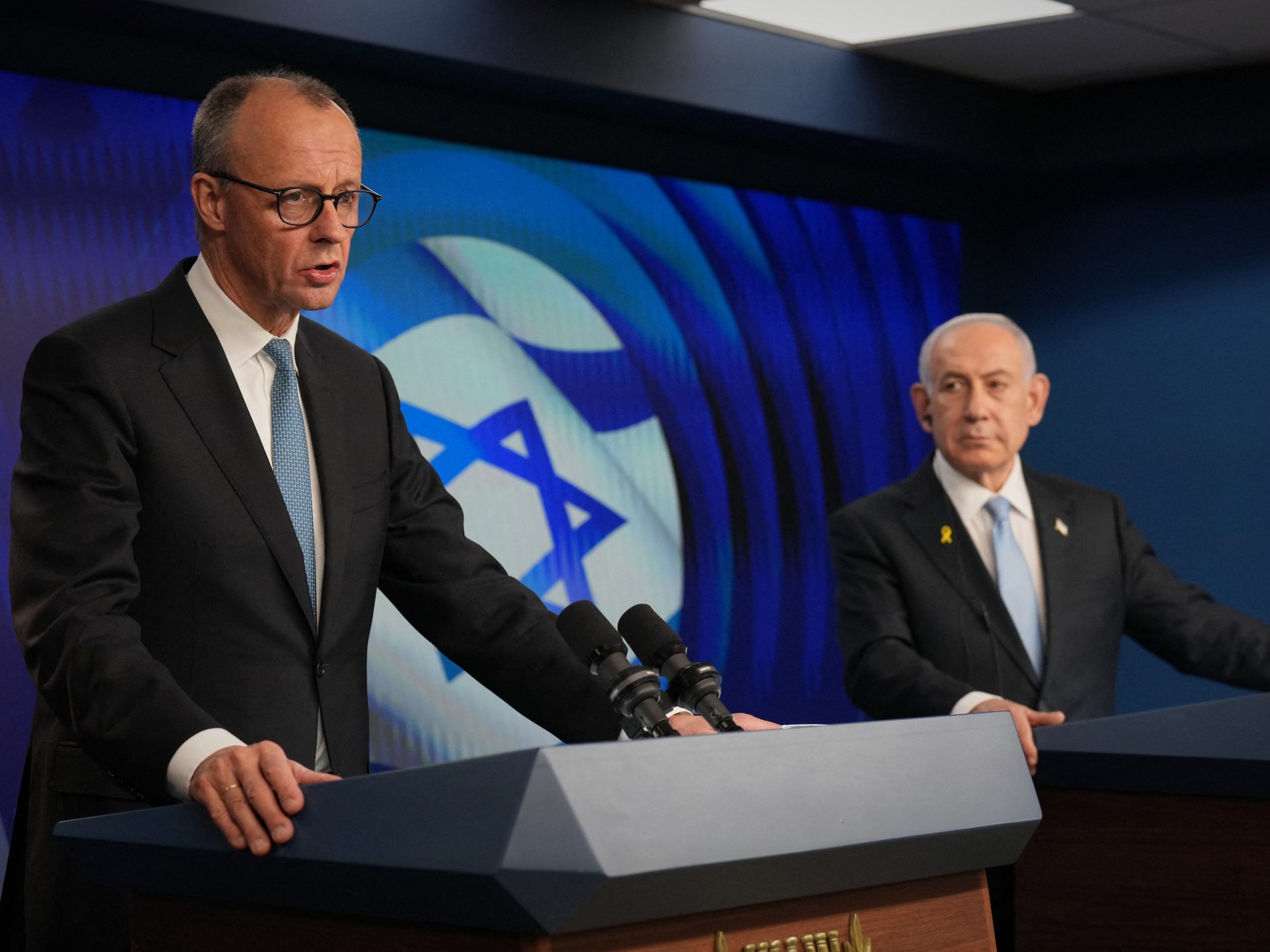
Germany’s Merz meets Netanyahu under shadow of Israel’s war on Gaza