


The Mexican government has arrested a suspected drug trafficker featured on the European Union’s “most wanted fugitives” list, as it attempts to crack down on criminal operations within its borders.
On Saturday, Mexico’s Security Minister Omar Garcia Harfuch announced that 48-year-old Hungarian citizen Janos Balla, who goes by the alias “Daniel Takacs”, had been detained in the southern state of Quintana Roo.
- list 1 of 3Argentina declares Jalisco New Generation Cartel a ‘terrorist’ group
- list 2 of 3Leader of Ecuador-based criminal group Los Lobos arrested in Mexico City
- list 3 of 3Mexican military says 11 killed in raid targeting Sinaloa cartel leader
end of list
In the EU, Balla has been sentenced to six years in prison for smuggling narcotic drugs and psychotropic substances.
According to Garcia Harfuch, Balla was the subject of an Interpol red notice, which calls on law enforcement authorities around the world to assist with the arrest of a suspect.
In a joint statement, the Mexican agencies involved in the arrest credited their collaboration with Hungarian authorities for helping to secure Balla’s arrest.
“Based on the exchange of information with Hungarian security agencies, as well as intelligence and investigative work, [Balla’s] mobility zone was identified in the municipality of Benito Juarez, where a coordinated operation was implemented, resulting in his arrest on Politecnico Avenue,” it said.
The statement added that Balla was placed in the custody of Mexico’s National Institute of Migration, “in order to determine his immigration status and continue his controlled deportation process to Europe”.
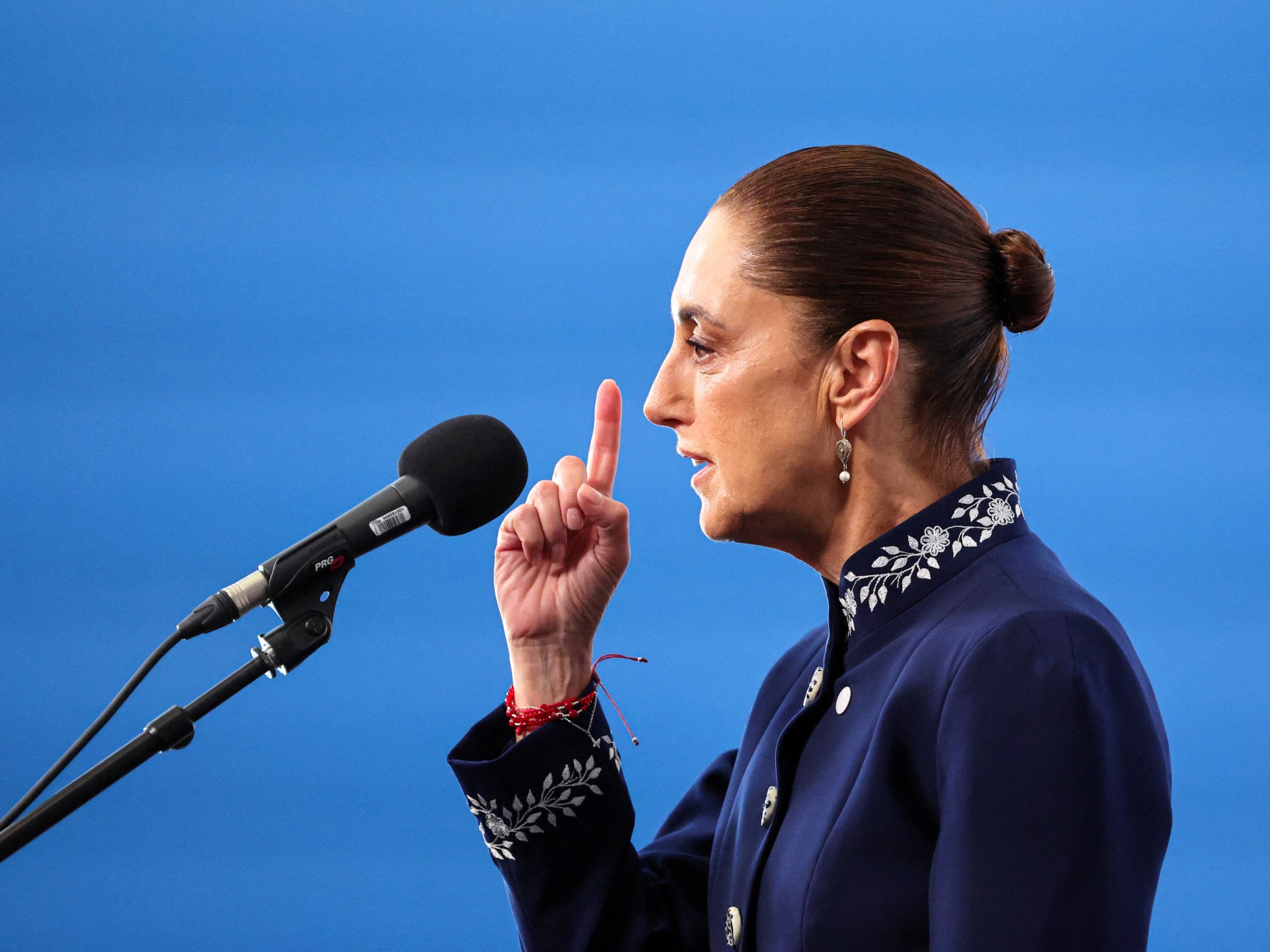
Saturday’s was the latest high-profile arrest under President Claudia Sheinbaum, who has sought to pivot away from the “hugs, not bullets” philosophy of her predecessor and political mentor, Andres Manuel Lopez Obrador.
Advertisement
Her administration has taken a harder line on combatting drug trafficking and other cartel activity in Mexico, particularly in the wake of pressure from her counterpart in the United States, President Donald Trump.
Having labelled several Mexican cartels “foreign terrorist organisations”, Trump has repeatedly threatened to take military action in the country, despite outcry that such a move would violate Mexican sovereignty.
He has also used tariffs on Mexican exports as economic leverage to ensure compliance with his anti-drug push.
“We have to eradicate them,” Trump said of Mexico’s cartels in March. “We have to knock the hell out of them because they’re getting worse. They’re taking over their country. The cartels are running Mexico. We can’t have that.”
But Sheinbaum’s government has pointed to an uptick in cartel arrests as proof of the efficacy of their strategy.
In February, her administration launched a military operation that resulted in the death of Nemesio Ruben Oseguera Cervantes, known as “El Mencho”, the former head of the Jalisco New Generation Cartel (CJNG).
And in March, another cartel leader, Omar Oswaldo Torres of the Sinaloa Cartel’s Los Mayos faction, was arrested.
Ahead of June’s World Cup kickoff, Sheinbaum has also pledged to surge law enforcement and military to Mexico’s streets, with nearly 100,000 security personnel expected to be present for the event.
Mexico has been an ally in the US’s “war on drugs”, and the country is also the US’s largest trading partner.
While Sheinbaum has denounced suggestions that the US could violate Mexican sovereignty, she has also sought to continue her country’s collaboration with its northern neighbour, including through prisoner exchanges and joint law enforcement operations.
Since Trump took office for a second term in 2025, Mexico has sent nearly 92 suspected cartel members to the US for prosecution.
The most recent batch of 37 was transferred in January. Another 29 arrived in February 2025, and 26 more were exchanged last August.
In a statement, Garcia Harfuch, a former police chief, defended the transfers as protecting Mexico from “individuals who posed a genuine threat to the country’s security” and “who will no longer be able to incite violence within our country”.
He also underscored that the decision to send the suspects to the US was made “with full respect for national sovereignty”.
But critics, including family members of the suspects, have argued that such transfers violate Mexican law, as they were conducted without extradition orders.
Advertisement
That, in turn, prevented the suspects from exercising their due process rights to appeal the extradition.
Related News
Starmer says UK will not support US blockade of Strait of Hormuz
Trump announces Strait of Hormuz blockade after US-Iran peace talks end
Celebrations in Lebanon as 10-day ceasefire with Israel begins