

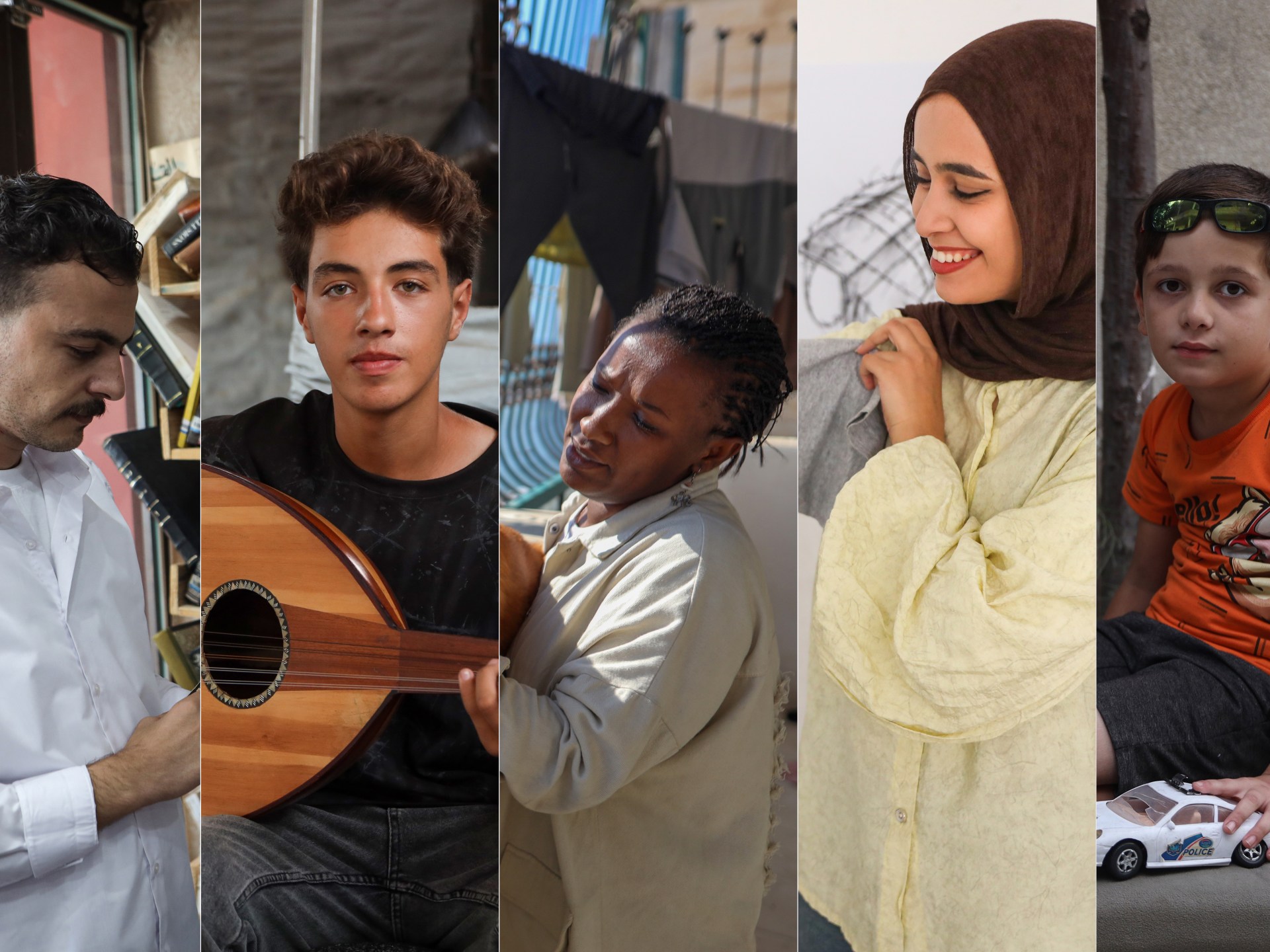

When Huda Helassa, 20, left her home in Tal al-Hawa, southern Gaza city, in the first hours of the war, she took a signed T-shirt from the Access Microscholarship Program, a United States-funded programme that provides English-language and cultural education to young people.
Her classmates had signed the shirt on September 15, 2023, during their final class, two years before she graduated on September 27.
“When we left our home on the first day of the war, the T-shirt was one of the first things that came to my mind,” Huda says.
She put it in her bag almost instinctively, wanting to hold on to something from a part of her life that had ended just days earlier.

Huda and her family first moved to her grandmother’s house in Gaza City, then were displaced south, walking part of the way, and eventually reached Rafah in the south of the Palestinian territory.
In May 2024, they were displaced again, this time to Khan Younis. When they returned to Gaza in January 2025, they found their home completely burned.
“There was nothing left of the life we had there,” she says. “No belongings, no photographs, no memories we could hold onto, just the blackened walls.”
They were displaced again in April 2025, moving to Remal and then Tal al-Hawa, before moving to az-Zawayda in September and returning to Gaza in October. They are currently in Tal al-Hawa.
For Huda, the T-shirt remains a link to the life she had before the war, a period of learning, friendships and experiences that shaped her.
Related News

Africa’s space ambitions are moving from policy to practice
US charges five people over alleged Russian plots

Trump-Xi summit live: Trade, AI, Iran and Taiwan top US-China talks