
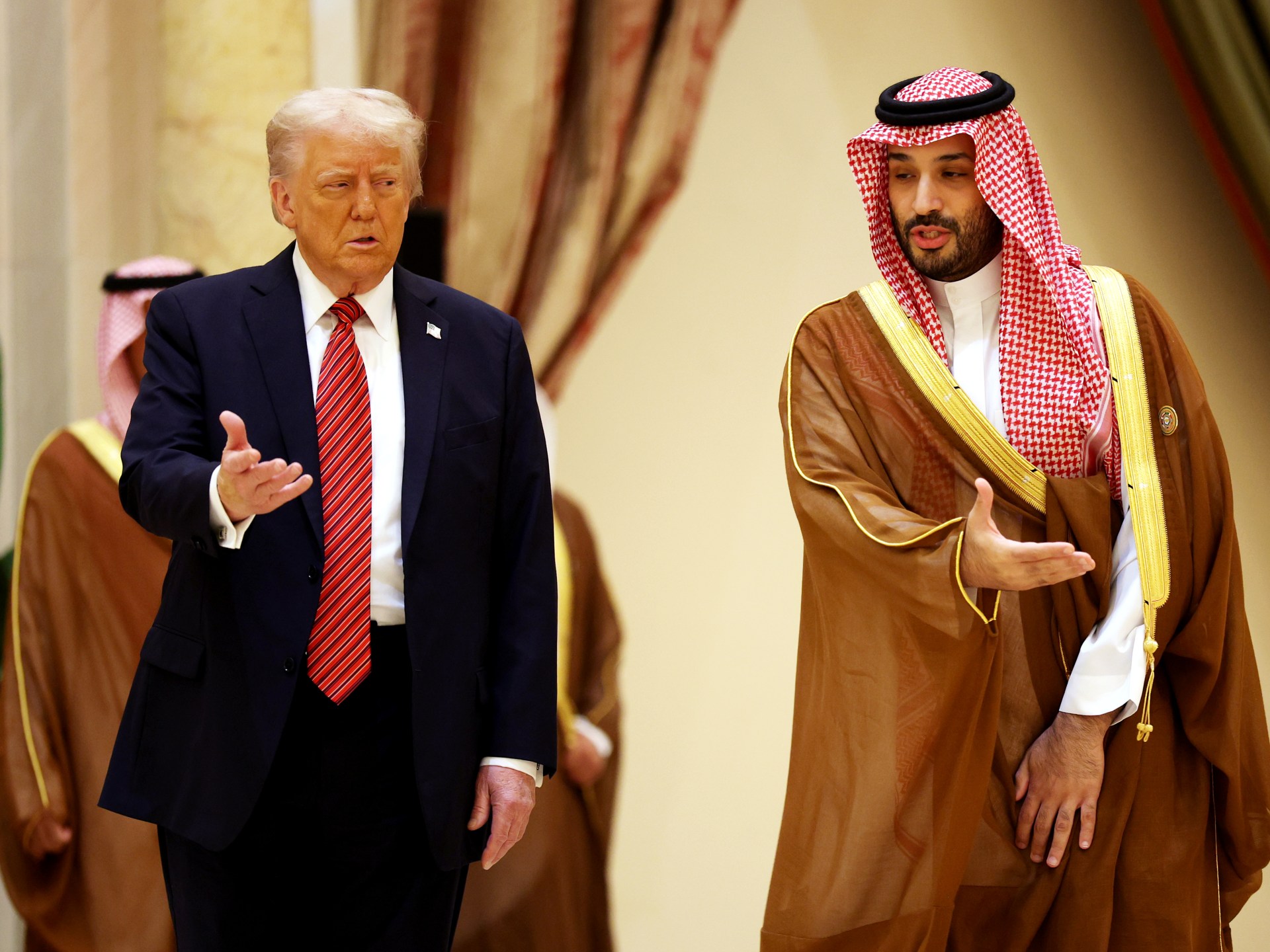

The United States and Saudi Arabia have signed a 30-year nuclear deal that will see Washington help the Gulf kingdom develop a civilian nuclear programme.
The deal was sealed on Wednesday when US Energy Secretary Chris Wright and Saudi Energy Minister Abdulaziz bin Salman signed a nuclear cooperation “123 agreement”, which permits US companies to transfer nuclear technology abroad. The US signs such deals under Section 123 of its Atomic Energy Act, which is why country-specific nuclear deals are known as 123 agreements.
- list 1 of 4Proposed US-Saudi nuclear energy deal: What we know so far
- list 2 of 4US and Saudi Arabia announce nuclear cooperation deal
- list 3 of 4Saudi Arabia and US agree to landmark nuclear deal for civilian purposes
- list 4 of 4Germany’s Merz hails nuclear deterrence cooperation with France
end of list
Much of what the Saudi deal entails is unknown for now, even as some analysts have raised concerns about whether it has strong enough guardrails to prevent a nuclear arms race in an already volatile Middle East.
The US and Saudi Arabia are signatories to the Treaty on the Non-Proliferation of Nuclear Weapons (NPT). However, the International Atomic Energy Agency (IAEA), the international watchdog against nuclear proliferation, was not involved in the bilateral agreement. It’s unclear how guardrails will be enforced. Saudi Arabia is also not a member of the Nuclear Suppliers Group, a cartel of 48 nations that controls nuclear commerce, so it is unclear how the country will access key nuclear technology and uranium.
But the deal is only the latest of several nuclear programmes in the Middle East, many of them civilian. Here’s what else we know about these programmes:
![This June 15, 2026, satellite image shows Iran’s Natanz uranium enrichment facility, upper right, and an underground nuclear site that is under construction at Pickaxe Mountain directly south of it [Planet Labs PBC via AP]](https://www.aljazeera.com/wp-content/uploads/2026/07/AP26203226244583-1784705249.jpg?w=770&resize=770%2C513&quality=80)
What did the US and Saudi Arabia agree to?
The two countries signed the nuclear agreement allowing US transfers of technology and a separate “bilateral safeguards agreement”.
Advertisement
It’s unclear what they entail, but a bilateral safeguards deal suggests that pact might include a mechanism for American inspectors to monitor the Saudi nuclear programme to ensure fuel enrichment levels remain within limits commensurate with civilian reactor needs and don’t rise to weapons grade or close to it.
“The US is not going to reach any agreement with any country in the world that leads to the risk of proliferation,” US Secretary of State Marco Rubio told reporters on Wednesday while in the Philippines.
US companies such as nuclear reactor designer Westinghouse are likely to profit from the deal.
The agreement will now be submitted to Congress for review. It could face resistance from legislators on both sides of the aisle, but they are expected to be in a minority. Under that scenario, the deal would automatically go into effect after the 90-day review window.
What Middle East countries have nuclear programmes?

Iran
The US joined Israel’s 12-Day War against Iran in 2025 by conducting one day of air strikes on Iran’s three main nuclear facilities. In February, the two allies launched another war on Iran. One of the reasons behind it was to stop the country from developing nuclear weapons. Tehran, however, has repeatedly insisted it maintains only a civilian nuclear programme.
Iran first launched its nuclear programme in 1957 with US assistance as part of a programme by then-President Dwight D Eisenhower to share US technology abroad for electricity generation and other civilian uses. The IAEA was created to monitor this process. Iran also signed the NPT in 1974.
Iran’s Bushehr Nuclear Power Plant was developed at this time by German companies. However, in the early 2000s, the IAEA found that Iran had secretly built the Natanz, Isfahan and Fordow uranium enrichment sites with Pakistan’s help, leading to accusations that Tehran was working on developing nuclear weapons. The United Nations Security Council sanctioned Iran for several years. US and Israeli covert operations also targeted Iran with cyberattacks and assassinations of Iranian nuclear scientists.
In 2003, then-Iranian Supreme Leader Ali Khamenei – who was killed in US-Israeli strikes on the first day of the current war on February 28 – issued a fatwa declaring that his country would not seek nuclear weapons.
During the administration of US President Barack Obama, Iran in 2015 signed the Joint Comprehensive Plan of Action (JCPOA), a nuclear deal in which Tehran agreed to limit its uranium enrichment to just over 3 percent – enough for reactors generating electricity but well short of what’s needed to make weapons.
Advertisement
Iran also granted the IAEA unprecedented access to its nuclear sites. It’s believed to be the most intrusive monitoring the agency has secured in any country to date. And the IAEA as well as US intelligence agencies repeatedly concluded that Iran had adhered to the deal and to low enrichment levels.
But the US pulled out of that agreement and reinstated sanctions in 2018 during President Donald Trump’s first term after he claimed it was ambiguous and posed a threat to Israel. In response, Iran started increasing its uranium enrichment levels.
In June 2025, the US and Israel launched the 12-Day War after an IAEA report said Iran had accumulated more than 400kg (880lb) of uranium enriched to 60 percent, not far below the 90 percent enrichment needed for weapons.
Trump claimed the 2025 US bombings “obliterated” Iran’s nuclear programme. In August, the UN also reinstated sanctions on Iran.
Yet in February, the US and Israel again started a war with Iran that they said was intended to degrade Iran’s nuclear capabilities.
Israel
Israel has refused to say whether it has nuclear weapons, but it is believed to be the only Middle Eastern country with an advanced nuclear arsenal. It has an extremely opaque policy regarding this. The country is not an NPT signatory, and the IAEA thus cannot assess its capabilities. Israel has bluntly refused to submit details to the agency since the 1980s.
According to the Nuclear Threat Initiative (NTI) think tank, Israel has possessed nuclear weapons since the 1960s and has about 90 nuclear warheads. According to the NTI, Israel has enough stockpiles of uranium and plutonium to produce up to 300 more nuclear weapons.
There is speculation that Israel tested its weapons with apartheid-era South Africa in 1979. Its most important nuclear site is the Shimon Peres Negev Nuclear Research Center near the southern city of Dimona. The facility was built with help from France in 1957.
Israel maintains that the Dimona reactor is for civilian purposes. However, in 1980, an Israeli whistleblower released documents and photos from the site to the media, affirming long-held suspicions about Israel’s advanced nuclear capabilities. Satellite images in 2025 appeared to show expansion work at Dimona, even as Israel and the US attacked Iran.

UAE
The United Arab Emirates launched its strictly civilian nuclear programme in 2009 when it signed a 123 agreement with the US. In it, the country said it would not pursue domestic uranium enrichment or reprocess spent fuel – two key ingredients required for an atomic bomb. The country is also an NPT signatory.
The Barakah Nuclear Energy Plant is the centrepiece of the UAE’s nuclear infrastructure. The enormous site was built in 2012 and has four South Korean-designed reactors that use US technology. US experts were also involved in helping to build the plant and train local workers. Barakah generates about 5,600 megawatts of electricity, or about a quarter of the UAE’s demand. The IAEA has full access to the site and can monitor activities there with real-time access cameras.
Advertisement
Turkiye
Turkiye does not have nuclear weapons of its own for now although government officials appear to be changing their posture in light of the war on Iran. The US has nuclear weapons in Turkiye, its NATO ally, and Ankara has long relied on their presence to deter possible nuclear attacks. Turkiye is also a signatory to the NPT.
It maintains civilian nuclear infrastructure in the form of its Akkuyu Nuclear Power Plant. The plant is designed and maintained by Russia and produces up to 4,800 megawatts, or about 10 percent of the country’s total electricity supply. Turkiye, as part of the deal, does not have access to the spent fuel from the reactors, which it would need for nuclear weapons.
After the US-Israel war on Iran began in February, Foreign Minister Hakan Fidan said Turkiye could acquire nuclear weapons, signalling a major shift. Analysts said Turkiye could begin expanding its civilian programme, but authorities have been strategically ambiguous on the topic. A Research Istanbul poll conducted during the 2025 war on Iran saw 71 percent of participants vote in favour of nuclear weapons.
Egypt
Egypt, as an NPT signatory, also maintains a strictly civilian programme for electricity and seawater desalination. Its El-Dabaa Nuclear Power Plant is currently under construction by Russia and could generate up to 4,800 megawatts by 2028. Like Turkiye, Russia has oversight over Egypt’s spent nuclear fuel. Egypt also has research reactors for isotope production meant for medical research.
Egypt did secretly pursue a military nuclear programme in the 1960s under President Gamal Abdel Nasser in a bid to counter Israel, but it failed.
Iraq
Under President Saddam Hussein in the 1970s, Iraq sought to secretly build nuclear weapons. The country bought the Osiraq reactor from France and housed it at the Tuwaitha Nuclear Research Center near Baghdad. Iran struck the reactor during the Iran-Iraq War in the 1980s while Israel bombed it a year later. The US also hit the site during the 1991 Gulf War. In 2003 after the US-led invasion of Iraq, the IAEA confirmed the nuclear programme had been dismantled.
In recent times, Iraq has sought partnerships with China and Russia to build nuclear power plants to help solve chronic power outages.
In the extended neighbourhood: Pakistan
Just beyond the Middle East lies Pakistan with a large arsenal of advanced nuclear weapons as a deterrence to its rival India.
While India has a “no first use policy”, Pakistan’s stance has long been deliberately ambiguous. According to the Stockholm Institute for Peace Research, Pakistan is believed to have 170 nuclear warheads while India has 190. Analysts said they believe Pakistan expanded its nuclear programme after a brief armed conflict with India in May 2025. Neither Pakistan nor India is a signatory to the NPT.
Pakistan was also part of the Eisenhower nuclear energy programme in the 1950s, but it began pursuing nuclear weapons in the 1970s after three wars with India since their 1947 independence. India itself began nuclear testing at the same time. Pakistani Prime Minister Zulfikar Ali Bhutto declared at the time: “We will eat grass, even go hungry, but we will have our own nuclear bomb.”
The nuclear programme was largely masterminded by physicist Abdul Qader Khan, who secured black-market uranium procurement networks from Niger. Pakistan’s highly enriched uranium is produced at its Kahuta and Gadwal facilities. Pakistan has also shared nuclear technology and weapons with Iran, Libya and North Korea. Libyan leader Muammar Gaddafi surrendered Libya’s nuclear infrastructure to the IAEA in 2003 after sanctions were imposed on his country.
Related News
Why a new war in Yemen could be different for the Houthis
US ‘open’ to negotiations with Iran but Tehran not ‘serious’, Rubio says
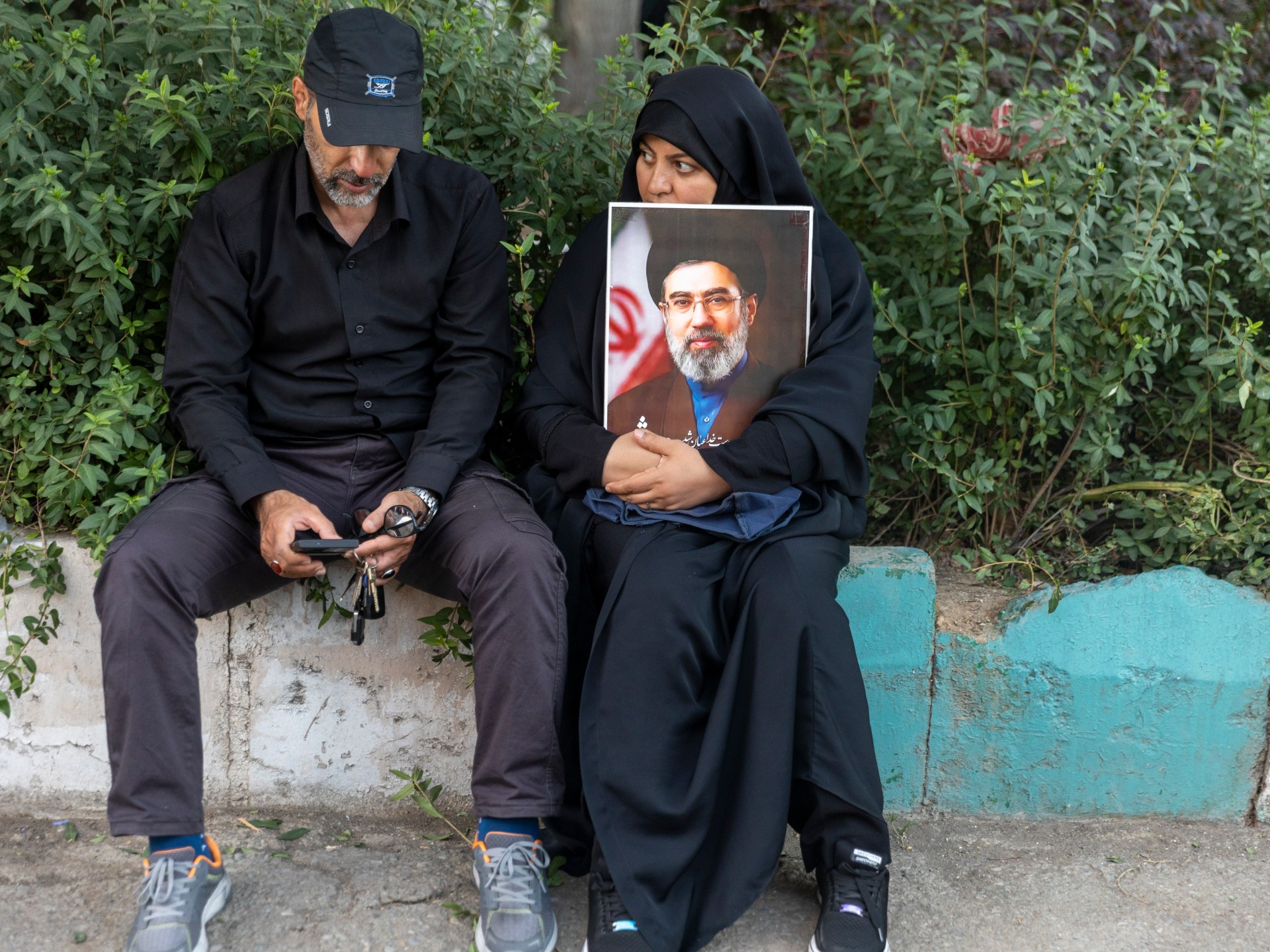
‘Sacred unity’: Iran’s supreme leader calls for calm amid political divides