

The United Kingdom has imposed visa restrictions on the Democratic Republic of the Congo, accusing its government of failing to cooperate with its new policy on the return of undocumented migrants and those who commit criminal offences.
The UK Home Office announced the measures in a statement late on Saturday. It also said that Angola and Namibia have agreed to step up efforts to take back their citizens.
- list 1 of 3How effective is UK’s one-in-one-out migrant deal with France so far?
- list 2 of 3Why does the UK want to copy Denmark’s stringent immigration policies?
- list 3 of 3Is Keir Starmer facing a plot to depose him as UK prime minister?
end of list
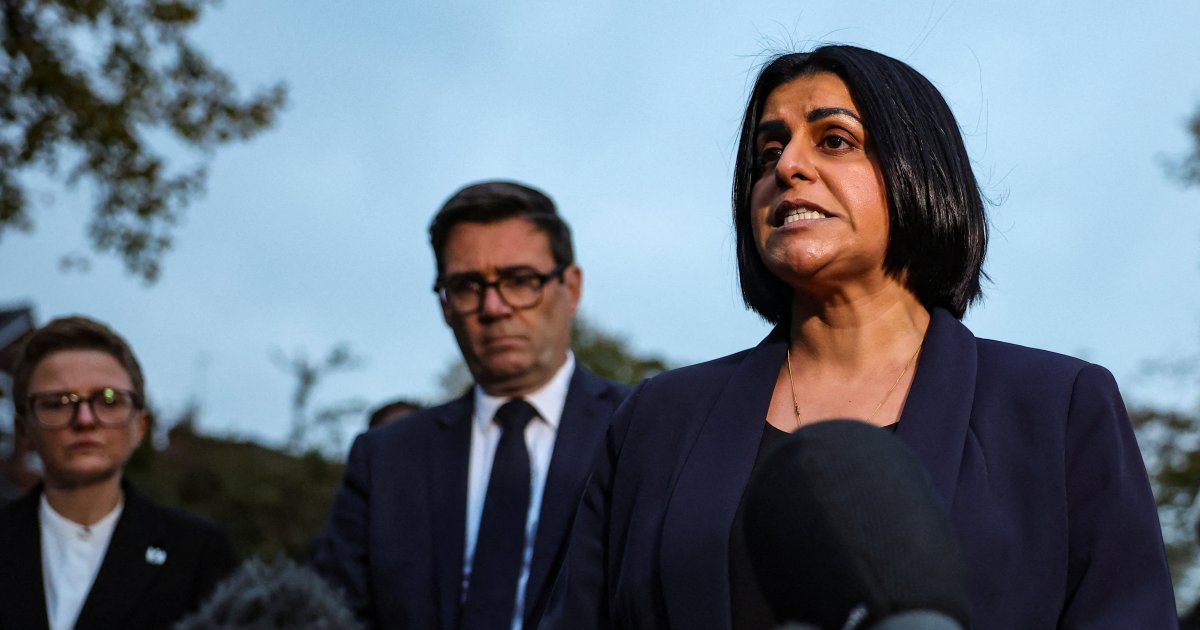
The agreements mark the first major change under sweeping reforms unveiled by Secretary of State for the Home Department Shabana Mahmood last month to make refugee status temporary and speed up the deportation of those who arrive without documents in the UK.
There was no immediate comment from the DRC, Angola or Namibia.
The Home Office said the DRC failed to meet the UK’s requirements for cooperation and has now been stripped of fast-track visa services and preferential treatment for VIPs and decision makers.
Mahmood said the UK could escalate measures to a complete halt of visas for the DRC unless cooperation rapidly improves.
“We expect countries to play by the rules. If one of their citizens has no right to be here, they must take them back,” she said.
“I thank Angola and Namibia and welcome their co-operation. Now is the time for the Democratic Republic of Congo to do the right thing. Take your citizens back or lose the privilege of entering our country.
“This is just the start of the measures I am taking to secure our border and ramp up the removal of those with no right to be here,” she added.
Prime Minister Keir Streamer’s centre-left government unveiled sweeping changes to the UK’s asylum system last month, including drastically cutting protections for refugees and their children, as part of a bid to stem the arrivals of irregular migrants that have fuelled rising anger on the far-right.
Advertisement
More than 39,000 people, many fleeing conflict, have arrived in the UK on small boats this year, more than for the whole of 2024 but lower than the record set in 2022, when the Conservatives were in power.
Mahmood told lawmakers that the reforms, modelled on Denmark’s strict asylum system, would discourage refugees and asylum seekers from crossing the English Channel from France on small boats.
She described the current system as “out of control and unfair”, adding that it was an “uncomfortable truth” that the government must face.
Under the reforms, refugee status will become temporary and will be reviewed every 30 months. Refugees will be forced to return to their home countries once those are deemed safe.
They will also need to wait for 20 years, instead of the current five, before they can apply for permanent residency.
The government has also said it will legislate to make it harder for irregular migrants and foreign criminals to use the European Convention on Human Rights (ECHR) to stop deportation.
Since July last year, the UK has “removed more than 50,000 people with no right to remain”, a 23 percent increase on the previous period, and instructed diplomats to make returns a top priority, Secretary of State for Foreign and Commonwealth Affairs Yvette Cooper said.
The policy has been facing criticism, however, with Mark Davies, a former adviser to the Foreign Office, calling it “shameful” and a departure from “Britain’s historic commitment to support refugees”.
Former Labour leader Jeremy Corbyn also described the policy as “draconian”, adding that it tries to “appease the most ghastly, racist right-wing forces all across Europe”, while undermining the UN Convention on Human Rights.
Enver Solomon, chief executive of the Refugee Council, urged the government to reconsider, warning the plans “will not deter” crossings, and that refugees who work hard should be able to build “secure, settled lives”.
Official figures cited by the AFP news agency showed that asylum claims in the UK are at a record high, with about 111,000 applications made in the year to June 2025.
But the number of initial positive decisions the UK authorities granted fell from 2023 to 2024.
Most asylum seekers and refugees arrive in the UK legally. Net migration reached a record high of 906,000 in the year to June 2023, before it fell to 431,000 in 2024, partly reflecting the tighter rules.
Related News

Russia-Ukraine war: List of key events, day 1,392

Saudi Arabia demands Yemeni separatists leave seized governorates
Australian police say Bondi Beach attackers inspired by ISIL