
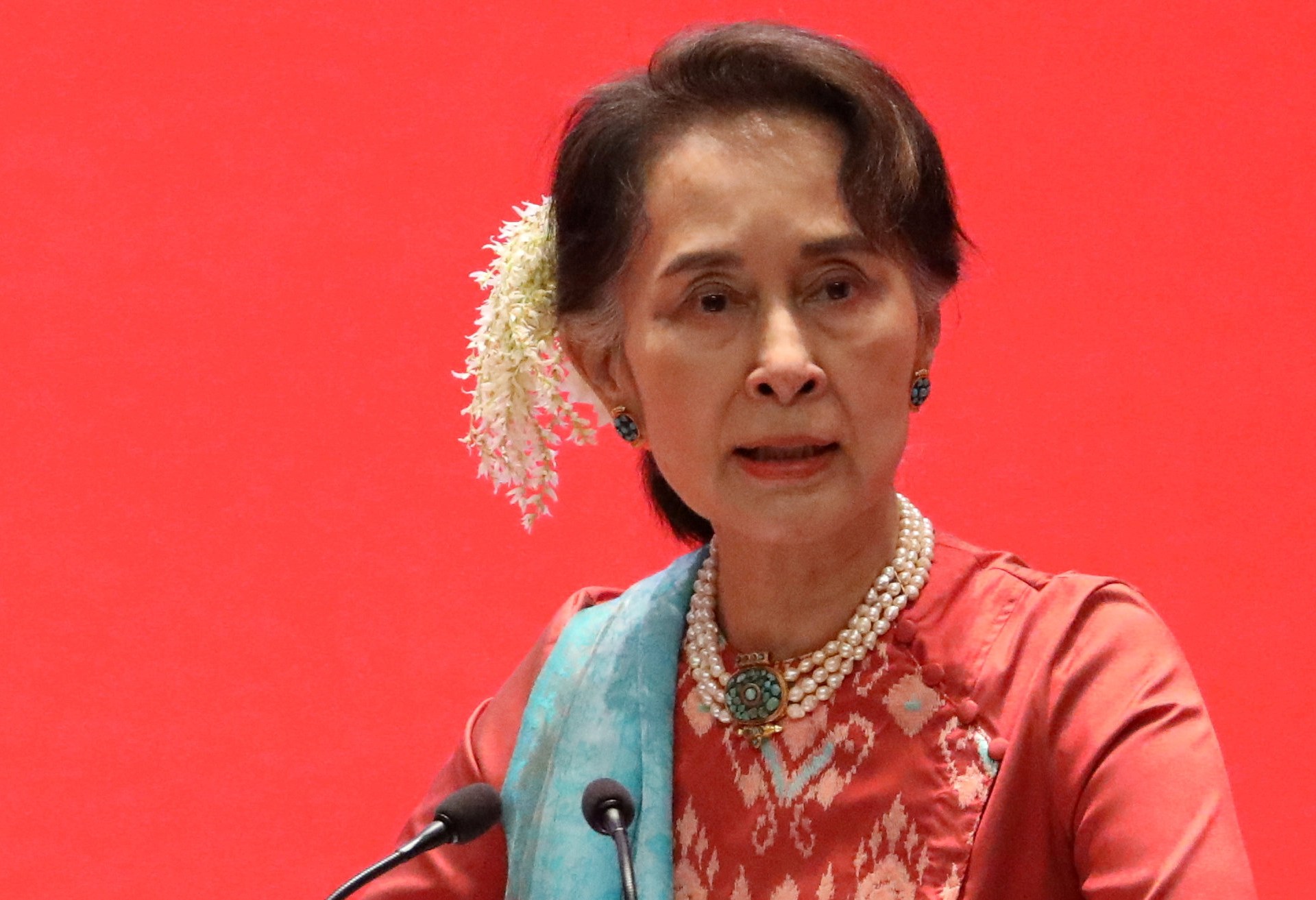

Myanmar President Min Aung Hlaing has cut all prisoners’ sentences by one-sixth, a blanket measure that grants deposed leader Aung San Suu Kyi’s sentence a further reduction, according to a member of her legal team.
Thursday’s measure comes to mark a public holiday, according to a statement published by the presidential office. Amnesties typically happen as Myanmar marks Independence Day in January and its New Year in April.
- list 1 of 3Russian weapons, tactics seen in Ukraine are shaping Myanmar’s civil war
- list 2 of 3Who is fighting in Myanmar’s multi-front civil war?
- list 3 of 3Myanmar’s coup leader elected president by pro-military parliament
end of list
Min Aung Hlaing, who was military chief before being sworn in as civilian president after a tightly restricted election, had already granted a similar sentence reduction in an amnesty for 4,335 prisoners earlier this month.
Aung San Suu Kyi has been imprisoned since 2021, when a military coup toppled her democratically elected government. She is serving a 33-year sentence, later reduced to 27, on charges her allies describe as politically motivated.
Her legal team member told the Reuters news agency on condition of anonymity that the 80-year-old will now have to serve about 18 years.
Aung San Suu Kyi remains significantly popular in Myanmar but has been held almost completely incommunicado as her family warns of her deteriorating health.
She won the Nobel Peace Prize in 1991, which she did not accept in person for fear she would be blocked from returning to the country, where she had become a symbol of non-violent defiance.
Myanmar’s main pro-military party claimed a sweeping victory in a three-phase general election in January, amid civil war and widespread repression.
Advertisement
More than four years after a military coup, the Union Solidarity and Development Party (USDP) declared an overwhelming majority in Myanmar’s two legislative chambers.
Aung San Suu Kyi’s National League for Democracy was dissolved along with dozens of other parties, and some others declined to take part, drawing condemnation from critics who say the process was designed to legitimise military rule.
In his inauguration address earlier this month, Min Aung Hlaing declared that “Myanmar has returned to the path of democracy and is heading towards a better future”, while acknowledging the country still had many “challenges to overcome”.
The United Nations human rights office said large segments of the population, including minorities such as ethnic Muslim-majority Rohingya, were excluded from voting since they have been denied citizenship, and many have also been displaced outside the country.
The Assistance Association for Political Prisoners, a human rights group, has said more than 30,000 people were imprisoned on political charges since the 2021 coup.
Related News
Iran war: What’s happening on day 58 as Tehran-Washington talks stall?
Anger in Lebanon as Israel launches deadly strikes despite diplomatic drive
Russian attacks on Ukraine kill at least five, damage ship in port