

China has waived loans worth $50m that it had given to Sudan, the two countries said over the weekend. The agreement comes three years into a war between Sudan’s army and the Rapid Support Forces (RSF) that has shrunk the country’s economy by roughly 40 percent, according to the United Nations.
The sum is small compared with what Sudan owes overall to external governments or agencies, an amount estimated at more than $56bn before the war. But the waiver lands at a moment when Khartoum has few other international lenders extending any financial support.
China’s relationship with Sudan predates the war by decades, built on oil and infrastructure interests that survived multiple changes of government in Khartoum. But the war has narrowed Sudan’s options elsewhere, as Western governments have largely held back or imposed sanctions.
Here’s why this deal is significant for Sudan and China:
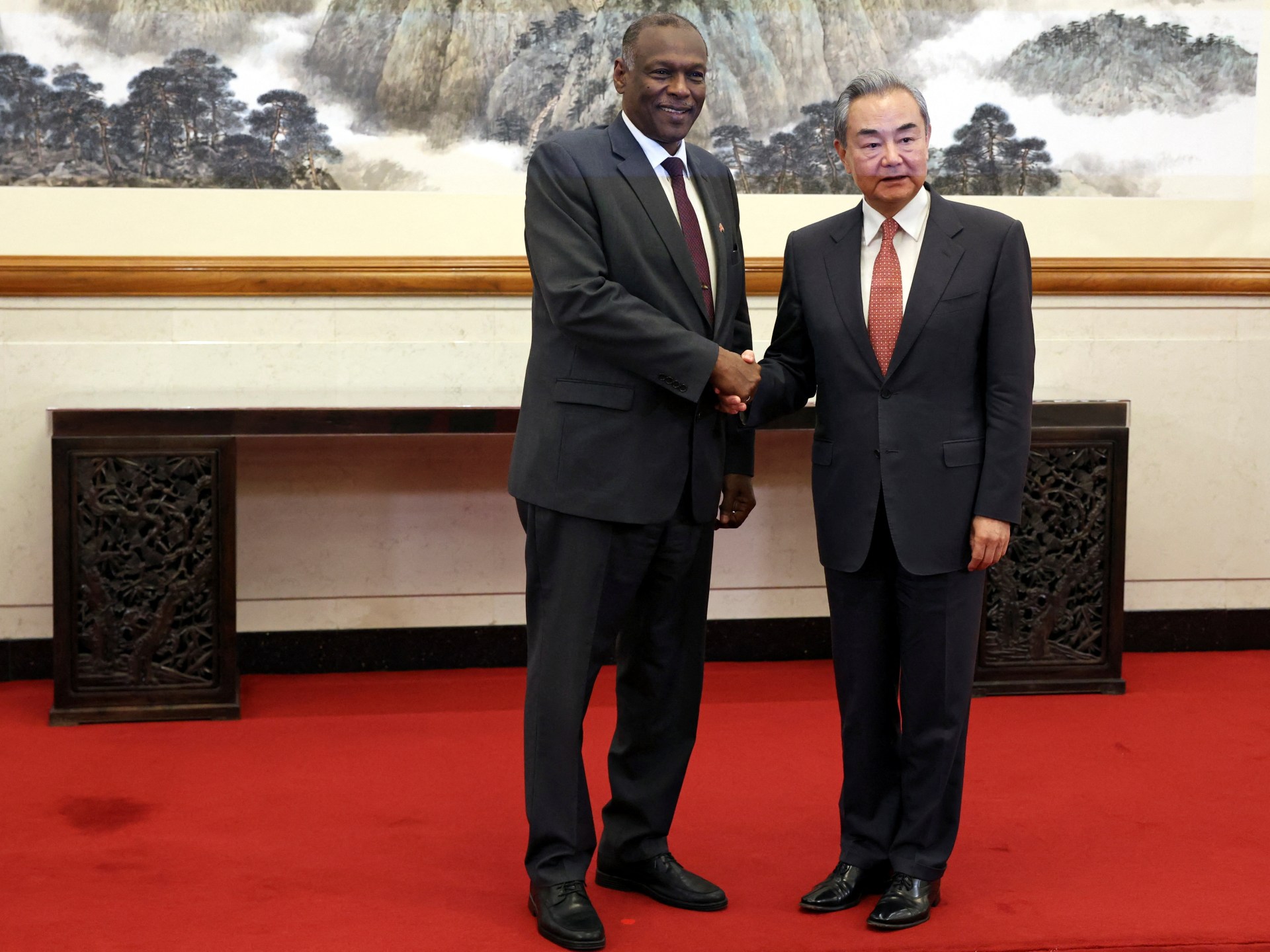
The signed protocol in Port Sudan cancels four interest-free loans worth 344 million yuan, about $50m, with immediate effect, according to Sudan’s official news agency, SUNA.
Sudan’s Finance Minister Gibril Ibrahim welcomed the move, reportedly saying that China has continued investing in the country throughout the war while Western governments, including the United States and European Union members, have largely held back. Gibril himself was added to the US Treasury sanctions list in September 2025 for his alleged “involvement in Sudan’s brutal civil war and … connections to Iran”.
Advertisement
China’s charge d’affaires in Sudan, Xu Jian, reportedly said at the signing ceremony that China was ready to help rebuild what was destroyed during the war in Sudan.
What’s in it for Sudan?
Sudan’s external debt of more than $56bn before the war is expected to have ballooned since.
The $50m debt relief amounts to not even 1 percent of the total external pre-war debt. In fact, Sudan was close to a far bigger debt write-off in 2021. It was on track with the IMF and the World Bank Heavily Indebted Poor Countries initiative to have more than $50bn of its debt forgiven within three years. The 2021 military coup in October derailed that debt relief plan, and the process was formally suspended a year later.
Still, China’s waiver arrives at a moment of acute need for the country. The war is now in its third year. More than 1.5 million people have been killed, according to the UN, and the war has displaced about 14 million people – about a quarter of the Sudanese population. The World Health Organization says less than 14 percent of health facilities are still functioning. Jobs have vanished in many parts of the country, and the rising cost of living has made it difficult for households to survive.
The Sudanese pound has collapsed since the start of the war. It went from roughly 600 to the dollar before the war to more than 5000 to the dollar by June 2026.
What’s in it for China?
In many ways, Beijing’s decision to waive the $50m loan is in keeping with a broader approach it has taken in recent years, one that has helped cement China as Africa’s largest trading partner for 17 consecutive years.
China has provided interest-free loan forgiveness as a diplomatic gesture to multiple countries, and these decisions are recurrent announcements at Beijing’s frequent leader-level summits with African nations. This is especially true for smaller loans. Research from the Johns Hopkins China Africa Research Initiative found that China forgave at least $3.4bn of these kinds of debts across the African continent between 2000 and 2019.
By contrast, larger loans are usually commercial loans through state banks that come with interest, and waiving those is harder.
At a time when the West is largely trying to isolate Sudan’s leadership, a small loan waiver gives China outsized influence in a country that sits at the intersection of the Middle East and sub-Saharan Africa.
What have China-Sudan ties been like historically?
Oil has long served as a catalyst for their relationship. From the mid-1990s on, China’s National Petroleum Corporation (CNPC) poured billions of dollars into Sudanese oil fields and the pipelines carrying that crude oil to Port Sudan. This was a time when many Western companies were pushed out due to sanctions.
Advertisement
The relationship changed when the southern part of the country voted in favour of independence in 2011. The world’s newest country, South Sudan, left the north and took most of the country’s oil fields with it.
Chinese investment largely dried up afterwards, but Sudan still has more than $5bn of outstanding debt to China. The war has aggravated Sudan’s economic challenges. The CNPC requested a formal exit from Sudan in December 2025.
Related News
Several killed in attacks on Ukraine as Kyiv hits Russian e-commerce giant
Hundreds protest in Kyiv over Zelenskyy’s dismissal of defence minister
Israeli forces blow up structures near Lebanon’s Beaufort Castle