
Central African Republic votes as Touadera seeks third presidential term
 28 December 2025
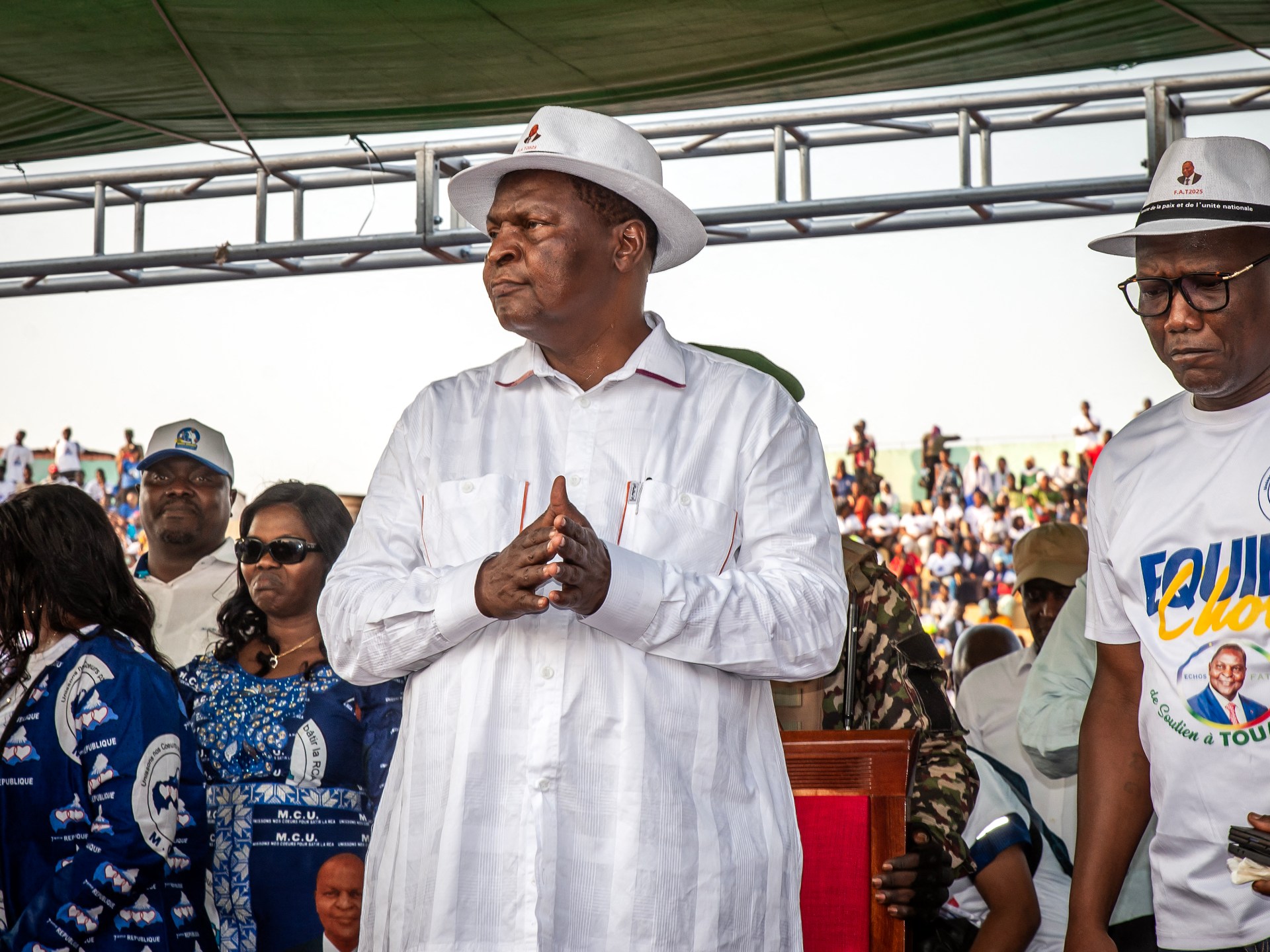

The Central African Republic (CAR) is holding the presidential election, with incumbent Faustin-Archange Touadera projected to secure another term in the conflict-ridden country.
Polling stations opened at 05:00 GMT on Sunday and will close at 17:00 GMT, with 2.3 million voters expected to elect their president, legislators, as well as municipal and regional representatives.
- list 1 of 4Central African Republic election: Who’s running and what’s at stake?
- list 2 of 4ICC convicts Central African Republic rebels over war crimes
- list 3 of 4The ‘ghost reporters’ writing pro-Russian propaganda in West Africa
- list 4 of 4Central African Republic
end of list
Touadera, who has been in office since 2016, is likely to win the first round of voting. However, if no candidate receives more than 50 percent of the votes, a runoff election will be held.
The 68-year-old incumbent is running for office following a controversial constitutional referendum in 2023 that allowed him to serve additional terms.
The campaign unfolded without significant incidents, with the exception of the most credible opposition figures, Anicet-Georges Dologuele and former prime minister and critic Henri-Marie Dondra, being prevented from flying to the provinces to hold rallies.

Security forces were omnipresent in the capital’s streets, with a significant deployment of police, army, and the Russian Wagner Group mercenaries.
The elections are taking place against the backdrop of a civil war that has been ongoing since 2013 and has brought the state to the brink of collapse, with armed groups controlling large parts of the country at times.
International peace missions, including the United Nations mission in the CAR, MINUSCA, as well as military support from Russia and Rwanda, have helped to partially stabilise the situation in recent years.
Advertisement
Nevertheless, rebels remain active, especially in the border regions with Sudan and South Sudan.
In addition to the presidential election, parliamentary elections and, for the first time in decades, local elections are also being held on Sunday in the country of some 5.5 million inhabitants.
Touadera was re-elected in 2020, in a vote marred by allegations of fraud and an uprising by six rebel groups attempting to overthrow the government.
The rebels were pushed back due to an intervention by the Rwandan army and Russian mercenaries.
According to political scientist and civil society figure Paul Crescent Beninga, “orchestrated” rallies have taken place across the country to plant the idea that Touadera enjoys widespread popular support.
Images of the incumbent have flooded the capital, with neon signs, giant portraits and T-shirts bearing his likeness seen everywhere on the streets.
While Touadera held rallies in Bangui’s stadium, his top two critics had to make do with neighbourhood walkabouts and events in schools or their party offices.
Dologuele and Dondra also faced the prospect of being barred from standing over allegations they held another country’s citizenship.
Touadera’s 2023 constitutional change introduced the requirement that candidates be single-nationals.
Although the courts rejected the bans, Dologuele, who previously ran for the top job in 2020, was stripped of his CAR passport in mid-October even after giving up his French citizenship. That prompted him to file a complaint with the UN human rights office.
“But despite their candidacies being approved, many … remain sceptical about the point of voting and the transparency of the elections,” Beninga told AFP news agency.
Related News
Trump says ‘anyone who disagrees’ with him will never head Federal Reserve
Israel launch several air strikes on southern and eastern Lebanon
Why a Bollywood spy film sparked a political storm in India and Pakistan