



News Americas, NEW YORK, NY, Fri. July 24, 2026: The MV Barima, the ferry that capsized off Guyana’s coast on July 19, killing at least 65 people with dozens more still unaccounted for, was not built for Guyana. It was built for a colony that no longer exists – 27 years before that colony became an independent nation.
The MV Barima was born on the River Clyde in Port Glasgow, Scotland, at the yard of Ferguson Brothers – a shipbuilder that still operates today as Ferguson Marine. According to the company’s own heritage records, work began on a passenger-cargo vessel named the Pomeroon, which underwent sea trials in January 1936.

The yard then built two sister vessels, the Lady Northcote and the Barima, which were completed in 1939. All three were ordered through the Crown Agents for the Colonies on behalf of the Transport and Harbors Department of British Guiana Railways, built specifically to stitch together a colonial territory by water – decades before Guyana would become an independent nation on May 26, 1966.
The Barima was a twin-screw vessel of modest ambition by design – built to cruise at roughly 8.5 knots, carrying the cargo and passenger loads of a colony whose coastal trade bore little resemblance to a modern independent nation’s. When it capsized on July 18, nearly six decades after Guyana’s independence, the vessel was carrying 179 people and cargo, a load far exceeding what its rigid, nearly 90-year-old hull, engineered under colonial administration, was ever built to safely stabilize.

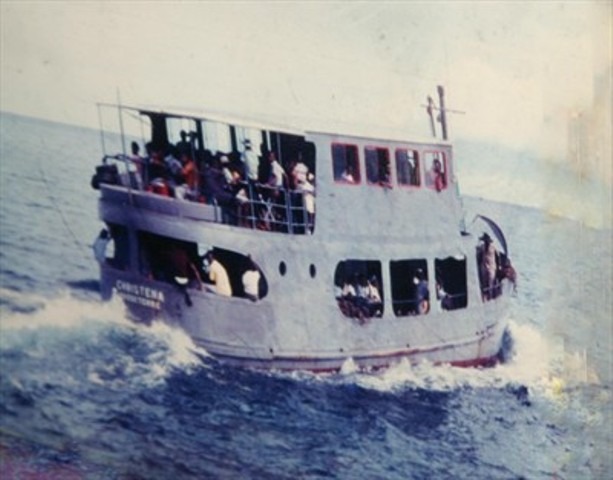
The Barima’s capsizing bears an unsettling resemblance to another Caribbean maritime tragedy from a similar era: the MV Christena, the government ferry that disappeared beneath the waters of The Narrows between St. Kitts and Nevis on August 1, 1970, killing 233 people and leaving only 91 survivors — one of the deadliest maritime disasters in Caribbean history. The Christena was smaller than the Barima, at about 66 feet long with a 16-foot beam versus the Barima’s roughly 126 feet, but both were aging government ferries serving as the primary lifeline for isolated island and coastal communities, and both capsized carrying more people than their design and era were ever built to accommodate.
The Christena’s sinking led to a Commission of Inquiry that found the vessel had been dangerously overloaded and improperly loaded with cargo positioned to destabilize it – findings that reshaped maritime safety oversight across the Eastern Caribbean in the years that followed. Guyana has similarly launched an independent Commission of Inquiry into the Barima’s capsizing, with Prime Minister Mark Phillips confirming a full investigation into potential criminal negligence and institutional failures within the country’s maritime administration.
Whether an independent nation, nearly 60 years removed from the colonial administration that ordered the Barima into existence, still relied on that same vessel as recently as this month is itself a question the Commission of Inquiry may have to reckon with – one that goes beyond mechanical failure, to what infrastructure a country inherits at independence, and how long it can go without replacing it.
NewsAmericasNow will continue following the Commission of Inquiry into the MV Barima disaster as it develops.
Related News
America Turns 250 – Its Financial System Was Built By A Caribbean Immigrant. Now The US ...
The Will Of God Or The Work Of The Devil? – Pursuing Power In The Church
Should Folarin Balogun Have Stood Down For America?